




The 'Free Birds' Blueprint
Take the 2013 animated film 'Free Birds,' one of the few big-budget Thanksgiving features. Two turkeys, voiced by Owen Wilson and Woody Harrelson, travel back in time to 1621 to take turkey off the first Thanksgiving menu. It’s a wacky, high-concept adventure
that dodges historical complexity by making the central conflict about saving the birds. The film even opens with a disclaimer stating it is 'in no way meant to be historically accurate.' The director, Jimmy Hayward, clarified that the goal was entertainment, not education, focusing on themes of togetherness rather than history. This approach treats the historical setting as mere window dressing for a standard kids' comedy, replacing a difficult story of cultural collision with a simplistic tale of turkeys versus a villainous Pilgrim hunter, Myles Standish.
History Versus Hollywood's Harvest
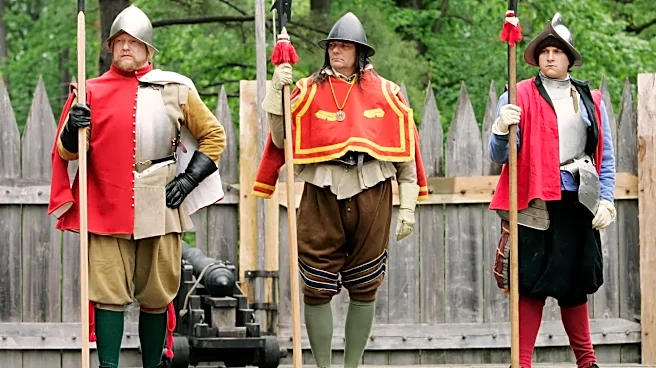
The sanitized school-pageant version of Thanksgiving—of friendly Pilgrims and Native Americans sharing a peaceful feast—is itself a myth. The reality of 1621 was far more fraught. The Wampanoag people, who had inhabited the land for millennia, had been decimated by diseases introduced by earlier European explorers. Their leader, Ousamequin (also known as Massasoit), approached the struggling English colonists not just out of goodwill, but as a strategic alliance against a rival tribe. The famous 'feast' was a three-day harvest celebration held by the Pilgrims. The Wampanoag weren't formally invited; they arrived after hearing celebratory gunfire, likely on a fact-finding mission with 90 warriors. Seeing there wasn't enough food, they contributed five deer to the meal, which was the main course, not turkey. This moment of fragile diplomacy is often stripped of its context, erasing the grim backdrop of colonialism and disease that would ultimately devastate Native populations.
The Comfort Food Formula
So why do family films run from the truth? The simple answer is that it's a tough sell. A story about talking turkeys changing the menu is far more marketable to kids than a nuanced tale of political alliances, plagues, and cultural displacement. The Thanksgiving myth is, for many, a form of 'comfort food' storytelling. It’s warm, simple, and avoids confronting the painful parts of American history. For many Native Americans, the holiday is observed as a National Day of Mourning, a tradition that began in 1970 to protest the erasure of their side of the story. Animated films, designed for mass appeal, are incentivized to present the most uncomplicated, feel-good narrative possible, even if that narrative is misleading. Acknowledging the deeper, darker truths risks making the audience—and by extension, the ticket-buying parents—uncomfortable.
A More Meaningful Feast of Stories
But a film doesn't have to be a somber documentary to be more truthful. Educators and child psychologists suggest that children, even as young as preschool age, can grasp concepts of fairness and perspective. It's possible to tell engaging stories that are also responsible. Instead of centering the Pilgrim experience, what if a film centered the Wampanoag, a people with their own rich traditions of giving thanks long before 1620? Stories could explore the world from the perspective of Tisquantum ('Squanto'), a Patuxet man who was kidnapped and sold into slavery in Europe before making his way home, only to find his village wiped out by disease. His story is one of incredible resilience, not just a footnote about helping colonists plant corn. Family entertainment can be a powerful tool for shaping a child's first draft of history. By offering a more inclusive and honest narrative, studios wouldn't be ruining the holiday; they’d be enriching it.