




More Than Just a Shoulder Strap
At its most basic, an epaulet—from the French épaulette, meaning “little shoulder”—is a piece of ornamentation on the shoulder of a garment. While today we see simple cloth straps on everything from raincoats to fast-fashion blouses, the original versions
were often far more elaborate. These could be intricate, fringed decorations made of gold or silver wire, sometimes becoming so ornate they resembled fancy brushes. Colloquially, the term is often used interchangeably with shoulder boards or rank slides, which are the flat cloth sleeves that display insignia. But their function has always been twofold: practical and symbolic.
A History Forged in Conflict
The epaulet’s direct origins trace back to the late 17th century. Soldiers wore heavy cross-body belts for swords and cartridge boxes, and bunches of ribbons were added to the shoulders of their coats to keep these straps from slipping. This functional knot of ribbons, with its fringed ends, established the basic design that would evolve over the next two centuries. By the 18th century, the French army and others began using epaulets to signify rank. Whether an officer wore one on the left, right, or both shoulders—and its color and fringe length—communicated their status at a glance. Some early versions, called shoulder scales, were made of flexible metal and may have offered a small degree of protection. But their primary role quickly became a clear, visual marker of authority in a military hierarchy.
Crossing Over to Couture and Culture
The transition from battlefield to civilian life happened gradually. Military-inspired clothing has always held a certain allure, suggesting structure, discipline, and honor. The epaulet, a prime symbol of this world, began appearing on non-military garments, most notably the trench coat. Originally designed for British officers in World War I, the trench coat's epaulets served their classic purpose of securing straps for gear like binoculars or gas mask bags. As the trench coat became a timeless civilian staple, so too did its shoulder details. From there, designers saw the aesthetic potential. An epaulet adds structure to the shoulder line, creating a stronger, more defined silhouette. It can make a soft garment feel more formal and a simple jacket look more intentional. Pop culture icons like Michael Jackson adopted the military jacket with its glittering epaulets, transforming it into a symbol of pop royalty and showmanship.
A Symbol of Rebellion and Power
Interestingly, a symbol of state authority also became a tool for counter-culture. In the 1970s, the punk movement co-opted military aesthetics as an act of rebellion. Adherents would add studs, spikes, and safety pins to leather jackets, often incorporating epaulets as part of their DIY, anti-establishment uniform. It was a way of taking a symbol of the system and twisting its meaning. Around the same time, epaulets became a key feature in women's "power dressing." In the 1980s, as more women entered the corporate world, fashion responded with broad, padded shoulders meant to project authority and confidence. Epaulets on blouses and blazers helped accentuate this powerful silhouette, giving women a sartorial tool to command respect in male-dominated spaces.
Why It Still Appears on Your Jacket
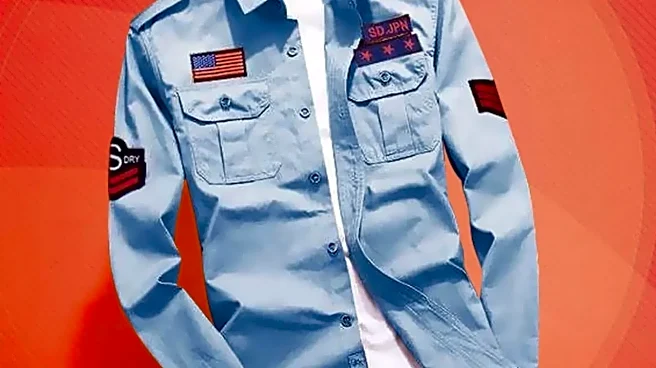
Today, the epaulet exists in a fascinating middle ground. It’s a functional piece of design history that has become a subtle, almost subconscious, style cue. On a classic peacoat or field jacket, it nods to the garment's utilitarian heritage. On a modern blazer or shirt, it provides a crisp, architectural detail that sharpens the entire look. It can convey formality, as seen on the uniforms of airline pilots or other service professionals who still use them to display rank. Or, it can signal a touch of edgy, military-inspired style. That small strap of fabric is a testament to how a practical solution—keeping a belt from slipping—can evolve into a complex symbol of rank, power, rebellion, and timeless style. It’s a reminder that in fashion, even the smallest details tell a big story.