








A Diamond in a Dust Bowl
The central character of Field of Dreams isn’t a person; it’s the corn. The entire plot hinges on Ray Kinsella plowing under his crop to build a baseball diamond. But when filming began in Iowa during the summer of 1988, the state was hit with a severe
drought. The production's primary crisis was that their magical cornfield couldn't grow. The stalks, which needed to be shoulder-high for key scenes, remained stubbornly short. This wasn't just a minor setback; it was an existential threat to the entire film. Local farmers looked on in bewilderment as the crew tried to coax life out of the parched earth while their own crops withered. The movie's core visual, the lush green field, was turning into a brown, dusty patch.
Manufacturing a Miracle
With the schedule collapsing, the crew turned to old-fashioned ingenuity. They received special permission to dam a nearby creek and create a massive irrigation system to water their corn. The plan worked a little too well. The corn shot up so fast that it grew taller than Kevin Costner, forcing the crew to build elevated platforms for him to walk on just so his head would appear above the stalks. The grass on the baseball diamond itself also suffered, constantly turning brown from the heat. The solution was brilliantly simple and surreal: they painted the grass green. This wasn't digital color correction; it was a team with paint, manually ensuring the field looked like a perfect slice of baseball heaven on camera, even as it was dying in reality.
The Ghost in the Machine
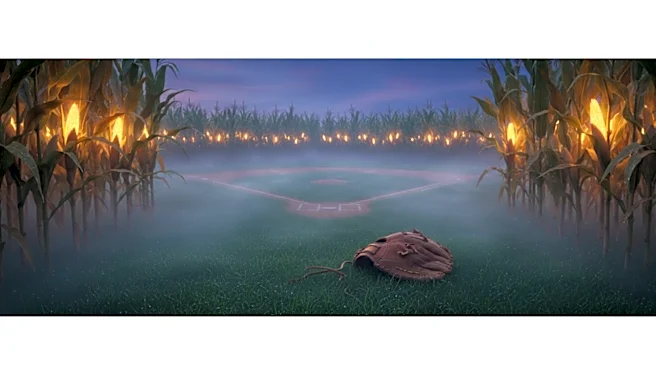
The film’s fantastical elements, like the ghostly players appearing from the corn, relied entirely on practical filmmaking tricks, not digital effects. The ethereal, hazy fog that hangs over the field when Shoeless Joe Jackson first appears wasn't generated by a machine; it was actual fog that rolled in at the perfect moment, a lucky break the filmmakers seized upon. The players' ability to phase through walls or disappear was achieved through classic in-camera editing, careful lighting, and blocking. This reliance on physical craft gives the film a tangible, believable quality. The magic feels earned because it was created in the real world, a testament to the crew's resourcefulness in an era just before the CGI revolution took hold.
A Traffic Jam of Dreams
Perhaps the most stunning practical effect is the film's final, iconic shot: an endless stream of headlights snaking toward the field. This wasn't a computer-generated image. To achieve this, the production put out a call over local radio, asking the community to come to the field in their cars for the shot. Around 1,500 vehicles showed up. With daylight fading fast, the director, Phil Alden Robinson, realized the cars looked static. For the final take, he had every driver flash their high beams on and off, creating the twinkling, moving river of light that became the movie's enduring final image. It required a helicopter, a town-wide blackout to make the car lights pop, and the coordinated effort of an entire community—a real-life parallel to the film's theme of people coming together for something they believe in.