


The Comeback No One Wanted
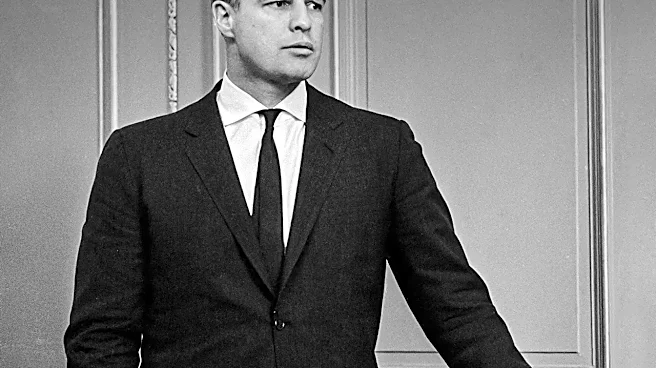
By the early 1970s, Marlon Brando was considered box office poison. After a string of flops and gaining a reputation for being difficult on set, major studios wanted nothing to do with him. When Francis Ford Coppola insisted Brando was the only man who
could play Don Vito Corleone in "The Godfather," Paramount Pictures executives actively resisted. Brando, desperate to revive his career, had to film a bootleg screen test to convince them. The result was one of cinema's most legendary performances, earning him his second Academy Award. The stunner wasn't just that he pulled it off, but that an actor so thoroughly dismissed by the establishment could reclaim his throne in a role that would define him forever.
The Ultimate Political Statement
Just one year after his triumphant comeback, Brando delivered his most audacious shock to the Hollywood system. When he won Best Actor for "The Godfather" in 1973, he didn't attend the ceremony. Instead, he sent Sacheen Littlefeather, an Apache activist, to decline the award on his behalf. Littlefeather took the stage and explained that Brando was protesting the film industry's derogatory portrayal of Native Americans, specifically citing the ongoing events at Wounded Knee. The move was met with a mix of boos and applause, stunning the audience and the millions watching at home. At the absolute height of his restored fame, Brando used Hollywood's biggest stage to reject its highest honor, a political act of defiance that remains one of the most memorable and controversial moments in Oscar history.
Art at Its Most Extreme
Brando followed "The Godfather" with Bernardo Bertolucci's "Last Tango in Paris," a film that remains deeply controversial. Playing a grieving American widower who engages in an anonymous, psychologically brutal affair, Brando delivered one of his most raw and emotionally exposed performances. The film's explicit sexual content earned it an X rating and sparked global debate. The controversy deepened decades later when it was revealed that a notorious rape scene was filmed without the full, informed consent of his 19-year-old co-star, Maria Schneider, a decision made by Brando and the director to elicit a genuine reaction of humiliation. Brando himself felt manipulated by the process and didn't speak to Bertolucci for years afterward. The choice to do the film was a dive into pure, dangerous art that pushed boundaries of taste and ethics.
The Million-Dollar Cameo
In 1978, Brando cemented his reputation for cynical brilliance with "Superman." He was cast as Jor-El, Superman's father, a role that amounted to less than 20 minutes of screen time. For this, he negotiated an unprecedented salary of $3.7 million plus 11.75% of the film's gross profits, ultimately earning an estimated $19 million. In stark contrast, the film's star, Christopher Reeve, was paid $250,000. Brando famously refused to memorize his lines, relying on cue cards hidden around the set. At one point, he even suggested his character could appear as a floating green bagel with his voiceover. This decision stunned Hollywood not for its artistic merit, but for its sheer financial audacity. It was a masterclass in leveraging stardom, setting a new benchmark for actor salaries and highlighting his growing contempt for the profession.
An Enigmatic Final Act
Brando's later career was marked by eccentricity and performances that baffled critics and audiences alike. His role in the disastrous 1996 production of "The Island of Dr. Moreau" is a prime example. On-set behavior was described as monstrous, and he seemed intent on sabotaging the film. He refused to learn his lines, communicating with the director via an earpiece that sometimes picked up local police radio signals, which he would then incorporate into his dialogue. His bizarre creative choices, including insisting on wearing white makeup and an ice bucket on his head in one scene, were seen as the perplexing actions of a genius in decline, a man so disillusioned with his craft that he turned his roles into a form of performance art protest.