








Estadio Azteca, Mexico City: The Historic Heartbeat
No stadium on Earth is as woven into the fabric of World Cup lore as Estadio Azteca. It is the only venue to host a third opening match, a historic achievement for the 2026 tournament. This is the ground where Pelé’s Brazil became legends in 1970 and
where Diego Maradona scored both the infamous “Hand of God” goal and the magnificent “Goal of the Century” in 1986. Sitting at a lung-testing altitude of 7,200 feet, its colossal, elliptical bowl has been a cathedral of football for decades. It’s not just a stadium; it’s a living museum where the ghosts of the game’s greatest moments will watch over the new generation. The Azteca’s identity is pure legacy.
SoFi Stadium, Los Angeles: The Hollywood Futurist
If the Azteca is the past, SoFi Stadium is a shimmering vision of the future. The most expensive stadium ever built, this indoor-outdoor marvel in Inglewood feels less like a sports venue and more like a sci-fi movie set. Its signature feature is the 70,000-square-foot, dual-sided “Infinity Screen” video board that hangs like a halo over the pitch. The entire structure is covered by a translucent canopy with embedded LEDs, allowing it to project imagery visible to planes landing at nearby LAX. To accommodate the wider soccer pitch, some corner seats were even removed, underscoring a commitment to the fan experience for the Cup. SoFi’s identity is one of breathtaking technological ambition and Hollywood-style spectacle.
Arrowhead Stadium, Kansas City: The Wall of Sound
While many modern stadiums are built for comfort and luxury, Arrowhead was built for noise. Long before it was selected for the World Cup, this stadium cemented its reputation as one of the most intimidating environments in American sports. Its fans hold the Guinness World Record for the loudest crowd roar at an outdoor stadium, once hitting an astonishing 142.2 decibels—louder than a jet engine at 100 feet. The stadium's design, a simple, steep bowl with great sightlines, acts as a concrete echo chamber, trapping sound and focusing it directly onto the field. Opposing players have complained for decades about their inability to communicate. Arrowhead’s identity isn’t in its architecture; it’s in the raw, overwhelming power of its crowd.
Mercedes-Benz Stadium, Atlanta: The Architectural Marvel
Atlanta’s stadium is an engineering masterpiece defined by its one-of-a-kind roof. Inspired by a camera's shutter and the Roman Pantheon, the retractable roof is composed of eight massive, triangular “petals” that slide in straight lines to create the illusion of a circular opening to the sky. The effect is mesmerizing, a piece of kinetic art that transforms the stadium's atmosphere. Below it hangs a 360-degree “halo” video board, which was the largest in sports when it debuted. As the first professional sports stadium in the U.S. to achieve LEED Platinum certification, its identity is a blend of groundbreaking design, sustainability, and technological innovation.
AT&T Stadium, Dallas: The Palace of Excess
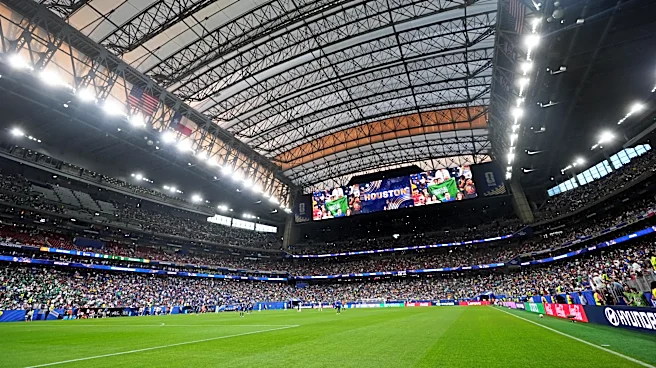
Everything is bigger in Texas, and AT&T Stadium is the embodiment of that philosophy. Nicknamed “Jerry World,” it’s a monument to scale and extravagance. Two colossal steel arches, the longest single-span arches in the world, support a retractable roof, creating a vast interior space. But its true identity lies in its fusion of sport and spectacle. The stadium famously houses a museum-quality contemporary art collection, with dozens of commissioned works from internationally renowned artists integrated throughout the concourses. This, combined with its legendary center-hung video board and luxurious clubs, makes it feel more like a cultural institution than a mere football field. Its identity is unapologetic grandeur, where a world-class art gallery meets a world-class sporting event.
BMO Field, Toronto: The Soccer Cauldron
Unlike many of its larger, multi-purpose American counterparts, BMO Field has an identity rooted purely in soccer. Originally built as a soccer-specific stadium, it is known for its passionate, European-style atmosphere, driven by dedicated supporter groups in its south end who maintain a constant barrage of chants, songs, and energy. Situated on the shores of Lake Ontario with views of the city skyline, the open-air design creates an intimate and intense viewing experience. For the World Cup, the stadium is undergoing significant expansion to increase its capacity, but its soul remains that of a true soccer ground. Its identity is not about size or gadgets, but about a passionate fan culture dedicated to the beautiful game.