





The Soul of the Toy Box
The central conceit of Toy Story isn’t just that toys are alive. It’s that their life force is inextricably linked to a child’s love and imagination. Woody, Buzz, and the gang are animated by a purpose: to be there for their kid. Their adventures, fears,
and triumphs all stem from this simple, powerful relationship. They are analog beings in an analog world, brought to life not by circuits or code, but by the storytelling enacted upon them by a child. A scuff mark isn't a defect; it's a memory of a backyard adventure. A missing button is a battle scar. This tangible, earned history is the bedrock of the series' emotional weight. The drama of the first film was about a child’s affection shifting from an old favorite to a new one, but both were still fundamentally passive vessels for imagination.
A New Kind of Replacement
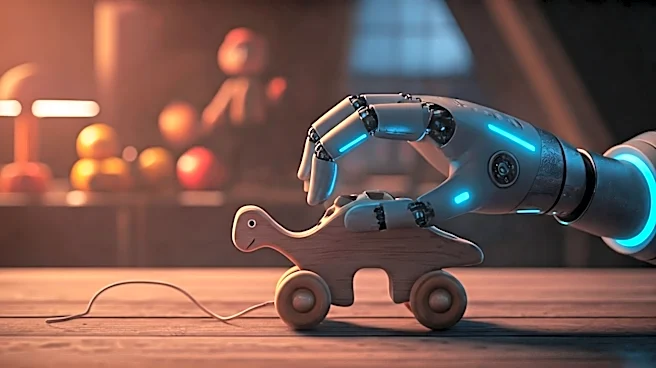
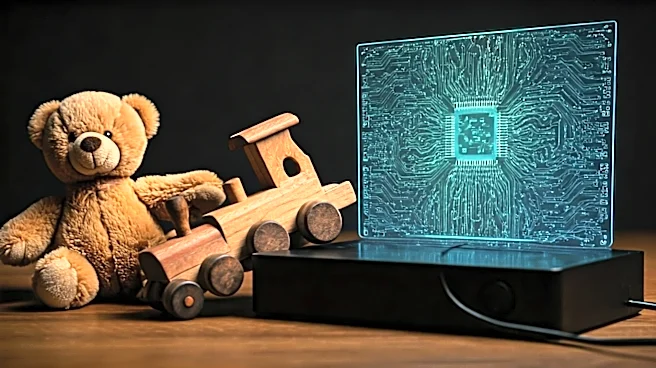
The fear of being replaced is the franchise's most persistent theme. Woody feared Buzz Lightyear, the flashy space ranger. The gang in 'Toy Story 3' faced the ultimate obsolescence: their kid growing up. In 'Toy Story 4,' Woody confronted a world where he was no longer the favorite. But in every case, the replacement was another toy competing for the same imaginative real estate. A 'tech toy' represents a completely different kind of threat. An AI-powered doll, a tablet-connected robot, or a drone with a pre-programmed personality isn't just a shinier version of Woody. It's a rival that doesn't need a child’s imagination to function. It comes with its own voice, its own script, and its own interactive agenda. It doesn't wait to be given a story; it arrives with one already installed. This shifts the central conflict from a battle for a child's heart to a battle against a fundamentally different kind of existence.
The Imagination Gap
This leads to the most dangerous creative problem. If a central new character is a smart toy, how does it fit into the established rules of the Toy Story universe? Does it 'freeze' when humans are around, or is its interactivity its natural state? If a toy can talk and respond to a child via its programming, the 'secret life' of toys becomes redundant. The magic of the films is rooted in the dramatic irony that we, the audience, know Woody and Buzz are alive, while Andy remains blissfully unaware, providing their personalities through his own play. A toy that talks to its kid out of the box eliminates that sacred barrier. It outsources the imaginative work a child is meant to do. Instead of a child making a plastic potato talk, the potato talks for itself. This doesn't just change the nature of play; it risks creating a story where the toys are no longer companions in imagination, but simply competing forms of entertainment.
Can a Villain Have a Warranty?
The alternative is to make the tech toy a villain. This is a tempting path, but it’s fraught with clichés. We've seen the 'rogue AI' or 'evil tech corporation' story countless times, from 'The Mitchells vs. the Machines' to 'M3GAN.' Shoehorning this trope into Toy Story risks making it feel generic and less personal. The best Toy Story villains—Sid, Stinky Pete, Lotso—were compelling because their motivations were rooted in the toy condition itself. Sid mutilated toys, betraying the owner-toy covenant. Stinky Pete was bitter from being left on a shelf, untouched. Lotso was twisted by the pain of being replaced. These are emotional, toy-centric conflicts. An evil iPad-dinosaur or a manipulative smart doll risks feeling like an external, sci-fi threat rather than an organic extension of the world's internal logic. It becomes a story about 'technology is bad' instead of a story about what it means to be loved.