








The Man, the Myth, the Name
Before there was the sound, there was the famously cantankerous man, Aleck “Rice” Miller. The details of his early life are shrouded in mystery, with Miller himself offering conflicting birth years to suit his narrative. He was a known character across
the Mississippi Delta long before he was a recording star. In a move of audacious branding, he adopted the name of an already famous Chicago-based harmonica player, John Lee “Sonny Boy” Williamson. Miller, often referred to as Sonny Boy Williamson II, not only took the name but arguably eclipsed its originator in fame, all while cultivating a persona as a world-weary, sharp-witted survivor. This personality wasn't just for show; it was the bedrock of his artistic identity.
The Harmonica as a Second Voice
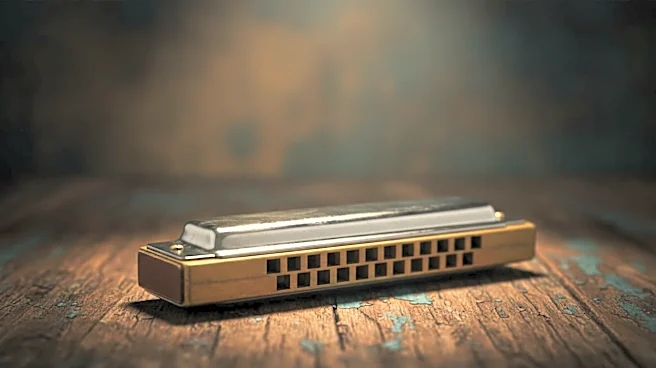
Williamson’s genius began with his revolutionary approach to the harmonica. He played an acoustic harp into a microphone, allowing for an astonishing range of expressive, nuanced sounds. He was a master of the hand-cup, creating deep, vocal-like “wah” effects that made it seem as though the instrument were speaking. His technique was a catalog of innovations: percussive tongue-blocking, rhythmic slaps, and breathy, ghost-like notes that filled the spaces between lyrics. He didn’t just play the harmonica; he made it an extension of his own voice, alternating between singing a line and having the harp answer it with a phrase of its own. This conversational style made his performances feel like an intimate, unfolding dialogue.
A Master of Rhythm and Phrasing
Many musicians can play fast, but few understand time like Sonny Boy Williamson did. His sense of rhythm was uncanny and famously difficult for other musicians to follow. He had a unique ability to play with phrasing that felt both lazy and precise, often holding back and leaving dramatic space between his notes. This created a palpable tension, making listeners hang on every anticipated note. While other bands locked into a steady groove, Williamson would float over it, his vocal and harmonica lines weaving in and out of the beat. This rhythmic unpredictability is a key reason his sound is so hard to duplicate; it was based on his personal, in-the-moment feeling, not a predictable pattern.
The World-Weary Songwriter
Sonny Boy’s unique sound wasn't just instrumental; it was lyrical. His songs were miniature portraits of a life filled with suspicion, humor, and hard-earned wisdom. Tracks like "Don't Start Me to Talkin'," "Help Me," and "Your Funeral and My Trial" are filled with clever, cynical, and memorable lines that reflect his sharp-edged personality. He wasn't singing abstract blues laments; he was delivering specific, folksy wisdom and witty observations that felt deeply authentic. This poetic, storytelling quality elevated his music beyond mere performance, turning his songs into enduring blues standards.
An Influence That Can't Be Cloned
In the 1960s, Williamson became a celebrity in Europe, touring with the American Folk Blues Festival and recording with young British rock bands like The Yardbirds and The Animals. These musicians revered him, and his influence spread throughout rock and blues. Yet, while countless players have copied his licks and covered his songs—from Led Zeppelin's "Bring It On Home" to The Who's use of "Eyesight to the Blind"—no one has ever truly captured his essence. His sound was a perfect storm of his idiosyncratic harmonica techniques, his unpredictable rhythmic sense, his clever songwriting, and his larger-than-life personality. You can learn the notes, but you can't replicate the man who played them.