




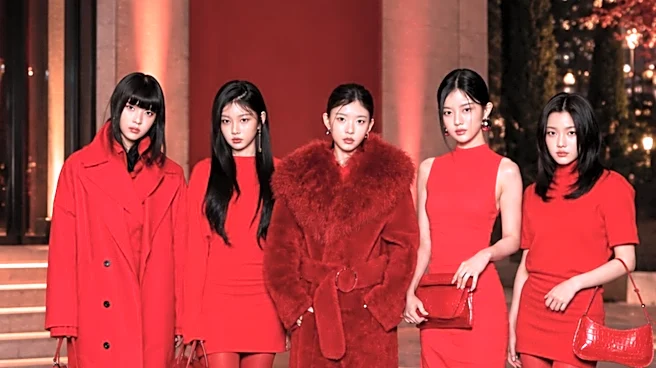

Ever wonder why one faux fur coat looks impossibly chic while another, at a similar price, just looks… fake? The secret isn't just the material, but a tiny detail most people miss: the direction of the fur. It's a game of light and texture.
First, What Is 'Fur Direction'?
In textiles,
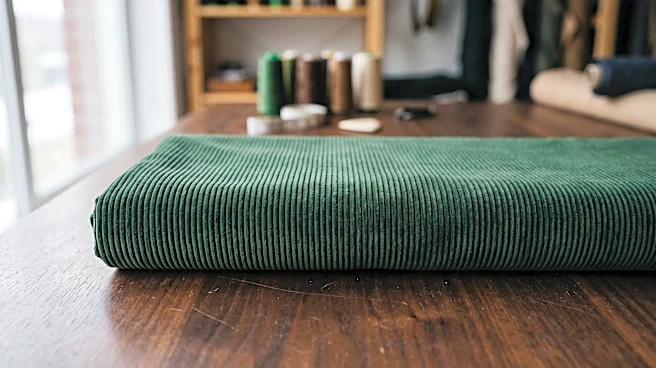
the direction of the fibers on a fabric's surface is called the 'nap'. You've likely encountered it without realizing it. Think of petting a cat—it feels smooth in one direction and rough in the other. Faux fur, like velvet or corduroy, has a nap where all the tiny synthetic fibers are designed to lie in a single, uniform direction. When you run your hand over high-quality faux fur, one way will feel silky smooth, while the other offers resistance. This directional quality is crucial because it dictates how the fabric reflects light, which, in turn, affects how we perceive its color, depth, and texture. A garment made without respecting the nap will have pieces that look like they're different shades, creating a cheap, patchy effect.
The Collar: A Frame for the Face
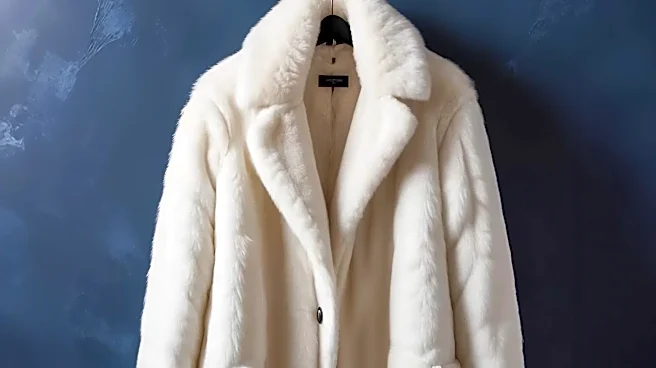
On a collar, the nap direction is everything. A collar’s job is to frame your face, and it sits right in the viewer’s line of sight where light hits it directly. If the faux fur fibers are running correctly—typically downward and outward—they will catch the light in a way that creates a subtle, healthy sheen that mimics real fur. This gives the collar a look of luxury and intentional design. The texture appears richer and the color more vibrant. However, if the nap is running sideways or, worse, in multiple directions, the light will scatter chaotically. This results in a flat, matted, or unnaturally shiny appearance that immediately reads as 'plastic'. Because the collar is so close to the face and often touches the skin, any textural mistake is both seen and felt, cheapening the entire garment instantly.
The Body Panel: More Forgiving by Design
Now, consider the large, flat panels that make up the body of a coat. While nap direction absolutely still matters for a cohesive, professional look, these areas are more forgiving than a collar. A large body panel isn't scrutinized at close range in the same way. It drapes and folds over the body, creating natural shadows and movement that can help disguise minor inconsistencies. The sheer surface area means that your eye takes in the overall silhouette and color rather than focusing on the precise way light is hitting millions of individual fibers. An expert designer will still ensure all panels are cut with the nap running in the same direction—usually downwards for a sleek look. But a slight deviation on a side seam is far less jarring than a collar where one lapel looks dark and the other looks light.
A Telltale Sign of Quality Construction
Ultimately, meticulous attention to nap direction on a collar is a hallmark of quality craftsmanship. It tells you the manufacturer didn't cut corners. Laying out pattern pieces to follow the nap is more time-consuming and often requires more fabric, as you can't just flip pieces upside down to squeeze them onto a roll of material. Inexpensive production lines often ignore this to save time and money. When you see a faux fur collar where the nap is perfect, it’s a strong indicator that the rest of the garment is also well-made, from the density of the fibers to the quality of the lining and stitching. So, the next time you're shopping, run your hand along the collar. If it feels smooth downward and looks consistently lush, you've likely found a piece worth investing in.