


The Runway Isn't a Store
The first thing to understand about the outlandish looks at a major fashion week is that they aren't always meant to be sold as-is. Think of the runway as less of a retail catalog and more of an art gallery or a science lab. For designers, especially
in a creative hub like London, the show is a platform for pure, undiluted ideas. It's their chance to ask big questions: What if a coat wasn't just for warmth? What if a suit didn't have to conform to a traditional shape? These conceptual collections are where designers push boundaries and showcase the full extent of their creativity and technical skill. The goal isn't necessarily to get you to buy that exact piece, but to establish a powerful creative vision for the season. The spectacle generates buzz and communicates the designer's core message, which is arguably more valuable than selling one complicated garment.
The Art of Deconstruction
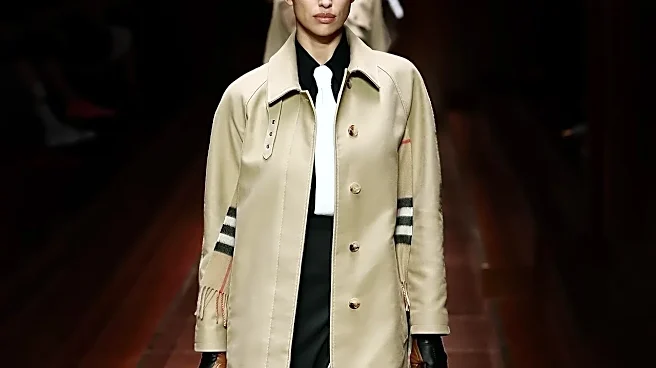
So how does a familiar garment get its avant-garde makeover? Often, it starts with deconstruction. Designers will take a universally recognized item—a classic trench coat, a pinstripe business suit, a humble tracksuit—and metaphorically (or literally) take it apart. At recent London shows, designers have built a reputation for this kind of remixing. Heritage silhouettes are often 'roughed up' and reassembled rather than treated with reverence. For example, a designer might take the lapels of a blazer and move them to the hem, or use the fabric from a pair of jeans to construct a corset. We've seen knitwear deconstructed and layered over the torso for texture, or the familiar shapes of athletic wear, like footballer shorts, fused with delicate ruffles and bows to create a surprising new hybrid. This process strips the garment of its original function and forces us to see its components—the fabric, the seams, the buttons—in a completely new light.
Telling a Story With Stitches
This transformation is rarely random; it's about telling a story. A deconstructed garment can be a powerful form of commentary. When a designer like Tolu Coker uses upcycled denim and heritage fabrics to create a new piece, it's a statement on sustainability and memory. When regal, Elizabethan-style collars are paired with punk-inspired boots, it's a playful wink at British history, mixing monarchy with mischief. The resulting 'strange' look is loaded with meaning. It might explore ideas of gender, comment on work culture, or express a particular mood, from dark romanticism to joyful rebellion. The clothes become a medium for a message, and the weirder they look, the more they make us stop and consider what the designer is trying to say. It turns fashion from a purely commercial product into a piece of cultural commentary.
How 'Strange' Ends Up in Your Closet
You're probably still thinking, 'Fine, it's art, but I'm still not wearing it.' And you're right. You won't wear the seven-sleeved trench coat. But the ideas from that coat will slowly trickle down into the clothes you do buy. This is the fashion life cycle. That extreme asymmetrical cut on the runway might become a slightly off-center closure on a jacket at a department store next year. The exaggerated fur trim seen on a runway piece at Toga or Simone Rocha might inspire the cozy shearling collars that become a major trend in winter coats. The core concepts—a specific color, a unique texture, a new proportion—are absorbed by the wider industry and translated into more wearable, commercial forms. The runway look is the first, most extreme version of an idea that, by the time it reaches your closet, feels fresh and modern, not strange at all.