




The Artist and The Architect
By 1958, Julian 'Cannonball' Adderley was a rising force in jazz. His powerful, blues-drenched alto saxophone style had critics buzzing, and he held one of the most coveted gigs in music: a spot in the Miles Davis Sextet. Guiding his career was John Levy,
a pioneering figure who was not just a manager but an institution. Levy, a former bassist himself, was the first major African American personal manager in jazz, known for his business acumen and fierce protection of his clients, who included stars like Nancy Wilson and George Shearing. Levy was a master strategist, focused on building long-term brand value and financial security for his artists in an often-exploitative industry. His relationship with Adderley was built on trust and a shared goal of elevating the saxophonist's career.
A 'Wrong' Turn to Blue Note
The conflict arose from a tempting, yet strategically problematic, offer. Alfred Lion, the visionary founder of Blue Note Records, wanted Adderley to record an album as a leader. For any jazz musician, a Blue Note date was a mark of prestige. The label was renowned for its stellar audio quality, courtesy of engineer Rudy Van Gelder, and its commitment to artistic freedom. However, from a business perspective, John Levy saw it as a terrible move. The session offered a standard, modest one-time fee. It wouldn't promote Cannonball's own working quintet or build on the brand Levy was carefully constructing. It was, in his view, a distraction that offered prestige but little else. He advised Adderley against it.
The Secret Session
Adderley, however, felt the artistic pull. He decided to go against his manager’s advice and do the session anyway. But he didn't just show up; he assembled a dream team. In an incredible display of professional respect, Adderley convinced his own boss, Miles Davis, to play trumpet on the album. This was a huge coup, as Davis almost never recorded as a sideman for other artists during this period of his career. Rounding out the lineup were pianist Hank Jones, bassist Sam Jones, and the legendary drummer Art Blakey. On March 9, 1958, this all-star quintet convened in Rudy Van Gelder's New Jersey studio and laid down the tracks for an album that would be called 'Somethin' Else'.
The Sound of 'Somethin' Else'
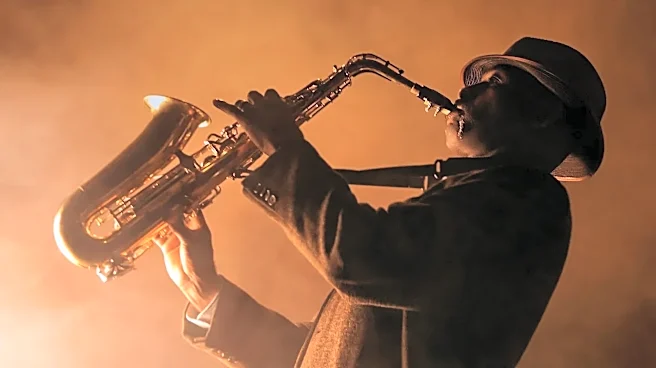
The result was magic. While Adderley was the session's leader, Miles Davis's influence is palpable throughout. He reportedly helped choose the material and shaped the cool, spacious, and lyrical mood of the record. The opening track, a now-iconic version of 'Autumn Leaves,' sets the tone with Davis’s plaintive, muted trumpet before giving way to Adderley's soaring, soulful alto sax. The interplay between the two horn players is the heart of the album—a conversation between the fiery, joyful bop of Adderley and the sparse, poetic cool of Davis. Blakey, known for his explosive drumming, plays with remarkable restraint, while Hank Jones's piano work is a model of elegance and taste. The entire session feels less like a formal recording and more like a gathering of masters reveling in their shared musical language.
A Legacy of Instinct
Upon its release, 'Somethin' Else' was immediately hailed as a classic and is now widely considered one of the greatest jazz albums ever recorded. It stands as Adderley’s only release on Blue Note, a beautiful anomaly in his discography. While albums like 'Mercy, Mercy, Mercy!' would later bring him massive commercial success, 'Somethin' Else' is often cited as his purest artistic statement. It serves as a precursor to the modal jazz explorations Davis would perfect a year later on 'Kind of Blue,' an album that also featured Adderley. The session was a testament to Adderley's artistic gut. He bypassed sound business logic for a chance to create music for its own sake, and in doing so, secured his legacy. At the end of one track, Davis's raspy voice can be heard asking the producer, 'Is that what you wanted, Alfred?'. The answer, from history, is a resounding yes.