





Books 1-4: The Telemachy
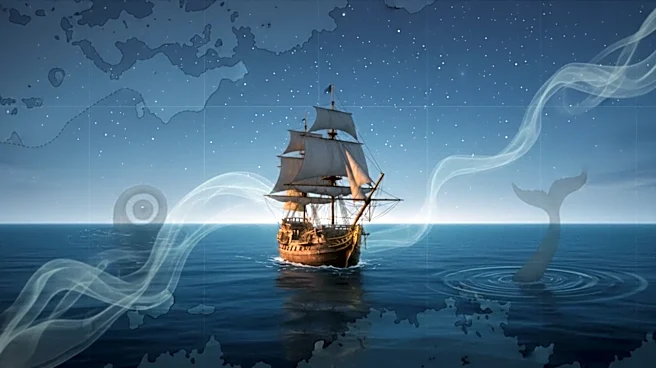
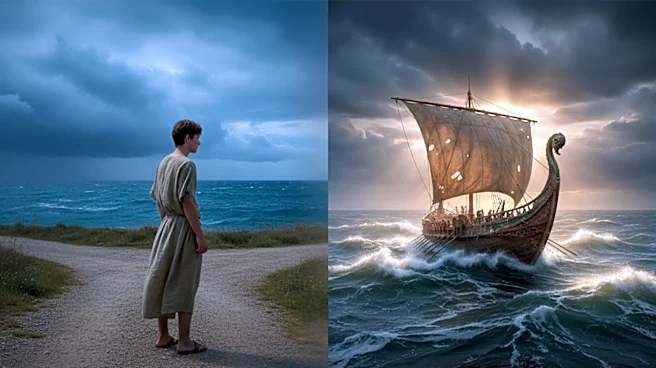
Instead of opening on our hero, the poem begins with his son, Telemachus. The first four books, known as the Telemachy, follow the young prince as he struggles against the suitors disrespecting his mother and searches for news of a father he barely remembers.
This is prime Nolan territory. Imagine a parallel narrative structure, cutting between Odysseus's perilous journey and Telemachus's coming-of-age search for identity. It’s a story about a son living in the shadow of a mythic father, a fractured family separated by time and war. Nolan could use this to establish the emotional stakes and the ticking clock back in Ithaca, creating a multi-perspective thriller where the home front is as tense as the high seas. It’s the perfect setup for a non-linear plot that explores legacy and the weight of a father’s absence.
Book 9: The Cyclops
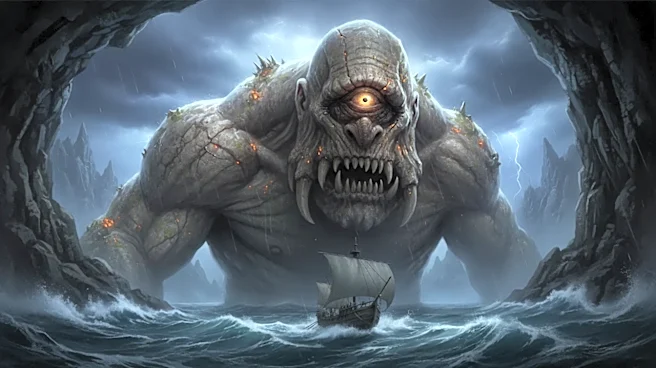
Every epic needs a show-stopping set piece, and Odysseus's encounter with the Cyclops Polyphemus is one of literature's greatest. After being trapped in a cave by the one-eyed giant, Odysseus must use his wits to blind the monster and orchestrate a daring escape. For a director obsessed with practical effects and visceral tension, this chapter is a goldmine. Nolan could stage this as a gritty, terrifying survival-horror sequence, emphasizing the sheer scale and brute force of the creature against the vulnerability of the men. It’s also a pivotal character moment. Odysseus’s hubris in taunting the blinded Cyclops—and revealing his true name—brings the wrath of Poseidon down upon him, defining the rest of his journey. It’s a study in how a hero’s ego can be his own worst enemy, a theme Nolan explored deeply in films like Oppenheimer.
Book 11: The Land of the Dead
To find his way home, Odysseus must journey to the underworld to consult the prophet Tiresias. This chapter, known as the Nekuia, is a descent into memory, grief, and prophecy—a sequence that feels tailor-made for the director of Inception and Interstellar. It’s less a physical journey and more a psychological one. Here, Odysseus confronts the ghosts of his past: his mother, who died of grief; comrades lost in Troy, like Agamemnon and Achilles; and the unburied crewman Elpenor. These encounters are haunting and surreal, with spirits who can only speak after drinking sacrificial blood. Nolan could visualize this as a fractured, dream-like limbo, a non-linear dive into Odysseus’s psyche where past trauma and future warnings collide. It's the moment the hero confronts the true cost of his journey and the fragility of mortality.
Book 12: Sirens, Scylla, and Charybdis
This chapter presents a series of impossible choices. First, Odysseus must sail past the Sirens, whose song drives sailors to their deaths. He famously has his men plug their ears with wax while he has himself tied to the mast, desperate to hear the song without succumbing to it. Immediately after, he must navigate between Scylla, a six-headed monster who snatches sailors from their ships, and Charybdis, a monstrous whirlpool that swallows the sea. He knows he must sacrifice six men to Scylla to save the rest of his crew. This sequence is a masterclass in suspense and leadership under duress. Nolan could frame this as a grueling ethical dilemma played out in real-time, focusing on the sheer terror of facing certain doom and the psychological toll of making a calculated sacrifice. It’s a perfect scenario for his brand of high-stakes, intelligent action.
Book 23: The Unmovable Bed
After 20 years, Odysseus is finally home, but his wife Penelope is cautious. Is this truly her husband or a god in disguise? To test him, she orders a servant to move their marriage bed. Odysseus, enraged, retorts that it's an impossible task—he built the bed himself from a living olive tree rooted in the ground. This is the secret sign only they could know, confirming his identity. This scene isn't about action; it’s a quiet, intensely psychological climax about trust, identity, and shared reality. It’s a puzzle box of a scene, rewarding a clever hero with an equally clever partner. Their reunion is not just emotional but intellectual. For a director fascinated by the lines between illusion, reality, and what proves a person’s identity, this intimate and brilliant test is the perfect, character-driven finale.