








The Solemnity Trap
Let’s be clear: the history of Juneteenth is profoundly serious. It marks the day in 1865 when enslaved African Americans in Galveston, Texas, finally learned of their freedom—more than two years after the Emancipation Proclamation. This history demands
respect, and contextualizing it is a vital part of any commemoration. This is where the speeches come in. We see historians, activists, and politicians delivering powerful oratory on the long, brutal road from bondage to liberation. These moments are necessary. They ground the holiday in its weighty origins and connect the past to the present struggle for civil rights. But when the entire emotional arc of a television special bends toward this solemnity, it risks falling into a familiar trap: framing the Black experience primarily through the lens of suffering. It inadvertently reinforces the idea that Black history is only a catalog of pain to be overcome, rather than a dynamic story of resilience, creativity, and joy. A holiday celebrating freedom should feel freeing, not perpetually anchored to the trauma that made it necessary. By making a somber speech the climax, we risk defining the day by the chains, not the breaking of them.
Freedom Is Also a Feeling
What did freedom on June 19, 1865, actually feel like? It was certainly a mix of shock, uncertainty, and righteous anger. But it was also, undoubtedly, an explosion of joy. It was the freedom to reunite with family, to dance without fear, to cook and share a meal on one's own terms. This is the part of Juneteenth that television often struggles to capture. Freedom isn't just a legal status decreed by a proclamation and delivered in a speech; it's a lived, sensory experience.
So, what would TV that understands this look like? It might look like a travelogue-style food show, exploring the history of red drink and barbecue in Juneteenth traditions, à la 'High on the Hog'. It could be a vibrant music special, tracing the lineage of Black music from gospel spirituals to the Houston hip-hop that carries the legacy of Texas forward. It could even be a comedy special, because laughter in the face of adversity has always been a cornerstone of Black survival and culture. These formats aren't frivolous; they are a different, equally valid way of exploring the meaning of liberation. They honor the spirit of the day by showing, not just telling, what freedom looks like in practice.
Broadening the Roster of Voices
The 'speech' format also tends to create a very specific, and limited, roster of experts. We see the same handful of national thought leaders, celebrity activists, and high-profile academics cycled through every network special. Their contributions are valuable, but their perspectives are, by definition, national and often filtered through the lens of media training and public relations.
Commemorating Juneteenth effectively requires hearing from the people who have been its stewards for over 150 years—long before it became a federal holiday. Let’s see specials that center the voices of local Texas historians, the descendants of Galveston’s original Black communities, and the community organizers who have fought to keep Juneteenth traditions alive for generations. Let's hear from the chef whose family has been making the same barbecue sauce for a century, or the marching band director whose high-stepping drumline is a moving testament to Black joy and discipline. These are the people who hold the holiday's DNA. Their stories are the texture that a national, top-down narrative often misses.
A Blueprint for Better Programming
Ending a Juneteenth special with a speech is safe. It’s definitive, it’s educational, and it’s relatively easy to produce. But the best television, and the most meaningful cultural commemoration, rarely comes from playing it safe. The goal shouldn’t be to eliminate historical context or powerful speeches entirely. It should be to integrate them into a richer, more holistic tapestry.
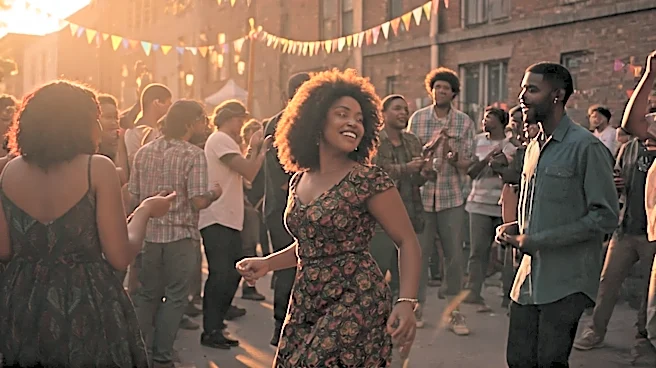
Imagine a special that opens with a historical montage, moves to a segment on the culinary traditions of the holiday, features a performance by a local-turned-national musical artist, and *then* includes a short, powerful speech before closing on a scene of a real community celebration—a block party, a family reunion, a parade. This structure honors the past, celebrates the present, and demonstrates that freedom is not a static concept to be lectured about, but a living, breathing, joyful action. It treats the audience as participants in a celebration, not just students in a history lesson.