
The Language of the Silhouette
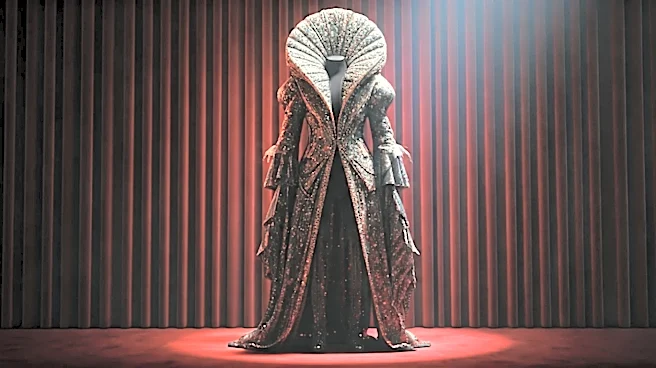
Before we talk about any specific dress, we have to talk about the most important element in theatrical costume design: the silhouette. From the back of the mezzanine or the last row of the balcony, the fine
details of a garment—the beading, the texture, the precise shade of blue—all melt away. What remains? The shape. The outline of a performer against the lights is what communicates character, status, and mood instantly. Is the shape sharp and angular, suggesting power or villainy? Is it soft and flowing, implying romance or vulnerability? This is the first and most crucial language of the stage. A costume designer knows that a distinctive silhouette can do half the actor's work before they even speak a line. It’s a visual shortcut to storytelling, understood instinctively by an audience.
The Asymmetrical Advantage
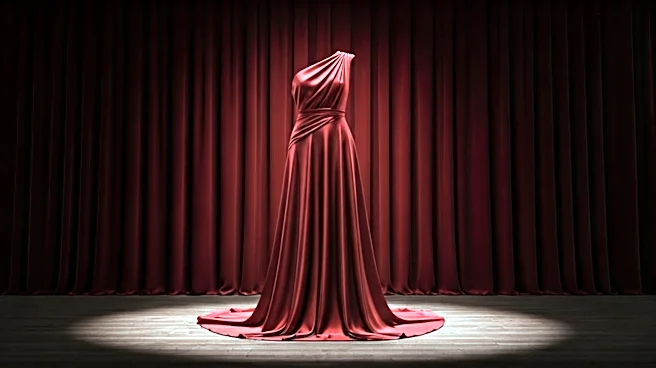
Enter the one-shoulder gown. In the world of design, symmetry often suggests stability, tradition, and calm. Asymmetry, by contrast, creates tension, dynamism, and visual interest. A single, dramatic shoulder line introduces a strong diagonal to the body. Your eye doesn't settle in the middle; it's forced to travel, sweeping from the exposed shoulder up to the face or down the length of the dress. This effect is powerful on a static red carpet, where hundreds of gowns can blur into one another. Think of Jessica Chastain’s glittering green Gucci at the 2023 Tonys. The sharp line of her gown’s single shoulder strap draws attention directly to her face, framing her like a piece of art. It creates movement even when she’s standing still. It’s not just a dress; it’s a pose captured in fabric. The body becomes a landscape of interesting lines rather than a simple, balanced column.
A Choice Rooted in Craft
The Oscars red carpet is for movie stars; the Grammys for rock stars. But the Tonys carpet is for stage stars, and that’s a crucial distinction. These are artists who live and breathe the principles of physical storytelling. They understand what it means to command a space, to project an emotion to the furthest seat in the house. When an actor like Ariana DeBose, a literal force of nature on stage, opts for a plunging, architectural gown that plays with asymmetry, it’s not a random choice. It feels like an extension of her own craft. The choice speaks to an inherent understanding of line and form. This particular silhouette—bold, unbalanced, and confident—mirrors the energy required to captivate a live audience for two and a half hours. It’s a sartorial nod to the physical demands and visual power of their profession.
Dressing for the Whole Theater
Ultimately, the one-shoulder gown is the perfect uniform for the Tony Awards because it’s designed to be 'read' from a distance. It’s not just for the close-up on a television screen but for the grander theater of the event itself. The strong, clean line of an asymmetrical cut ensures that the wearer’s silhouette is memorable and striking, even from across a crowded lobby or from a photo taken from fifty feet away. It's a design that refuses to be background noise. In an industry where presence is everything, it’s a way for an actor to wear their understanding of the stage. It says, “I know how to make an impact. I know how to use my body as an instrument. And I know that a story begins with a single, unforgettable line.”