




5. The Scattered Sprigs of 'Rustic Charm'
Let’s start with the most attainable look. You’ll see this approach in smaller hospitality areas or along less-trafficked walkways: delicate posies of wildflowers or simple jars of lavender and baby’s breath. They’re undeniably pretty, evoking a charming
English countryside aesthetic. But do they look expensive? Not really. The use of common, seasonal flowers and a 'less is more' approach reads as tasteful but budget-conscious. While lovely, the lack of density and reliance on what floral designers might call 'filler'—like gypsophila—signals thrift oversplendor. It’s the floral equivalent of a sensible fascinator: perfectly appropriate, but nobody’s mistaking it for haute couture.
4. The Riot of Cottage Garden Color
A step up in scale, these are the big, beautiful bursts of mixed-color florals. Think large planters overflowing with delphiniums, foxgloves, lupins, and snapdragons. They are joyous, photogenic, and require a significant number of stems. However, the multi-color, meadow-in-a-box look can sometimes appear visually busy rather than intentionally curated. The sheer variety can paradoxically make it seem less expensive than a more disciplined arrangement. While the volume is impressive, the mix of relatively common garden flowers keeps it from screaming 'money.' It looks like a very, very talented gardener went to town, not that a sheikh’s budget was deployed.
3. The Impeccable Rose Archway
Now we're talking. Nothing says 'grand entrance' like a perfectly constructed floral archway, and at Ascot, these are often dripping with roses. The sheer engineering required to create a lush, seamless arch is costly. What elevates this into the upper echelons of perceived expense is the choice of flower. A dense archway made exclusively of one type of premium bloom—like thousands of David Austin or English garden roses—looks incredibly deliberate and extravagant. There’s no hiding behind filler here; it’s a pure, unadulterated display of one of the world's most beloved (and pricey) flowers. This is floral architecture, and it doesn't come cheap.
2. The Monochromatic Masterpiece
This is where we enter the realm of true floral flexing. Take a massive urn or a sprawling tablescape and fill it with flowers of a single, uniform color—most often, pure white. Think towering displays of just hydrangeas, phalaenopsis orchids, and peonies. A monochromatic palette signals extreme confidence. It says, 'Our design is so strong, we don't need color to distract you.' It also suggests a massive budget, as sourcing thousands of blooms in the exact same shade is a logistical and financial challenge. The result is pure sculpture. It’s chic, it’s modern, and it looks like it costs more than the average car.
1. The Gravity-Defying Grand Marquee Installation
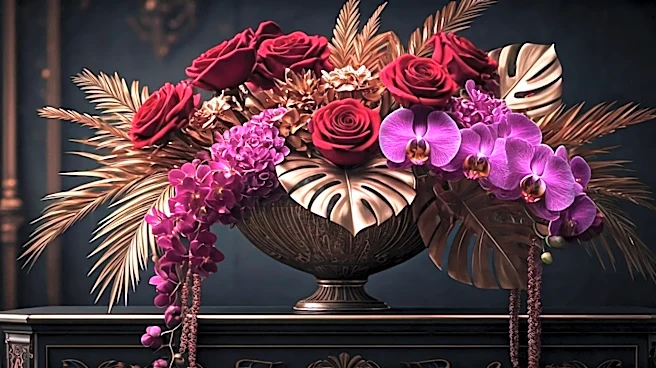
Here it is: the pinnacle of perceived floral wealth. Found inside the most exclusive enclosures, these aren’t just centerpieces; they are ecosystems. We’re talking about colossal, ceiling-suspended structures or 15-foot-tall arrangements that seem to defy physics. They are packed so densely with premium, often out-of-season flowers—orchids, cascading amaranthus, exotic foliage, and perfect peonies in October—that you can't see a single stem or piece of foam. The sheer mass and flawless execution are one thing, but the use of rare and imported blooms is the ultimate tell. This is a statement of power. It doesn’t just decorate a room; it dominates it. This is the floral arrangement that has its own security detail, and it looks every penny of it.