






Woody's Real Rival
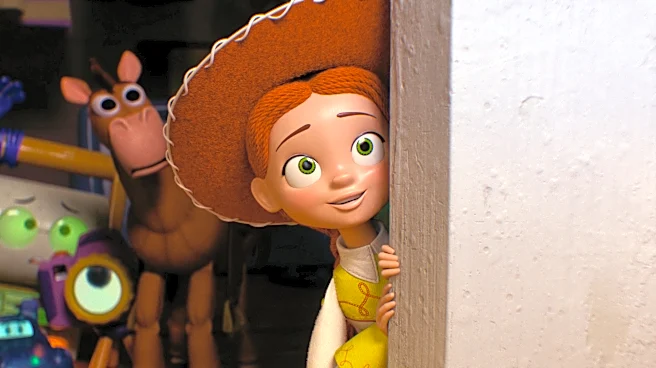
The central drama of 1995’s *Toy Story* was displacement. Woody, a simple pull-string cowboy, feared being replaced by Buzz Lightyear, a shiny marvel of plastic and electronics. It was a classic tale of old versus new. But in today’s world, Buzz Lightyear looks
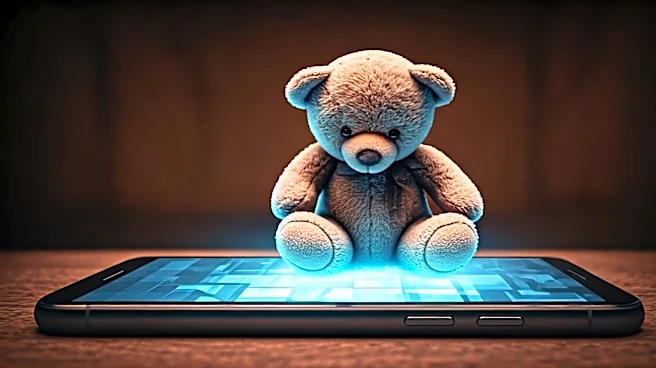
positively quaint. Woody’s real rival wouldn't be another toy; it would be a device. It would be the tablet offering an infinite scroll of YouTube Kids videos, the smartphone with a universe of instantly gratifying games, the console pulling kids into vast digital worlds. This is the reality of the attention economy, a landscape where every app, platform, and piece of content is engineered to capture and hold our focus for as long as possible. And it has fundamentally reshaped childhood. The competition for a child’s time is no longer a zero-sum game between a Slinky Dog and a Mr. Potato Head. It's a lopsided battle between a finite, physical object and an infinite, algorithmically-optimized digital stream.
The Changing Nature of Play
For generations, the rules of play were straightforward. Toys were props, and the child’s imagination was the engine. A cardboard box became a spaceship, a doll became a confidante, and a set of blocks became a sprawling city. The toy was a catalyst for a story the child created. This kind of unstructured, imaginative play is what child development experts have long championed for fostering creativity, problem-solving, and social skills.
Digital entertainment operates on a different principle. While many games and apps are wonderfully creative, the ecosystem they belong to is designed for consumption. The stories are often pre-written, the worlds are pre-built, and the rewards are pre-determined. The primary goal is not to spark a child’s inner world but to keep them engaged with the outer one presented on the screen. Play becomes less about creation and more about interaction within a closed system. A toy can be put down and forgotten, but a tablet sends notifications to remind you it’s there, waiting.
The Toy Industry Fights Back
The toy industry is far from oblivious. Walk down the aisles of any major toy store, and you'll see the frantic effort to stay relevant. The buzzword is “phygital”—a blend of physical and digital play. Classic LEGO sets now come with augmented reality apps that bring your creations to life on a phone. Board games have digital companions that run the rules and add sound effects. Dolls have QR codes that unlock online content.
It’s a defensive strategy, an attempt to co-opt the enemy's power. If you can’t beat the screen, join it. This has led to a boom in STEM-focused toys that promise to teach coding and robotics, turning playtime into a form of resume-building for the future. Yet, this raises its own question. Is a toy still a toy if its primary purpose is to tether a child back to a screen or prepare them for a future job market? Or does it become just another piece of hardware, sacrificing imaginative wonder for measurable utility?
The Fear of the Attic
Woody’s deepest fear was being abandoned and forgotten in a dusty box. This resonates so strongly because it taps into a universal human anxiety about obsolescence and losing one’s purpose. Today, that fear feels less like a children’s movie plot and more like a cultural diagnosis. Parents worry that a childhood spent staring at screens will leave kids unprepared for the nuances of real-world human interaction. We fret that the quiet, contemplative moments that allow for boredom—and the creativity it sparks—are being systematically eliminated.
In the *Toy Story* universe, the greatest value a toy has is its connection to a child. The joy is in being held, in being part of an imagined adventure, in bearing the scuffs and marks of being truly loved. What happens when that connection is outsourced to a digital interface? If Pixar were to make a *Toy Story* for Generation Alpha, the emotional stakes would be even higher. The enemy wouldn't be a jealous rival, but the profound loneliness of an object designed for touch in a world that increasingly prefers to swipe.