


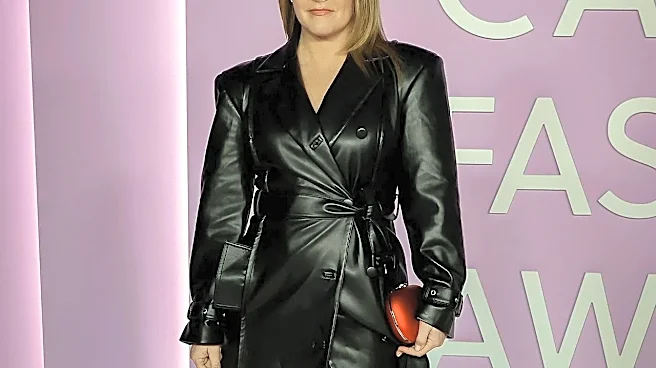



Often called the 'Oscars of American fashion,' the CFDA Fashion Awards are more than a glitzy party. They are a high-wire act, a calculated effort by the industry's governing body to answer one crucial question: How do you stay vital?
The Three Pillars of Prestige
For the Council of
Fashion Designers of America (CFDA), the annual awards ceremony is a primary tool for shaping the narrative of American fashion. The entire event is engineered to perform a delicate balancing act, built on three essential pillars: honoring legacy, rewarding contemporary relevance, and anointing the next generation. This isn't just about handing out trophies; it's a strategic showcase of the industry's past, present, and future. The nominees and honorees for the upcoming November 2nd awards reveal this blueprint in action. The list is a careful mix, placing established global icons alongside designers who are currently defining the cultural moment and those just starting to make their mark. This curated blend is how the CFDA reinforces its authority and tells the world what—and who—matters in American style.
Cementing the Canon with 'Legacy'
The 'legacy' component is the foundation. Awards like the Geoffrey Beene Lifetime Achievement Award serve to canonize designers and creators who have shaped the industry over decades. For the 2026 awards, this honor is going to photographers Inez van Lamsweerde and Vinoodh Matadin, recognizing their four-decade influence on fashion's visual language. Last year, it was designer Ralph Rucci. These are not trend-based decisions. They are acknowledgments of an enduring impact that provides the awards with institutional weight and a sense of history. Similarly, the main designer categories often feature titans like Ralph Lauren, Michael Kors, and Thom Browne—names that are synonymous with American fashion itself. Their consistent presence reinforces the idea of a stable, powerful American fashion establishment, even as the industry around it remains in constant flux.
Capturing the Zeitgeist with 'Relevance'
While legacy provides gravitas, 'relevance' delivers the buzz. This is where the CFDA recognizes designers who are at the peak of their contemporary influence. The American Womenswear, Menswear, and Accessory Designer of the Year categories are the key battlegrounds. Nominees for 2026 like Catherine Holstein of Khaite, Willy Chavarria, and Raul Lopez of Luar are designers who are driving the current conversation. Their work reflects what is happening in culture right now. The CFDA also uses special honors to tap into the zeitgeist. The Media Award, for instance, will go to Eva Chen of Meta for her work connecting fashion and technology, while the International Designer of the Year, Anthony Vaccarello of Saint Laurent, is being recognized for his sustained cultural relevance. These selections ensure the awards feel current and connected to the wider cultural landscape, not just an insular industry affair.
Investing in the Future with 'Newness'
The third pillar, 'newness,' is arguably the most critical for the industry's longterm health. The CFDA has several mechanisms for this, most notably the Google American Emerging Designer of the Year award. The 2026 nominees include names like Colleen Allen, Julian Louie for Aubero, and Zane Li for Lii—designers the CFDA is betting on to define the future. This category, along with the CFDA/Vogue Fashion Fund, acts as a crucial pipeline, providing emerging talent with not just recognition but often mentorship and financial support. By elevating new voices, the CFDA actively combats stagnation and demonstrates its commitment to renewal. It’s an investment, signaling to the wider world which new talents have the institution's official stamp of approval, often catapulting them to global recognition. This pipeline has helped launch the careers of past winners like Telfar Clemens, Christopher John Rogers, and Bode, proving its success.