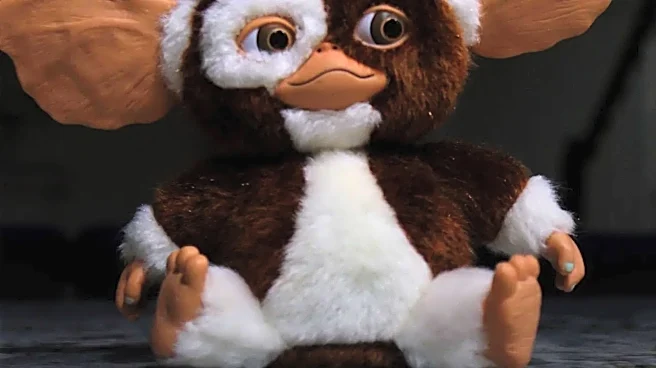









Gremlins: The Three Simple Commandments
Joe Dante’s 1984 classic Gremlins operates on a foundation of three beautifully simple, explicit rules for caring for a Mogwai: don't expose it to bright light, don't get it wet, and never, ever feed it after midnight. These aren't just suggestions; they
are the engine of the entire plot. Each broken rule has a clear, escalating consequence that the audience discovers alongside the protagonist, Billy Peltzer. A splash of water doesn't just make a mess; it causes the adorable Gizmo to painfully multiply, spawning mischievous, mean-spirited offspring. Feeding these new Mogwai after midnight doesn't just cause a stomachache; it triggers a grotesque metamorphosis into the reptilian, chaos-agent gremlins. The rules are a masterclass in narrative economy. They are easy to remember, visually demonstrable, and provide a perfect framework for suspense and horror. The film relies on the audience's understanding of this simple cause-and-effect to build tension, turning everyday objects like a glass of water or a late-night snack into ticking time bombs.
Krampus: The Vague Clause of Christmas Spirit
In contrast, Michael Dougherty's 2015 chiller Krampus operates on a more thematic, folkloric set of rules. There is no checklist handed to the family. Instead, the entire ordeal is triggered by a single, abstract event: a young boy, Max, losing his Christmas spirit. Humiliated by his dysfunctional family, he tears up his heartfelt letter to Santa, an act that extinguishes the last ember of festive belief in the house. This summons Krampus, the 'shadow of Saint Nicholas', an ancient demon who punishes not just naughtiness, but cynicism and lost hope. The 'rules' are therefore implicit. The consequence of familial strife and bitterness isn't a time-out; it's being besieged by demonic toys, sinister elves, and the horned beast himself. As Omi, the grandmother who survived her own encounter with Krampus explains, he comes for those who have forsaken the spirit of the holiday. This makes the film's logic one of atmospheric consequence rather than direct action-and-reaction.
Clarity of Plot vs. Richness of Theme
The effectiveness of each film's rules depends entirely on its goal. Gremlins aims for a tight, propulsive horror-comedy, and its clear-cut rules serve that purpose perfectly. The plot moves forward with the relentless logic of a Rube Goldberg machine of horror. You know exactly what mistake was made and what the terrifying result will be. The 'after midnight' rule, while famously ambiguous, works precisely because its vagueness allows for the plot's most crucial turn to feel like a tragic accident. It is a screenplay built on brilliantly simple 'if-then' statements. Krampus, on the other hand, is less concerned with plot mechanics and more with creating a modern fairy tale. The summoning of Krampus isn't a biological reaction; it’s a moral and spiritual judgment. The lack of clear rules makes the horror feel more ancient and inescapable. You can't avoid it by checking your watch; you avoid it by being a better person, which is a far more complex and dramatically interesting challenge for the characters. The horror is thematic, rooted in the idea that losing the best parts of ourselves invites something terrible to take their place.
The Verdict: Which Rulebook Reigns Supreme?
While Krampus tells a powerful, resonant story about the importance of hope and family, Gremlins ultimately uses its rules more effectively as a narrative device. The genius of the three Mogwai commandments lies in their simplicity and direct impact on the plot. They are not just background lore; they are the active agents of the story's chaos, creating a near-perfect chain of escalating stakes that is both thrilling and easy to follow. Each broken rule directly creates the next, bigger problem. Krampus's summoning is a powerful inciting incident, but once he arrives, the 'rules' become less defined, shifting to a more conventional survival-horror structure. Gremlins remains a film about its rules from start to finish. The final confrontation with Stripe is won by weaponizing a rule—using sunlight to destroy him. This narrative elegance, where the setup and payoff are so tightly woven, gives Gremlins the edge. Its rulebook isn't just a gimmick; it's the heart of a flawlessly constructed creature feature.