



It's Not Just What You Watch, but Who You Watch With
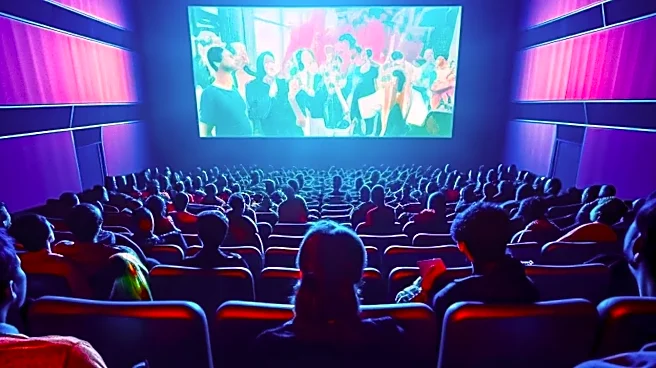
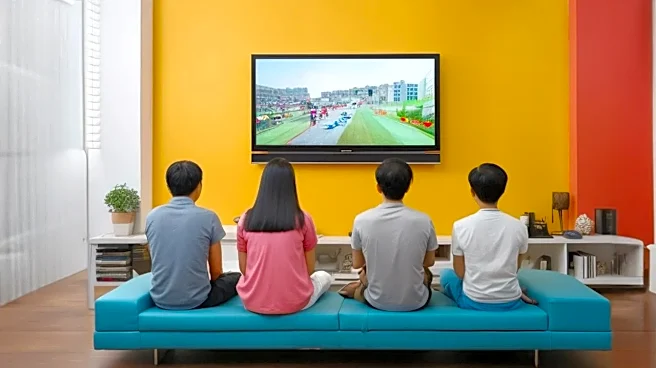
The secret ingredient in a powerful movie memory isn't just the film itself—it's the people in the seats next to you. Our brains are fundamentally social organs, wired to prioritize and more deeply encode social information. When you watch a movie with
friends, you're not just passively consuming a story; you're participating in a shared emotional event. Every gasp, laugh, and post-credit debate strengthens the memory. This process transforms a solitary activity into a collective one. Psychologists have found that while groups collaborating on a memory task might recall fewer individual facts than the sum of their parts, the act of discussing and sharing the experience creates a powerful, unified recollection. This shared narrative becomes a piece of your group's history, a touchstone you can return to for years. It’s the difference between saying “I saw a movie” and “We saw that movie.”
Your Brain on Blockbusters
Summer movies are engineered for impact. They are loud, fast, and emotionally charged—a perfect recipe for creating what neuroscientists call an “episodic memory.” These are the movie-like memories of autobiographical events, complete with context and feeling. An emotionally arousing experience, like the climactic battle in a superhero film, essentially tells your brain, “This is important. Save this.” Studies show that emotion strengthens memory by increasing cohesion across different brain networks, essentially getting the whole brain to work together to lock the moment in place. When you combine that cinematic adrenaline with the positive social cues of being with friends—the safety, the laughter, the connection—you have a potent mnemonic cocktail. The experience is tagged with both high emotion from the film and positive emotion from the social context, making it far stickier than a movie watched alone on a Tuesday night.
The Power of the Summer Ritual
Context is king when it comes to memory. And the context of a summer movie is about as powerful as it gets. Summer itself is a time of heightened emotion and transition, especially for younger people—no school, longer days, a sense of freedom. Memories made during these periods often feel more significant. The summer blockbuster is a cultural ritual built around this. It starts with weeks of trailers and hype, builds to an opening-weekend pilgrimage to a freezing-cold theater, and ends with a week of dissecting every plot point. This entire process frames the movie not just as a piece of entertainment, but as an event. The sensory details—the smell of popcorn, the sticky floor, the booming sound system—all serve as powerful retrieval cues. Years later, one of these sensory details can trigger the entire memory, bringing you right back to that specific time and place.
A Touchstone for Who We Were
Ultimately, these vivid movie memories become more than just recollections; they become vessels for nostalgia. Nostalgia is a complex, self-referential emotion that involves activity in the brain’s memory, self-reflection, and reward systems. When you remember seeing a blockbuster a decade ago, you're not just remembering the movie. You're remembering the friend you’ve since lost touch with, the city you used to live in, the person you were at that moment. The movie becomes a thumbprint left behind by a specific era of your life. In a world that often feels chaotic, our brains find comfort in the predictable narratives of our favorite films. They act as anchors to our past, allowing us a moment to revisit not just a great story, but a younger, more hopeful version of ourselves.