





Pilot Episode: The Declaration
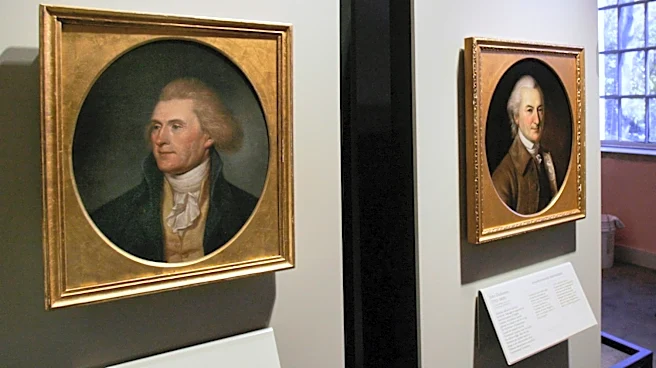
The first season's showrunner was John Adams, a brilliant but famously “obnoxious, suspected, and unpopular” producer who knew he couldn't write the script himself. Instead, he tapped his quiet, lanky Virginia colleague, Thomas Jefferson, to be the lead
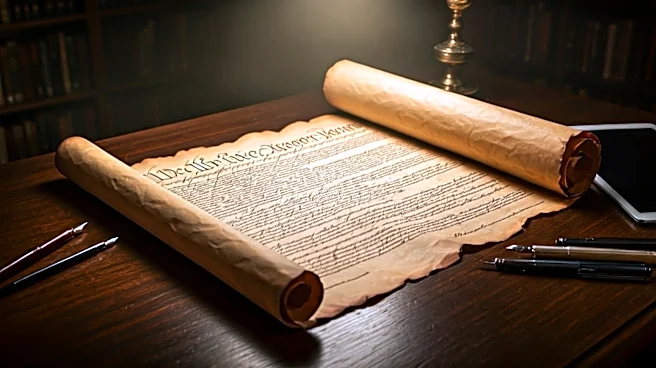
writer, arguing that Jefferson could write ten times better. The core writing team was a study in contrasts. Jefferson, the reserved intellectual, produced a soaring first draft. Adams, ever the pugnacious executive, served as its primary champion on the floor of Congress. Then there was Benjamin Franklin, the 70-year-old seasoned veteran who dropped in to provide the most crucial edit. Jefferson had originally written, “We hold these truths to be sacred and undeniable.” Franklin, ever the pragmatist, crossed it out and scribbled “self-evident.” This small change shifted the entire philosophical basis from religious faith to Enlightenment reason, a move so slick it’s still marveled at today. The final cut, however, was a group effort; Congress slashed nearly a quarter of Jefferson's original text, including a passionate condemnation of the slave trade, leaving Jefferson quite annoyed.
Reboot: The Constitutional Convention
By 1787, the original series—the Articles of Confederation—had been canceled for low ratings. It was time for a reboot, gathering a new, expanded cast in Philadelphia for a summer-long writers’ summit. The room was tense and the stakes were higher. Arguments were constant. Big states and small states bickered over representation until the “Great Compromise” created a bicameral Congress. The most amoral and mechanical calculation was the infamous “Three-Fifths Compromise,” a brutally pragmatic deal to count enslaved persons for representation. The convention floor was dominated by big personalities. James Madison, the meticulous “Father of the Constitution,” was the new showrunner, but he wasn’t the only voice. Gouverneur Morris, an eccentric New Yorker with a wooden leg and a sharp wit, spoke more than any other delegate—173 times. He was a fierce opponent of slavery, calling it a “nefarious institution,” but also an aristocrat who wasn't shy about his views. Morris was ultimately tasked with polishing the final script, and it is his pen that gave us the iconic opening, “We the People of the United States,” a subtle but powerful change from “We the People of the States.”
Spinoff Series: The Federalist Papers
With the Constitution drafted, it was time for the marketing campaign. To sell the new government to a skeptical public, Alexander Hamilton initiated a spinoff project: a series of essays called The Federalist Papers. He recruited James Madison and John Jay to help him write under the collective pseudonym “Publius.” What followed was a furious burst of content creation. Hamilton and Madison, who would later become bitter political rivals, entered into a temporary and purely functional collaboration. They were not close friends, but they shared a common goal. Working at a breakneck pace to meet newspaper deadlines, they churned out 85 essays arguing for ratification. Their differing ideologies were submerged under a single, unified voice, so much so that for years, historians debated who wrote which specific essays. This temporary alliance of frenemies was a masterclass in putting a project ahead of personal politics, a creative partnership that would soon dissolve into one of the fiercest rivalries in American history.