


An Invitation to Be Outrageous
Unlike the stately glamour of the Oscars or the high-fashion costume party of the Met Gala, the VMAs have a different DNA. From its inception in 1984, the event has positioned itself as the rebellious younger sibling of the awards circuit. It’s a place
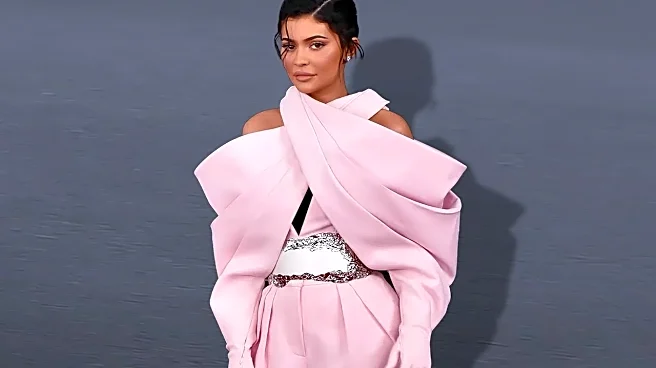
for musicians to flex their creativity and court controversy, and the red carpet is not just a walkway—it's the first stage of the night. The looks are intentionally provocative and designed for spectacle. When an artist arrives in a dress made of meat or an outfit constructed from little more than beads and attitude, they aren't just wearing clothes; they're throwing down a gauntlet. The unspoken agreement is that subdued elegance is the wrong answer. This inherent wildness is an open invitation for a strong public reaction.
A History of Shock and Awe
You can't understand the modern VMA fashion free-for-all without looking at its history. The tone was set early and consistently. Think of Rose McGowan’s infamous beaded dress in 1998, a look she later described as a statement against shame. Or Lil' Kim's one-shouldered purple jumpsuit with a matching pasty in 1999, a moment so iconic that Diana Ross playfully acknowledged it on stage. And, of course, Lady Gaga’s 2010 meat dress, which was a political statement against the military's 'Don't Ask, Don't Tell' policy. These moments aren’t just memorable; they are foundational. They established the VMAs as a venue where fashion is a form of performance art, protest, and pure, unadulterated shock value. Each new generation of artists is practically expected to either top the legends or create their own jaw-dropping moment.
The Social Media Coliseum
While VMA fashion has always been audacious, the phenomenon of everyone being a critic is relatively new, fueled by the rise of social media. Platforms like Twitter, Instagram, and TikTok have turned a passive viewing experience into an interactive, real-time sport. The commentary is no longer limited to a few television hosts; it's a massive, collective conversation happening in memes, threads, and video takedowns. Sharing a hot take on an outfit is a form of participation. It's a way to be part of the event, to bond with others over a shared love (or hate) for a look, and to flex your own comedic and critical muscles. The apathetic response is the only one that doesn't work; the outfits are designed to be talked about, and social media provides the global forum to do just that.
Low Stakes, High Entertainment
There's also a simple psychological reason why it feels so good to judge VMA fashion: the stakes are incredibly low. Critiquing a celebrity's outfit is a harmless form of judgment. It’s not an attack on their talent or their character, but on a temporary, often borrowed, and deliberately over-the-top aesthetic choice. This creates a sense of what some call 'schadenfreude'—a small, guilty pleasure in seeing a 'failure' from someone who is otherwise idealized. It’s liberating to see that even the most famous people can make a bizarre style choice. The criticism isn’t truly mean-spirited for most; it's a form of entertainment. In a world of heavy news cycles and complex issues, the simple, binary question of 'love it or hate it?' offers a welcome and fun escape.