
The Contagion of No Confidence
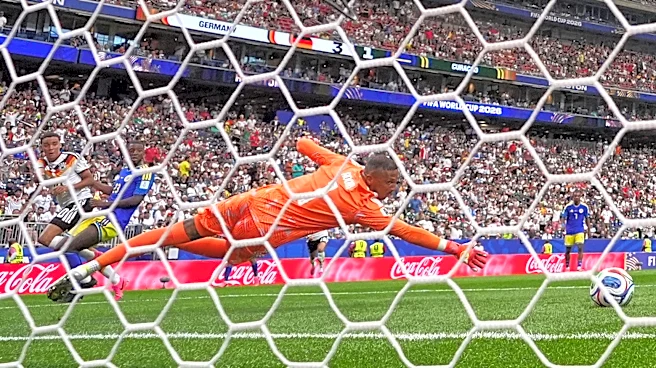
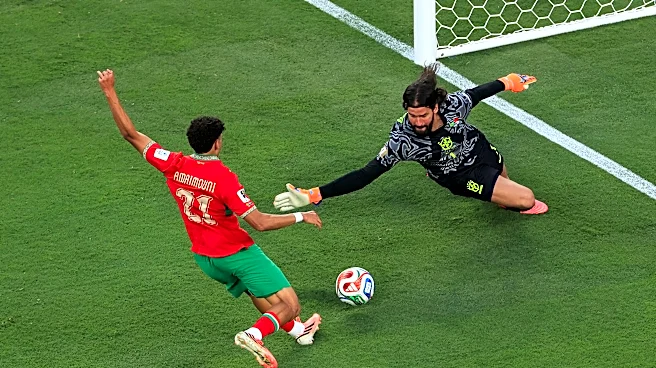
First, let’s get one thing straight: a ‘keeper problem’ isn't just about a guy who can't make saves. It's far more insidious. It’s the goalkeeper who looks shaky on crosses, who hesitates to come off his
line, or whose distribution is more of a liability than a weapon. This uncertainty doesn't stay in the six-yard box; it spreads through the team like a virus. Defenders who don't trust their keeper start doing things they shouldn't. They drop deeper to protect the goal, ceding valuable space to the opposition. They second-guess letting a ball run through to the goalie, leading to clumsy clearances and panicked decisions. Instead of focusing on their own jobs, they’re constantly looking over their shoulder, wondering if their last line of defense is going to hold up. This hesitation creates cracks in the defensive foundation, and the best teams in the world are built to exploit exactly that.
More Than Just a Shot-Stopper
The role of the goalkeeper has evolved dramatically. A generation ago, the job was simple: keep the ball out of the net. Today, a top-tier keeper is the first line of attack. They are expected to be calm and precise with the ball at their feet, capable of breaking an opponent's high press with a single, well-placed pass. Think of Alisson Becker at Liverpool or Ederson at Manchester City—their ability to launch counter-attacks is a core part of their team's tactical identity. A contender with a keeper who is a liability in possession is essentially playing with a hand tied behind its back. Opponents know they can press high and force a mistake. Every back-pass becomes a moment of anxiety for the fans and, more importantly, for the players on the field. The team can’t build from the back with confidence, forcing them into hopeful long balls that surrender possession and invite more pressure. In a tight game, that one extra turnover can be the difference.
The Unforgiving Spotlight of Knockout Football
In a 38-game league season, a bad goalkeeping performance can be absorbed. There’s always next week. In a World Cup, Copa América, or Champions League knockout stage, there is no next week. The margins are razor-thin, and the pressure is immense. This is where the psychological toll of a keeper problem truly manifests. One fumbled save, one misjudged cross, one disastrous pass—it’s not just a goal conceded; it’s a moment that can define a legacy and send a nation home. We all remember Robert Green’s infamous error for England against the USA in the 2010 World Cup. England was a team loaded with talent, but that single moment set a tone of fragility they never shook. The intense scrutiny means every action is magnified. A shaky keeper doesn’t just face the opposition; he faces the weight of his entire country’s expectations, knowing that one slip-up will be replayed for eternity.
The Modern American Example
For U.S. soccer fans, this isn't just a theoretical discussion. The USMNT has spent years blessed with legendary keepers like Brad Friedel, Kasey Keller, and Tim Howard. They were often the team's strongest position. Today, the situation is more complex. While Matt Turner has proven himself a phenomenal shot-stopper, especially in penalty shootouts, the debate often circles back to his comfort and consistency with the ball at his feet—a key requirement for manager Gregg Berhalter’s system. This isn't to say Turner is a ‘problem,’ but it highlights the tightrope contenders walk. Every team is searching for the complete package: a keeper who is an elite shot-stopper, commands his box, and can play like an eleventh outfield player. Finding that player is difficult. Failing to find one, or having to rely on one who is merely ‘good enough,’ leaves a vulnerability that every other top contender will look to expose when the stakes are highest.