


Born from Resilience, Not Hollywood
You can’t understand Tribeca without understanding its origin story. Unlike festivals born to celebrate the art form or drive market sales, Tribeca was founded for a different reason: to heal a city. Created by Robert De Niro, Jane Rosenthal, and Craig
Hatkoff in 2002, it was a direct response to the September 11th attacks. Its mission was to revitalize Lower Manhattan by bringing people, art, and commerce back to a neighborhood hollowed out by tragedy. That civic-minded DNA sets it apart. While Cannes projects Riviera glamour and Sundance offers a cozy, industry-focused retreat in the mountains, Tribeca’s energy is rooted in community and recovery. It began as an act of defiance and a celebration of New York’s enduring spirit, and that fundamentally shapes the experience. It’s a festival that feels less like an industry insider event and more like a city-wide cultural happening with a purpose.
More Than Just Movies
New York is a chaotic, glorious mashup of industries and cultures, and Tribeca reflects that. While its name still centers on film, the event has evolved into a sprawling celebration of storytelling in all its modern forms. Walk into a Tribeca venue and you’re just as likely to find a video game premiere, a panel on audio storytelling, a virtual reality installation, or the season finale of a hit TV show as you are an indie film screening. This multi-platform approach makes it feel distinctly contemporary and distinctly New York. Other festivals can be purist, focusing almost exclusively on cinema. Tribeca’s approach acknowledges that a great story can be told through a controller, headphones, or a VR headset. This embrace of intersecting media mirrors the city itself, where the worlds of tech, art, music, and film constantly collide and collaborate on the same city blocks.
The City Is the Campus
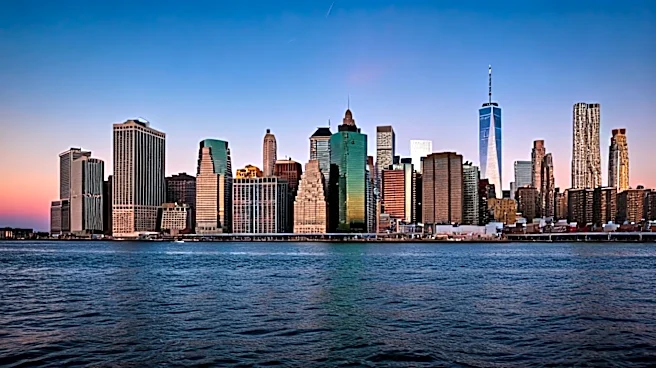
Geography is destiny for a film festival. Sundance’s magic comes from being cloistered in Park City, forcing industry players into the same few bars and shuttle buses. Cannes is all about the spectacle of the Croisette, a promenade of high fashion and high finance. Tribeca’s campus, however, is downtown Manhattan itself. The screenings, talks, and parties are woven into the fabric of existing neighborhoods. You might watch a documentary in a state-of-the-art theater and then walk out onto a bustling street, grabbing a slice of pizza next to the film’s director. This integration with the city makes the festival feel incredibly accessible. It’s not cordoned off in a special zone; it’s happening right there on the sidewalk. This creates a democratic energy where festival-goers, locals, and filmmakers all share the same space, turning the city into a living, breathing backdrop for the event.
A Different Kind of Star Power
Of course, there are celebrities at Tribeca. But the flavor of fame feels different. It’s less about pristine, untouchable Hollywood royalty descending from on high and more about creators and artists who are part of the city's creative class. With Robert De Niro as a founder and a fixture, the festival has an authentic, New York-centric gravitational pull. You see actors, directors, and musicians who live in the city or have deep ties to it. The red carpets feel more like a neighborhood block party than a high-stakes Oscar precursor. The focus is often on the craft, with an extensive lineup of “Tribeca Talks” featuring conversations between legendary artists. The star power serves the festival’s purpose—to inspire and engage—rather than the other way around. It’s the energy of people who are there because they are passionate about the work and the city that nurtures it.