





A Burden of Peace, Not a Lack of Will
The traditional weak king is defined by what he fails to do. He doesn’t confront his enemies, secure his lineage, or make hard choices. On the surface, Viserys Targaryen checks these boxes. He placates feuding lords, avoids conflict, and seems willfully
blind to the vipers nesting in his own court. But Considine’s performance reframed this inaction not as a failure of nerve, but as a deliberate, if doomed, pursuit of peace. Viserys isn’t a coward; he’s a man haunted by a prophetic dream of unity, desperately trying to hold his family and kingdom together with kindness in a world that only respects fire and blood. His “weakness” is an allergy to the brutality that defines his house. He remembers the stability of the long reign of his predecessor, Jaehaerys, and sees it as a legacy to be preserved, not a foundation for further conquest. He is a man trying to steer a warship as if it were a pleasure barge, a tragic flaw that stems from a fundamentally decent, but misplaced, core.
The King as a Father First
Weak kings in fiction are often as ineffective at home as they are on the throne. They are distant, cruel, or simply pathetic fathers. Considine’s Viserys was the opposite. His defining characteristic, the engine for all his political missteps, was his overwhelming love for his daughter, Rhaenyra. Every decision, from naming her heir to defending her against accusations, flowed from a place of deep, almost suffocating affection. This fundamentally changed the audience’s relationship with him. We weren't watching a monarch fail; we were watching a father try, and fail, to protect his child from the vicious world he rules. This emotional anchor gave his political failings a sense of tragic inevitability. His inability to control his scheming brother, Daemon, or his ambitious second wife, Alicent, felt less like incompetence and more like the heartbreaking reality of a man torn between his duties as king and his devotion as a father.
The Visceral Decay of the Body Politic
Perhaps the most striking element of the performance was its sheer physicality. Over the course of the season, Considine masterfully portrayed Viserys’s slow, agonizing decay from a mysterious ailment—a fictional leprosy that rotted him from the outside in. This wasn't just a convenient metaphor for the rot in the kingdom; it was a harrowing, episode-by-episode depiction of suffering. We saw a man literally falling apart while trying to hold his realm together. Considine imbued this decline with a quiet dignity. The pained gasps, the labored movements, and the visible erosion of his body made his continued presence a daily act of courage. He wasn't withering in a forgotten corner of the castle; he was enduring, showing up to council meetings and feasts long after his body had quit on him. This physical suffering earned him not our scorn, but our pity and, ultimately, our respect.
One Final, Agonizing Walk to the Throne
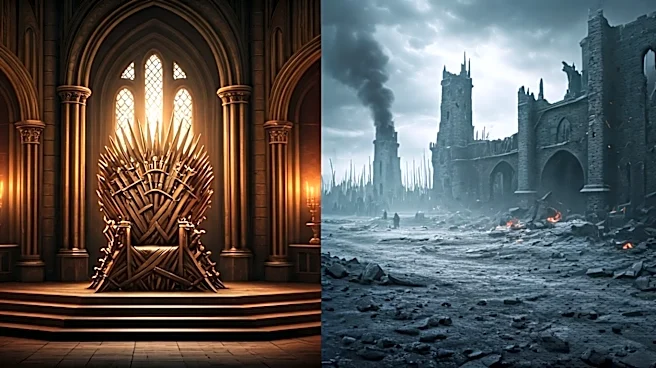
All of these elements culminated in one of the great scenes in modern television: Viserys’s final walk to the Iron Throne. Gaunt, masked, and barely able to stand, he shuffled through the court to defend Rhaenyra’s claim one last time. In that moment, he was no longer a weak king. He was a father powered by sheer force of will, making a final, monumental effort for the daughter he loved. When his crown slipped and his brother Daemon gently replaced it, the scene cemented the true nature of his reign. He had failed to inspire fear, but he had, in his own flawed way, inspired love and loyalty from those who mattered most. It was the ultimate subversion of the archetype. The weak king’s most powerful moment came not through a sword or a decree, but through a painful, staggering walk—an act of profound and undeniable strength.