








Born of Pure Intellect
To understand Athena, you have to start with her truly bizarre birth. The story goes that Zeus, king of the gods, swallowed his pregnant wife Metis (goddess of wisdom) after a prophecy foretold their child would overthrow him. He was soon struck by a splitting
headache, and when the smith-god Hephaestus cracked open his skull with an axe, out sprang Athena—fully grown, fully armed, and ready for action. Unlike other gods born of messy earthly affairs, Athena was born of pure thought. This isn't just a wild story; it’s a metaphor for the perfect strategy. An 'Athenian' plan is one that arrives fully formed, a product of pure intellect and foresight, not a series of panicked reactions. It’s coherent and complete from its inception because it was conceived in a space of total clarity.
The Goddess of Smart Warfare
The Greeks had two war gods. One was Ares, the embodiment of bloodlust, rage, and the chaotic violence of battle. The other was Athena. While Ares represented the frenzy of fighting, Athena personified the intellectual and civilized side of war. She is the goddess of strategy, of winning through superior planning, discipline, and skill rather than brute force. This distinction is crucial. An Ares-led strategy is all sound and fury. An Athena-led strategy is about understanding the terrain, the objective, and the psychology of the opponent to secure victory, often before the first spear is thrown. Her wisdom wasn't just about knowing facts; it was about the practical application of knowledge under pressure, making her counsel invaluable to heroes.
Patron of a Practical Craft
Beyond war and wisdom, Athena was also the goddess of handicrafts, particularly weaving. This might seem like an odd addition to her portfolio, but it’s key to understanding her strategic genius. A good strategy, like a well-woven tapestry, is a thing of intricate, interlocking parts. Every thread has a purpose, contributing to the strength and coherence of the final design. Weaving requires patience, attention to detail, and a clear vision of the finished product. Athena’s patronage of this craft reinforces the idea that a 'divine' strategy isn't some abstract, unknowable force. It's something that is built, piece by piece, with skill and purpose. It makes the grand plan tangible, visible, and legible to those who must help create it.
The Mentor to Heroes
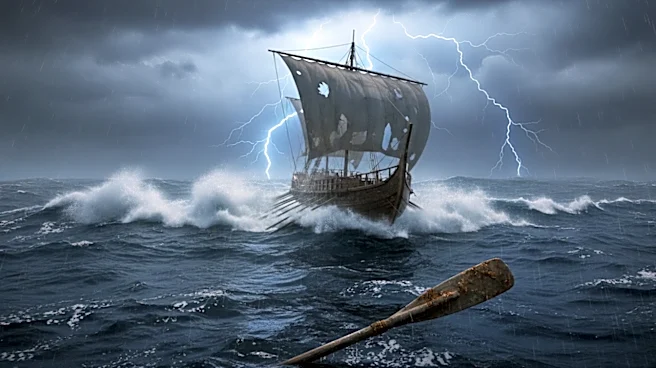
Perhaps the best illustration of Athena’s strategic mind is her role as a mentor, most famously to the hero Odysseus. Throughout his long, perilous journey home in The Odyssey, Athena is his constant guide. But she rarely solves his problems for him. Instead of handing him magical solutions, she offers counsel, changes his appearance with disguises, and gives him the critical information he needs to navigate his own challenges. She empowers him to see the path forward himself. This is the final, essential piece of a legible strategy: it must be communicable. A plan is only as good as the ability of those on the ground to understand and execute it. Athena’s method is to make the hero smarter, not to make the hero’s journey easier, ensuring the plan can live and breathe through the actions of others.