




A World Without Reference Points
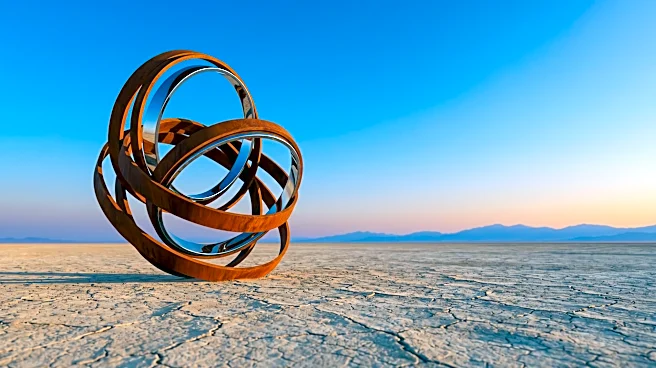
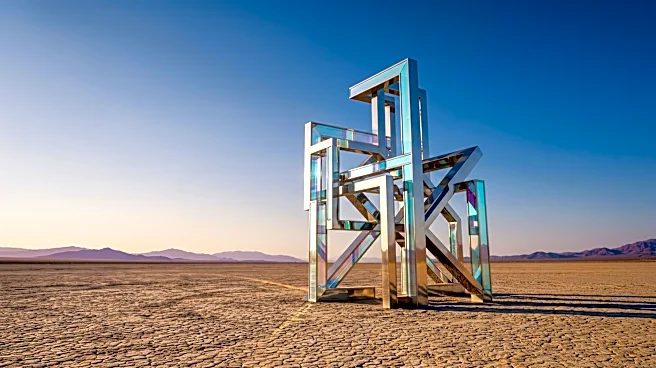
Before the art cars and sound systems arrive, the playa is a fundamentally alien environment. It's a massive, almost perfectly flat, ancient lakebed. For miles in every direction, there are few, if any, natural features. No trees, no buildings, no hills.
This lack of reference points is profoundly disorienting. Our brains are built to understand the world through relational cues—that building is far away, that tree is close. By removing these cues, the desert forces the brain to work much harder. Psychologists refer to the feeling this can inspire as 'awe'—an emotion triggered by encounters with vastness that challenge our existing mental frameworks. This initial sensory deprivation is the crucial first step; it primes the mind for the overwhelming sensory input to come, creating a state where everyday perception is up for grabs.
Where Dust and Neon Bend the Light
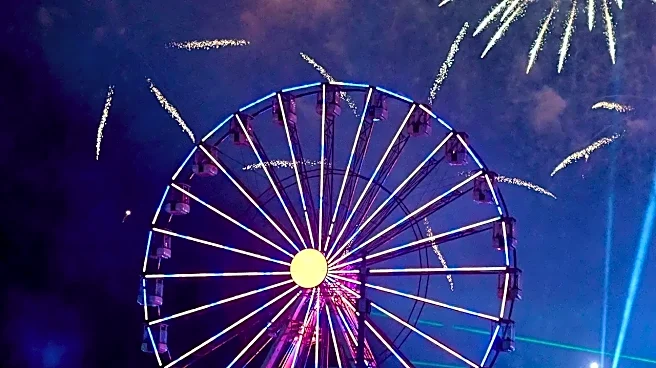
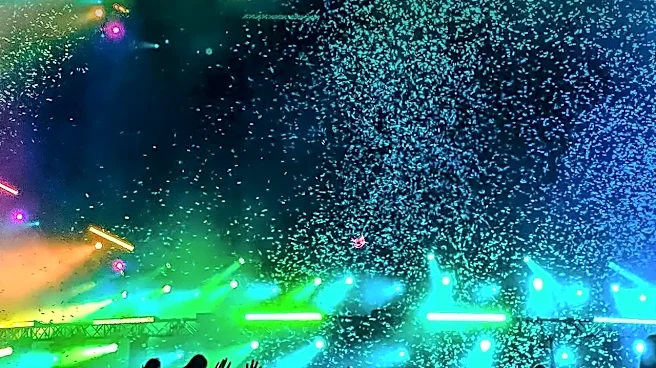
During the day, the sun is relentless, bleaching the landscape and creating heat shimmers that make the horizon dance. But the defining feature is the dust. This extremely fine, alkaline powder is constantly airborne, acting as a natural diffusion filter. It softens shadows, scatters sunlight, and creates a perpetual haze that makes distant objects appear ghostly and indistinct. At night, this same dust becomes a canvas. The near-total darkness is punctuated by millions of LEDs on art installations, mutant vehicles, and participants themselves. The light doesn't just illuminate; it hangs in the dusty air, creating glowing auras and visible beams. This effect transforms light from a tool for seeing into a physical presence, a tangible medium that you move through. It’s a world where light has volume and color has texture, overwhelming the visual cortex with novel stimuli.
Giants in a Land of Nothing
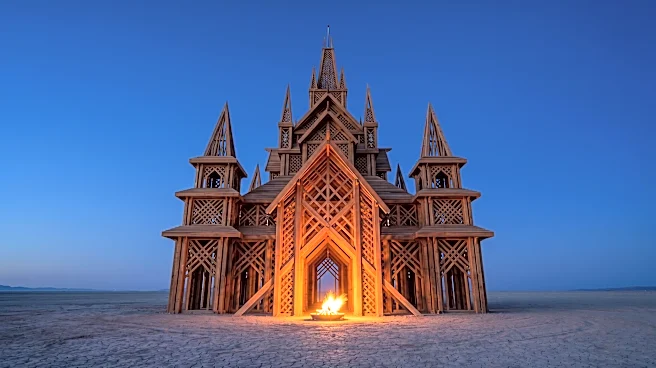
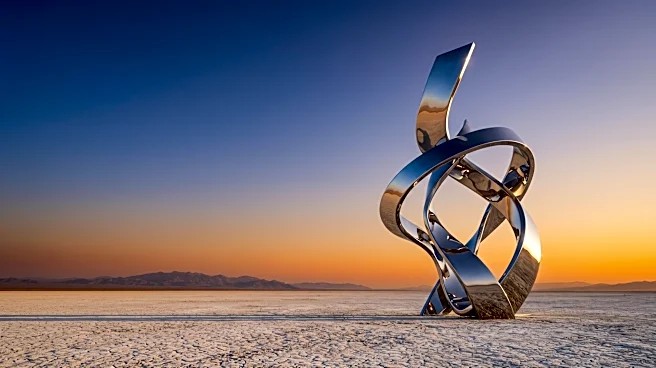
The loss of reference points has its most dramatic effect on our perception of scale. On the playa, it’s nearly impossible to judge distance or size accurately. A sculpture that appears to be a small object a few hundred yards away might actually be a six-story-tall installation over a mile across the desert. This phenomenon, known as distorted spatial perception, is a direct result of the featureless ground plane. Without the usual visual cues of perspective, the brain simply can't compute the data. Artists at Burning Man exploit this intentionally, creating massive structures that would be inconceivable in a normal city environment. Experiencing a 55-foot-tall sculpture in a vast, open space creates a feeling of self-diminishment that researchers associate with profound awe. You feel small not in a negative way, but as part of something much, much larger than yourself, a shift in perspective that many find transformative.
The Immersive, Directionless Sound
The soundscape of Burning Man is a unique and challenging auditory environment. Unlike a city where buildings block and reflect sound, the open playa allows sound to travel in all directions with little to absorb it. The result is a constant, low-frequency hum punctuated by the thumping bass of distant sound camps and the eclectic music of passing art cars. This creates an immersive but directionless wall of sound. Your brain, which is wired to identify the source and direction of noise as a survival mechanism, is thrown into overdrive. It can become difficult to have a simple conversation as you’re constantly trying to filter a cacophony of inputs. This sensory overload can be exhausting, but it also contributes to the feeling of being inside a completely different reality. The usual rules of auditory focus don't apply, forcing a more passive, absorptive mode of hearing that dissolves the boundary between you and the environment.