





The Agony That Forges an Identity
In sports, winning is the goal, but losing is often what creates the most powerful stories. A devastating loss provides a narrative starting point, a collective trauma that can unite a team, a fanbase, and even an entire nation. The shared experience
of 'almost' becomes a foundational myth. There is no greater example than Brazil's 1950 World Cup loss to Uruguay. In a match they only needed to draw, played in their brand new Maracanã stadium in front of nearly 200,000 expectant fans, Brazil lost 2-1. The event was so traumatic it was given its own name: the "Maracanazo," or "the Maracanã blow." The loss was seen as a national tragedy that fractured the country's psyche. In its wake, Brazil even changed its national team's kit, abandoning the white shirts worn during the defeat for the iconic yellow jerseys we know today, symbolizing a new start. That single loss became the ghost that haunted generations of Brazilian players, fueling a national obsession to reclaim their honor on the world stage, which they finally did by winning their first World Cup eight years later.
The Beautiful Losers Who Won the Future
Sometimes, a team's legacy isn't defined by the trophy they lifted, but by the one that got away. The Netherlands national team of the 1974 World Cup are the ultimate case study. Led by the legendary Johan Cruyff, the Dutch introduced the world to a revolutionary tactical philosophy called "Total Football," a fluid system where players seamlessly interchanged positions. They were mesmerizing, a blur of orange-clad movement that overwhelmed opponents. They reached the final against hosts West Germany, took an early lead, and then lost 2-1. They lost the World Cup final again in 1978. Yet, despite having no World Cup trophy to their name, the '74 team is remembered more fondly and has had a more lasting impact on the sport than many champions. Their heartbreaking loss cemented their legend as football's great artists, proving that how you play can leave a more profound legacy than the result itself. The ideas of Total Football were carried to clubs like Barcelona and have influenced generations of coaches, including Pep Guardiola.
The Hero’s Redemption Arc
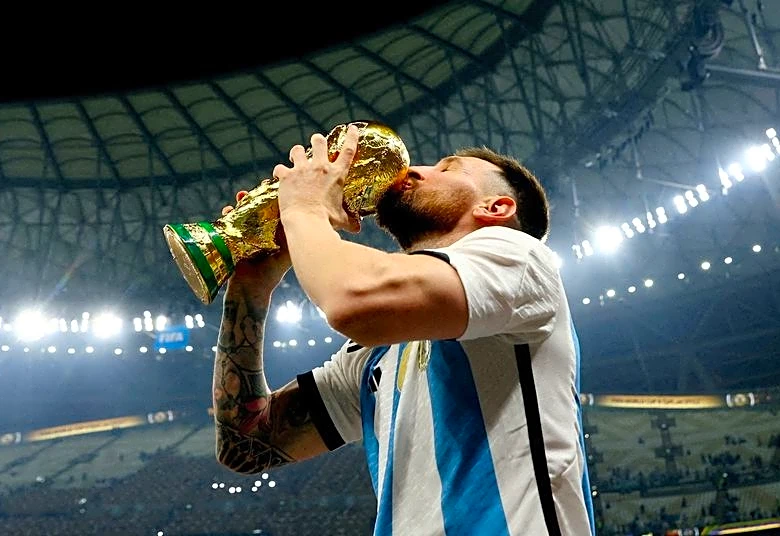
For an individual athlete, a crushing defeat on the world’s biggest stage can become the defining chapter of their story, setting up an epic quest for redemption. For years, this was the story of Lionel Messi. Widely considered one of the greatest players of all time, the one prize that eluded him was the World Cup. The closest he came was in 2014, when he dragged Argentina to the final in Brazil, only to lose a tense, hard-fought match 1-0 to Germany. For many, that loss cemented Messi's fate as a hero destined to fall just short with his national team, following other final defeats in the Copa América. But that failure provided the narrative tension. It made his eventual triumph in 2022, at the age of 35, all the more powerful. The years of struggle and the sting of past defeats provided the emotional context that transformed his victory in Qatar from a simple win into the culmination of a life's work, completing his personal legend.
Overcoming the National Curse
Sometimes the heartbreak is not a single event but a recurring nightmare. For decades, the English national team was haunted by the penalty shootout. It began at the 1990 World Cup, where they lost a semi-final to West Germany on penalties, a moment of high drama that set a painful precedent. Over the next 28 years, England would be knocked out of major tournaments on penalties six times, losing in 1996, 1998, 2004, 2006, and 2012. The shootout became a symbol of national failure, a psychological hurdle the team and country seemingly couldn't overcome. This string of painful exits became part of the team's identity. When they finally broke the World Cup curse by winning a shootout against Colombia in 2018, it felt like more than just a victory in a single match; it was a moment of national catharsis, overcoming a demon that had tormented them for a generation.