






More Than Just Singing Along
Call-and-response is one of music’s oldest and most powerful tools. In its simplest form, it’s a musical conversation where one phrase (the "call") is answered by another (the "response"). This technique has deep roots in African oral traditions, where it was
a form of democratic participation in gatherings and rituals. It traveled to the Americas and became a foundational element of work songs, spirituals, gospel, blues, and eventually, almost every genre of popular music, including rock, hip-hop, and pop. It's different from a simple singalong. A singalong is the crowd joining in on a chorus they already know. Call-and-response is interactive; the artist actively cues the audience, inviting them to become part of the song's structure in real-time. It’s the artist shouting, "When I say, 'Hey,' you say, 'Ho!'" and a sea of thousands of people roaring back on cue.
The Festival's Unofficial Headliners
At a massive, genre-spanning event like the iHeartRadio Music Festival in Las Vegas, call-and-response is the glue that holds diverse sets together. Artists like Snoop Dogg and Cardi B are masters of this, using their iconic ad-libs and hooks to command crowd participation. You can see it when a performer like Ciara, known for high-energy dance numbers, pauses to let the audience chant a lyric back, turning a complex production into an intimate exchange. Even rock bands on the bill, like Muse or Weezer, use instrumental riffs or anthemic choruses as a call, prompting a vocal response from the audience that becomes as loud as the on-stage amplifiers. These moments become the show's highlights, proving that the most memorable instrument at the festival is often the collective voice of 20,000 fans.
The Psychology of Participation
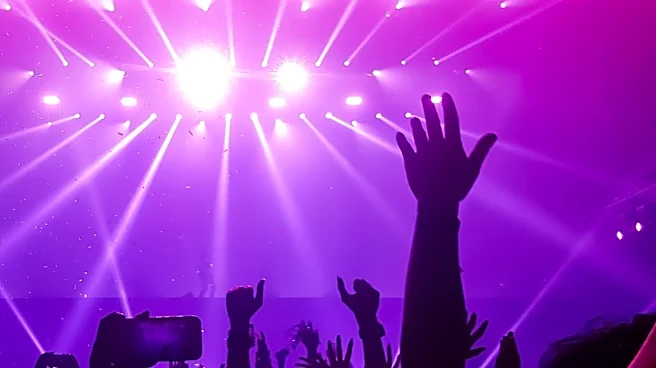
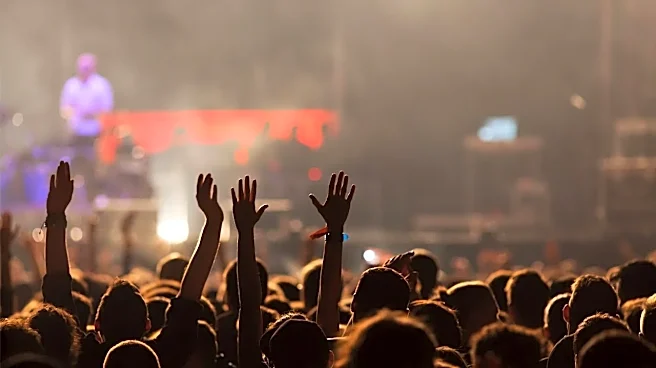
So why does it feel so good to shout a lyric back at a stage? It’s about more than just making noise. Psychologically, participating in a call-and-response triggers a profound sense of community and belonging. When thousands of people act in unison, it creates a feeling of what sociologists call "collective effervescence"—a shared emotional energy that makes individuals feel connected to something larger than themselves. This synchronized activity can release hormones like oxytocin and dopamine, which are associated with bonding, trust, and pleasure. You’re no longer a passive observer; you are an active participant. The barrier between fan and artist dissolves, and for a few seconds, everyone in the arena is part of the band. That shared experience fosters a powerful emotional connection, both to the music and to the people around you.
An Enduring Live Music Ritual
This technique isn't new, but it remains one of the most effective tools in a performer's arsenal. Think of Freddie Mercury conducting the Wembley Stadium crowd at Live Aid in 1985—a masterclass in call-and-response that needed no words. Look at how Iron Maiden's instrumental intro to "Fear of the Dark" was turned into an epic chant by a Brazilian audience, a tradition that fans continue to this day. It’s a timeless ritual that artists across generations use to measure and amplify the room's energy. At its core, call-and-response is a testament to the collaborative spirit of live music. It’s a dynamic conversation that can't be replicated on a studio recording or a livestream.