
The Climate Demands It
Let’s get the obvious out of the way first. The Monaco Grand Prix takes place in late May on the sun-drenched French Riviera. It’s warm, it can be humid, and you’re likely spending hours outdoors, whether
perched on a balcony overlooking the track or navigating the crowded streets of Monte Carlo. In this environment, a traditional wool suit is a sentence to a sweaty, uncomfortable day. Even fine cotton can feel stifling when the sun is at its peak. Enter linen. Derived from the flax plant, linen is one of humanity’s oldest textiles for a reason. Its fibers are hollow, allowing air to circulate freely, making it exceptionally breathable. It’s also highly absorbent and dries quickly, wicking moisture away from the skin. Choosing linen in Monaco isn’t just a style choice; it's a practical necessity. It’s the sartorial equivalent of bringing a bottle of water—a fundamental act of self-preservation that also happens to look incredibly chic.
The Psychology of the Wrinkle
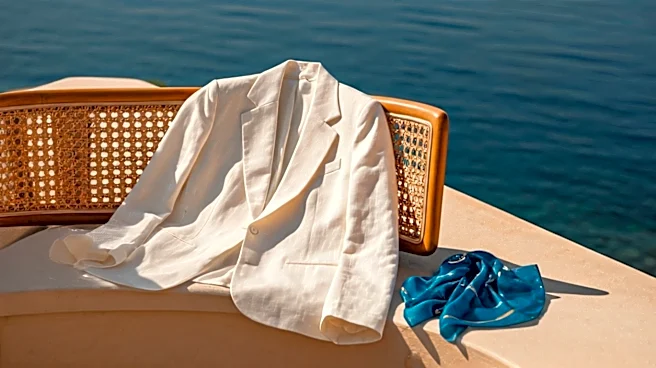
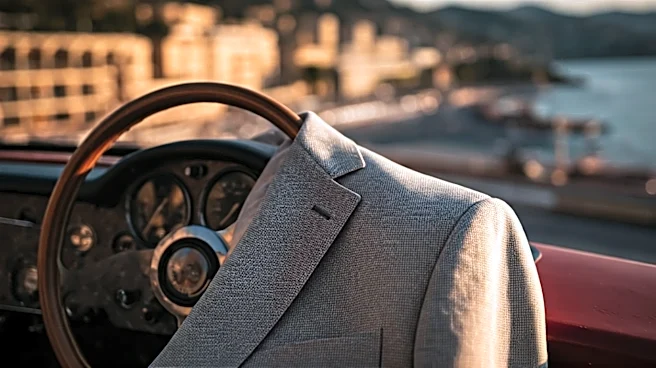
In almost any other context, a wrinkled suit suggests you slept on a park bench. But in the leisurely world of the Mediterranean coast, linen’s tendency to crease is not a bug, but a feature. Those soft, lived-in wrinkles are a badge of honor. They broadcast a message: “I am not here for business. I am not rushing to a meeting. My biggest concern today is the quality of the rosé.” This embrace of imperfection is the core of linen’s appeal. It signals a relaxed, confident attitude that is the very essence of Riviera cool. The man in the perfectly pressed, razor-sharp worsted wool suit looks like he’s trying too hard. He looks like a tourist. The man in the softly rumpled linen blazer, however, looks like he belongs. His outfit has what the Italians call ‘sprezzatura’—a studied carelessness, an artful nonchalance that is far more difficult to achieve than simple perfection.
A Nod to Cinematic Heritage
Wearing linen in Monaco is also an act of cultural homage. You’re stepping into a visual history that has been defined by icons of screen and society for nearly a century. Picture Cary Grant in *To Catch a Thief*, effortlessly charming in a lightweight jacket against the backdrop of the Côte d'Azur. Think of Alain Delon in *Plein Soleil* (*Purple Noon*), radiating a dangerous, sun-soaked glamour in a simple linen shirt. These images are baked into the collective consciousness of what it means to be stylish by the sea. By choosing linen tailoring, attendees are participating in this legacy. They aren't just wearing clothes; they're playing a role in the ongoing film of Riviera life. A cream-colored linen suit or a pair of tobacco-brown linen trousers isn’t a trendy item; it’s a piece of a timeless uniform, connecting the wearer to the golden age of international jet-set travel and old-Hollywood elegance.
The Uniform of Quiet Luxury
Monaco is a place of staggering wealth, but the chicest way to express it has always been through subtlety. While there’s no shortage of ostentatious displays, the truly powerful style move is one of quiet confidence. Linen tailoring is the perfect vehicle for this. It’s an “if you know, you know” fabric. It doesn’t scream for attention with loud logos or flashy materials. Instead, its value lies in its provenance, the quality of its weave, and the elegant drape of a well-cut jacket. It pairs perfectly with other emblems of understated wealth: a fine leather loafer, a classic watch, a pair of tortoiseshell sunglasses. It creates a cohesive look that is sophisticated and expensive without being vulgar. In the context of the Grand Prix, where everything is about peak performance and high stakes, linen tailoring is the personal style equivalent of a masterfully driven lap—it looks effortless, but it’s the result of perfect judgment and a deep understanding of the environment.