







From Housewife to... Pants?
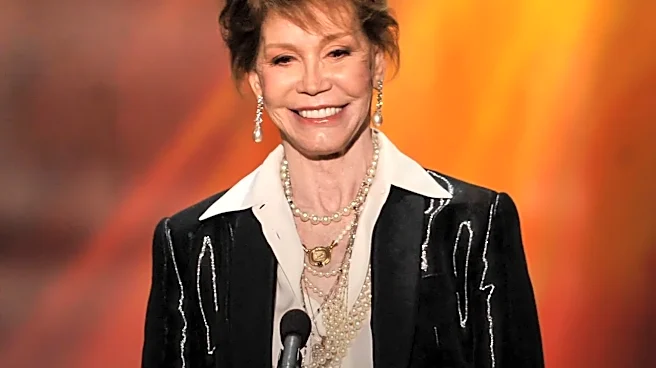
Before Mary Richards was a news producer, Mary Tyler Moore was Laura Petrie on 'The Dick Van Dyke Show.' Even then, her fashion choices were quietly radical. At a time when TV housewives like June Cleaver and Donna Reed were perpetually vacuuming in pearls
and full-skirted dresses, Moore insisted her character wear capri pants. Her reasoning was simple and profound: it's what real women wore at home. Network executives and sponsors were initially horrified, concerned the pants were too form-fitting and revealing. They tried to limit her to one pants-wearing scene per episode, but Moore and the show's creator, Carl Reiner, persisted. Audiences responded, and the capri pants became a signature look, helping to redefine the on-screen image of the American housewife from an idealized prop to a relatable person.
Dressing for the Job You Want
When 'The Mary Tyler Moore Show' debuted in 1970, it centered on a single, 30-something career woman—a concept that was itself groundbreaking. Her wardrobe had to match. Costume designer Leslie Hall crafted a look for Mary Richards that was aspirational yet attainable. Through a partnership with clothing brand Evan Picone, Mary was dressed in stylish, mix-and-match separates: turtlenecks, blazers, crisp blouses, and tailored trousers. This was a new uniform for the working woman. It was professional without being stuffy, feminine without being fussy. It rejected the buttoned-up suits of the past and embraced a modern sensibility with bell-bottoms, wrap dresses, and bold patterns, mirroring the confidence of a woman entering a male-dominated field on her own terms.
The Art of the Re-Wear
One of the most subtly revolutionary aspects of Mary Richards' style was its realism. Leslie Hall deliberately had Mary repeat outfits and individual pieces, mixing a blouse from one episode with a skirt from another. This had never been done on television before. Sitcom characters typically appeared in a fresh, new costume for every scene, creating an unrealistic standard. Mary’s wardrobe, however, felt like a real closet. It showed a practical, intelligent approach to dressing that resonated with the show's audience of working women who were building their own professional wardrobes on a budget. This simple act of repeating clothes grounded the character in reality and made her journey that much more inspiring.
A Legacy in Separates and Silk
The influence of Mary Richards' style is immeasurable, paving the way for generations of television's professional women. From the sharp power suits of 'Murphy Brown' to the fashion-forward experiments of 'Sex and the City's' Carrie Bradshaw, the template was set by Mary. She proved that a female character's wardrobe could be central to her identity, expressing her ambition, independence, and personality. Designers like Michael Kors, Tory Burch, and Isaac Mizrahi have all cited Mary's style as an inspiration. She created a blueprint for looking capable, confident, and chic—a combination that remains the gold standard for women on screen and off. She taught a generation that you could be serious about your work and still turn the world on with your smile—and a killer pantsuit.