







More Than Just a Bedroom
To the casual viewer, the rooms in Toy Story are just backdrops—a child’s bedroom, a daycare, an antique store. To the die-hards who populate Reddit threads and fan forums, these spaces are narrative engines. This is the concept of “toy-room geography,”
an almost academic-level appreciation for how a location’s layout, contents, and history define the stakes and emotional core of the story. It’s the understanding that in a Pixar film, the environment isn’t just where the story happens; the environment *is* part of the story. Fans don't just watch these movies; they study them like architectural blueprints, knowing that every poster on the wall, every toy in the chest, and every scuff mark on the floor is a deliberate choice that informs the world. This isn't just about spotting Easter eggs; it's about decoding the very soul of the film through its physical space.
A History of Lived-In Spaces
This obsession is well-earned. From the very beginning, Toy Story has used its locations to brilliant effect. Andy’s first room in the original film is a perfect childhood haven, a self-contained universe where Woody is king. Its geography is simple and safe. When the toys move to a new house at the end, the unfamiliarity of the new room layout creates immediate tension. Compare that to Sid’s room, a gothic horror show of mangled toys and menacing tools that functions as a literal chamber of horrors. Fast forward to *Toy Story 3*. Sunnyside Daycare is a masterclass in environmental storytelling. At first, it appears to be a utopian paradise, but its geography reveals a dark secret: it’s a prison, sectioned off by age group, with the Caterpillar Room serving as a brutal, toddler-run penitentiary. In *Toy Story 4*, the antique store isn't just a shop; it’s a sprawling, dusty labyrinth full of forgotten souls, where the geography of cluttered shelves and glass cabinets dictates every chase and escape.
The Psychology of the Room
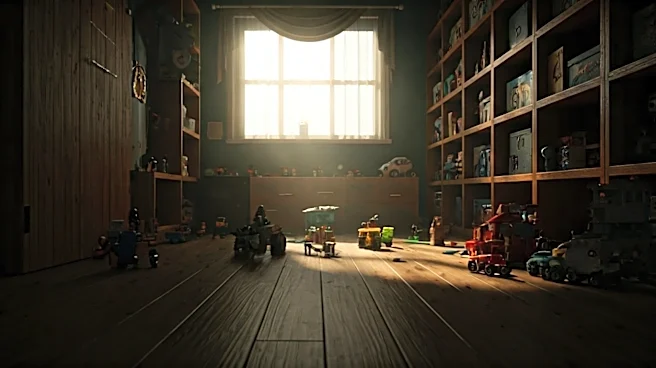
The geography of a room does more than just create obstacles. It reflects the psychology of its owner, which in turn dictates the toys’ entire existence. Andy's room evolved with him—the cowboy wallpaper of his youth was eventually replaced by posters of cars and rock bands, signaling his changing interests and foreshadowing the toys' obsolescence. His room told a story of growing up. Bonnie’s room, by contrast, is a space of pure, chaotic imagination. There’s less structure, more floor-based play, and a closet that becomes a creative workshop for Forky. The space is a direct reflection of her free-form creativity, which explains why a structured, rule-based toy like Woody struggles to find his place there. The owner of the space is the toys’ god, and the room is their universe. Its laws, layout, and culture determine their happiness, their purpose, and their fears.
The Uncharted Territory of Toy Story 5
This is why the announcement of *Toy Story 5* immediately sparks geographical speculation. Woody is now a “lost toy” living a carnie life, and Buzz has found a new home with Bonnie. The core group is fractured. Will the film take place in a new child’s room, forcing fans to decode a new owner’s personality from their posters and possessions? Or will it explore an entirely new kind of space? Message boards are already buzzing with possibilities: a college dorm, a storage unit (a classic purgatory for forgotten belongings), a museum, or even the vast, impersonal world of a shipping warehouse. Each possibility carries immense narrative weight. Fans will be looking for clues in the first teaser trailers not just about the characters, but about the lines on the floor, the light from the windows, and the nature of the space they inhabit. They’ll be mapping it out, theorizing how its layout will create new rules and challenges, long before the movie ever hits theaters.