







The Promise of the Stars
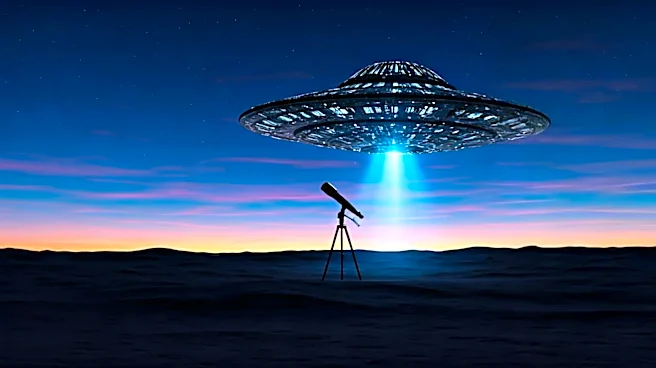
When we think of Spielberg and the sky, we immediately go to the classics. The benevolent, glowing mothership in *Close Encounters of the Third Kind* communicating through music. The silhouette of a boy on a bicycle flying across a colossal moon in *E.T.
the Extra-Terrestrial*. For a generation, these moments weren't just scenes; they were formative cultural events. They represented the ultimate feel-good promise: we are not alone, and whatever is out there is filled with childlike wonder and friendship. The sky was a canvas for hope. It was Spielberg’s grand stage for telling us that the universe, in its infinite mystery, was fundamentally good-hearted. His aliens weren’t conquerors; they were lost tourists or celestial teachers, bringing light and, in E.T.’s case, the power to heal. This was pure, uncut cinematic optimism, beamed directly into our suburban lives.
The Ache Beneath the Awe
But here’s the “weirdness” of it all. That sublime, feel-good spectacle was always grounded in profound loneliness and brokenness. In *Close Encounters*, Roy Neary’s obsession with the sky costs him his family. He leaves his children behind to board a spaceship, choosing cosmic discovery over domestic reality. It’s a triumphant ending, but also a deeply sad one. Similarly, *E.T.* is a story born from divorce. Elliott is a lonely child of a fractured home who finds the one friend who truly understands him, only to have that friend leave forever. The film’s iconic, heartbreaking “I’ll be right here” is a testament to this bittersweet reality. Spielberg’s camera may have been pointed at the stars, but his stories were always rooted in the earthbound pain of families coming apart. The magnificent light from above was a beautiful distraction, a form of therapy for the quiet ache below.
A Canvas for Hope and Fear
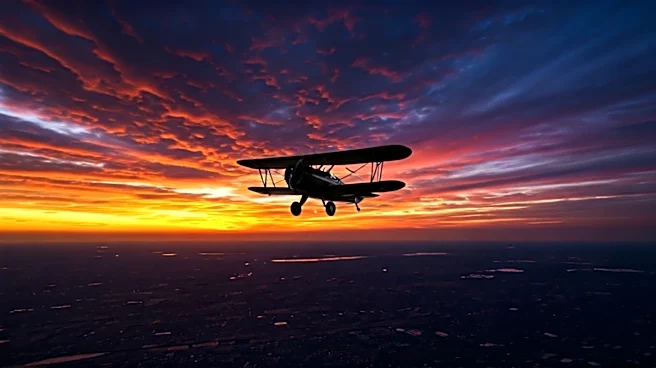
As his career progressed, Spielberg’s sky became a more complicated space. It was no longer just a source of friendly visitors. In *War of the Worlds*, the heavens unleash sheer terror, as tripods descend in lightning storms to incinerate humanity. The sky becomes a source of dread, a ceiling from which there is no escape. In *A.I. Artificial Intelligence*, the final, haunting sequence sees an advanced, alien-like civilization emerge from a frozen future sky, offering the android David a single, perfect day with his long-lost mother—a gift of impossible beauty wrapped in cosmic tragedy. Even in his adventure films, like the *Indiana Jones* series, the sky is a place of transit and danger, a vast emptiness to be crossed on the way to the next perilous discovery. For Spielberg, looking up has never been a simple act; it’s an invitation for awe, terror, hope, and loss, all at once.
Returning Home, Not to Space
So what does it mean for Spielberg to “return to the skies” now? With his most recent, deeply personal work like *The Fabelmans*, the theme has turned inward. The film is his origin story, and in it, the sky is replaced by the movie projector. The beam of light in a dark room, creating images on a screen, becomes the new source of wonder and escape. Young Sammy Fabelman isn’t looking up at UFOs; he’s looking through a viewfinder, using his camera to make sense of his parents’ crumbling marriage. He controls the light, edits the pain, and transforms his family’s heartbreak into art. This is the ultimate Spielbergian return. He’s no longer just pointing his camera toward the heavens for a fictional escape. Instead, he’s pointing it back at himself, revealing that the real magic—and the real weirdness—was never in the stars, but in the boy who first learned to use a camera to cope with the world by creating new ones.