






1. Find the On-Field Quarterback
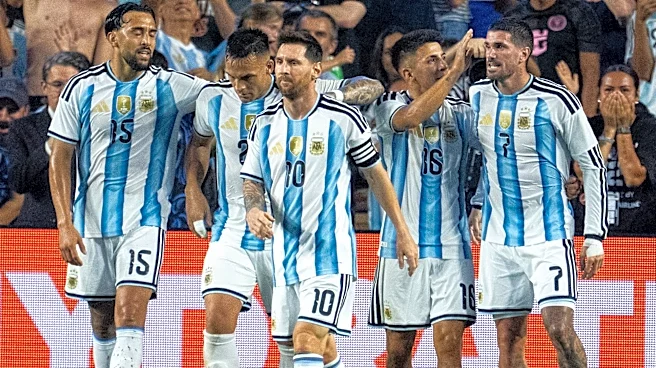
In football, your eyes are drawn to the quarterback. He’s the decision-maker, the field general who dictates the pace and flow. Soccer has the same thing, but he might be wearing number 10, 8, or 6. Look for the midfielder who is always demanding the ball, who plays
with his head on a swivel, and who seems to see the next three passes before they happen. This is the team’s creative engine. He’s not just passing; he’s probing the defense for weaknesses, like a QB reading coverage pre-snap. When you see a player drop his shoulder, play a killer through-ball that splits two defenders, and sends a forward in on goal, you’ve found him. That’s your guy to watch.
2. Embrace the Methodical Drive
The most common complaint from football fans is soccer’s low scores. A 1-0 game can feel like a failure. Time for a mental reset. Don't think of goals as touchdowns; think of them as the *only* way to score. There are no field goals. A soccer match is not a series of explosive plays but a 90-minute strategic battle for territory and control. Appreciate the slow, methodical drive. A series of 15 consecutive passes that moves the ball from a team's own goal line into the final third is the equivalent of a 12-play, 80-yard drive that eats up the clock. The tension isn't just in the shot on goal; it's in the build-up, the near-interceptions, and the defensive stands that prevent the shot from ever happening. A 1-0 win isn't boring; it’s a masterclass in efficiency and defense.
3. Understand the Clock is a Weapon
American football is a game of controlled bursts punctuated by timeouts, commercials, and replay reviews. Soccer is a fluid, continuous burn. The clock never stops, not for substitutions, not for minor injuries, and certainly not for a TV ad break. This creates a different kind of drama. Instead of a frantic two-minute drill, you get “stoppage time”—an estimated amount of time added by the referee at the end of each half to account for delays. This is where the real chaos lives. A team nursing a one-goal lead will do everything in its power to waste those precious seconds, while the trailing team throws everything forward in a desperate, last-gasp surge. It’s less structured than a two-minute drill but far more unpredictable and, often, more heartbreaking.
4. Recognize the Special Teams Moments
Think special teams can’t decide a football game? A blocked punt or a kick-return TD says otherwise. In soccer, the equivalent is the “set piece.” This refers to any time the game is restarted with a stationary ball: a corner kick or a free kick awarded after a foul. These are soccer’s game-changing special teams plays. A corner kick is like having a play start on your opponent’s 5-yard line. Teams have specific plays and formations designed just for these moments. A perfectly delivered ball into a crowded penalty box is a moment of pure, unadulterated chaos. A direct free kick from just outside the box is a chance for a specialist to score a spectacular goal. Pay attention when the ball goes dead; the game is often about to get very interesting.
5. Deal With the Diving (It’s Tactical)
Let’s address the elephant in the room: the flopping. Yes, it’s theatrical. Yes, it’s frustrating. But it’s not just poor sportsmanship; it’s a tactical tool. In a game with so few scoring chances, earning a free kick in a dangerous area or getting an opposing player a yellow card (a warning) can be a huge strategic advantage. Think of it like a quarterback masterfully drawing a defensive lineman offsides with a hard count. Is it a bit cheap? Sure. But it’s part of the game's meta. Instead of just getting angry, watch what happens *after* the whistle. Did the foul give the attacking team a chance to reset? Did it relieve defensive pressure? Recognizing the strategic benefit won’t make you love it, but it might help you understand it.