
You’re shopping for a statement piece and see two gorgeous, patterned fabrics: one labeled “jacquard,” the other “brocade.” They look similar, feel luxurious, and are often used interchangeably. But they
aren’t the same thing.
The Master Class: All Brocade is Jacquard
Here’s the single most important thing to understand: Jacquard is not a type of material, but a method of weaving. It refers to any fabric created on a Jacquard loom, an invention from the early 1800s that revolutionized textiles by allowing complex patterns to be woven directly into the fabric's structure. This loom attachment allows for individual control over warp threads, making intricate designs like florals, geometrics, and damasks possible without printing or embroidering. So, when you see a jacquard fabric, you're seeing a pattern that is integral to the cloth itself. Brocade, on the other hand, is a specific type of jacquard fabric. Think of it like this: "jacquard" is the category (like 'pasta'), and "brocade" is a specific kind (like 'lasagna'). All brocades are made using the jacquard weaving process, but not all jacquard fabrics are brocades.
What Makes Brocade Special?
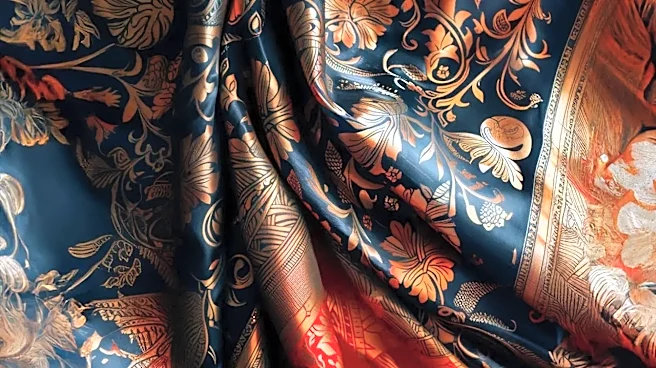
Brocade stands apart from other jacquards because it’s defined by its rich, raised, and seemingly embossed pattern. This three-dimensional effect is created by using supplementary weft threads—extra yarns that are woven into the fabric to create the decorative motif. These additional threads float over the base fabric, which is why the pattern appears to sit on top of the background, giving brocade its signature textured and luxurious feel. Historically, these supplemental threads were often silk, gold, or silver, making brocade a symbol of wealth and status reserved for royalty and ceremonial garments. While modern brocades can be made from cotton or synthetic fibers, they retain that opulent, decorative quality.
A Shopper’s Guide: How to Tell Them Apart
So, how can you spot the difference in a store? It comes down to two simple tests: the touch test and the flip test. First, feel the fabric. A brocade’s pattern will feel distinctly raised against the ground fabric, almost like embroidery. Other jacquards, like damask, may have patterns that are flat or have only a very subtle texture difference. Second, flip the fabric over. On the reverse side of a brocade, you’ll often find long, floating threads called "floats" where the supplementary pattern threads were carried across the back. Sometimes these floats are neatly trimmed, but you’ll still see the cut ends. A standard jacquard, however, might show a clearer negative of the pattern on the back, as the design is fully integrated into the weave.
Use Case and Cost: Choosing the Right Fabric
Because of its ornate and heavy nature, brocade is most often used for formalwear, statement jackets, evening gowns, and high-end upholstery. Its structure and decorative flair make it ideal for garments where visual impact is key. Other jacquard weaves are more versatile. Depending on the fiber (cotton, polyester, silk, etc.), jacquards can be used for everything from business attire and casual dresses to durable upholstery and drapes. Generally, brocade is the more expensive option due to the extra yarns and labor-intensive process required to create its raised designs. A lightweight cotton jacquard shirt will often be more affordable and practical for daily wear than a silk brocade blazer.