






The Ghost of the Genie
The first and most obvious hurdle for Maui is what we can call the "Genie Problem." When Disney remade Aladdin, the single biggest question was how anyone could follow Robin Williams' iconic, lightning-in-a-bottle vocal performance. Will Smith, for all his
charisma, faced immense pressure, and his portrayal was inevitably measured against the impossible standard of the original. The result was a performance that, while commercially successful, struggled to escape the shadow of its animated predecessor. Maui presents a similar challenge. Voiced originally by Dwayne "The Rock" Johnson, the character is a whirlwind of bravado, charm, and surprisingly emotional depth. By casting Johnson to portray Maui in live-action, Disney has smartly anchored the character to his original, beloved voice. However, this also doubles down on the pressure. Now, the performance must not only honor the animated version but physically embody it in a way that feels authentic rather than like a costume.
The Uncanny Valley of the Pride Lands
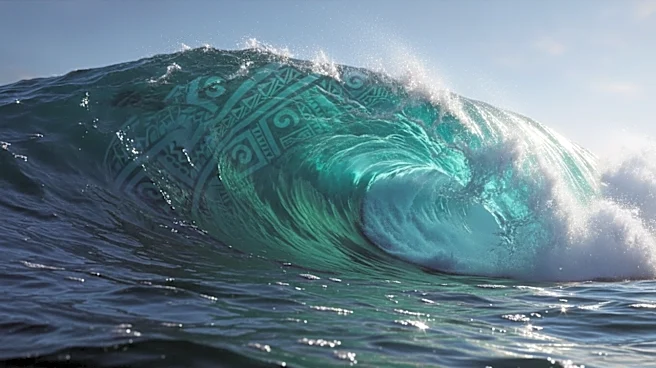
If the Genie was a test of personality, 2019's The Lion King was a test of technology, and the results were deeply polarizing. Director Jon Favreau’s commitment to photorealism created breathtaking digital landscapes and stunningly realistic animals. But in doing so, it stripped the characters of the very expressions that made them so beloved. Scar’s menacing sneer and Simba’s playful grin were lost in translation, replaced by the stoic faces of actual lions. This brings us to Maui's shapeshifting and his living tattoos. A core part of his character is his magical fish hook, which allows him to transform into a hawk, a shark, and a variety of other creatures. His tattoos, especially "Mini Maui," serve as his conscience and a key storytelling device. If these elements are rendered with the same cold photorealism as The Lion King, they risk feeling disconnected and lifeless. The challenge is to make these magical, non-realistic elements feel seamlessly integrated and, most importantly, expressive.
Maui: The Ultimate Final Exam
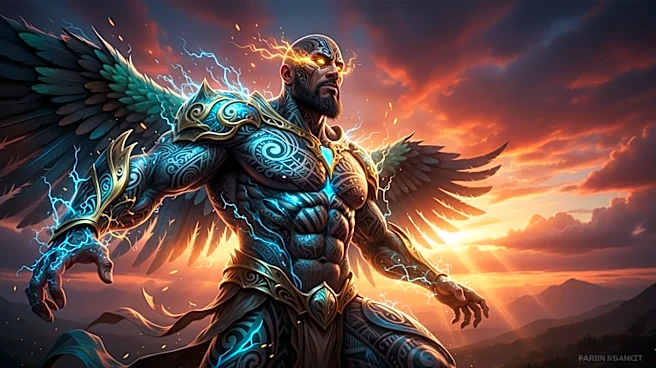
Maui is not just one of these problems; he is both, with an added layer of cultural significance. He requires the immense, irreplaceable charisma of the Genie and the complex CGI integration of The Lion King. To succeed, the film must find a perfect balance. Dwayne Johnson can't just be The Rock in a costume; he has to become a believable demigod, a task made more complex by the use of a 40-pound bodysuit and intricate prosthetics to achieve Maui's signature physique. His shapeshifting can't just look real; it has to feel magical and tied to his emotional state. His tattoos can't be a simple special effect; they have to interact with him and convey personality without a single word. This combination makes Maui the ultimate test case for Disney's entire remake strategy. The studio's choices here will reveal whether it has learned to prioritize soul over sterile recreation.
The Dwayne Johnson Factor
Having Dwayne Johnson reprise his role is both the film's greatest strength and its most fascinating variable. Johnson isn't just an actor; he's a producer on the film and has a deep personal connection to the story and its Polynesian roots, even citing his own grandfather, the High Chief Peter Maivia, as an inspiration for the character. This level of investment is a powerful safeguard against cultural missteps and ensures a performance rooted in genuine respect. Yet, it also locks the film into a very specific interpretation. Unlike a fresh take, this Maui will be intrinsically linked to the one audiences already know and love. The director, Thomas Kail of Hamilton fame, has expressed a desire for the film to be a "companion" to the original, not a replacement. The success of this approach will depend on whether Johnson's physical performance can add new layers to the character without undermining the magic he created with his voice alone a decade ago.