







Why the Edge Is a Dead Giveaway
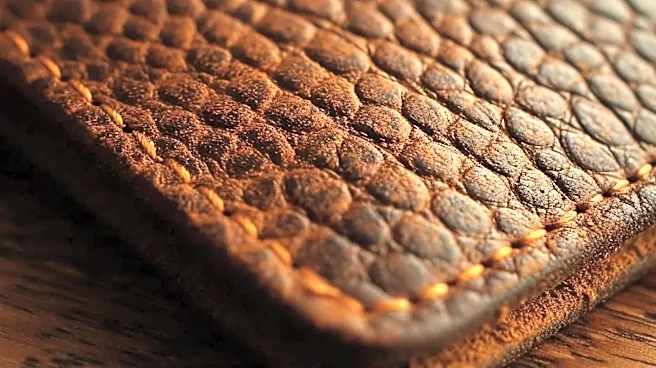
Look at any leather bag. Its edges—the sides of the straps, the seams, and the opening—are where the raw, fibrous interior of the hide is exposed. How a maker treats this vulnerable surface tells you everything about their commitment to quality. Leaving
it unfinished is a red flag; over time, those raw fibers can fray and absorb moisture, weakening the bag's structure. Finishing these edges isn't just for looks; it's a crucial step that protects the leather and ensures longevity. A well-finished edge is a sign of patience and expense, while a poor one reveals cost-cutting shortcuts that will likely show up elsewhere in the bag's construction.
The Gold Standard: Turned, Burnished, and Painted Edges
There are three main techniques for creating a high-quality, durable edge. The first is the "turned" or "folded" edge, where the leather is thinned, folded over on itself, and stitched down. This creates a soft, seamless look where the raw edge is completely hidden, eliminating any risk of cracking paint. The second method is burnishing. Artisans sand the edge smooth, apply moisture or wax, and then use friction to compress and polish the leather's own fibers into a smooth, sealed, and often glossy finish. This technique works best on vegetable-tanned leathers and creates a beautiful, natural-looking seal. The third, and very common in luxury bags, is the painted edge. This involves applying multiple thin layers of a flexible, water-based paint, often sanding between coats. When done correctly, the result is a perfectly smooth, even, and durable strip of color that feels like a seamless part of the bag.
The Red Flags: Thick Paint and Raw Fuzz
So, what does a bad edge look like? The most common sign of a cheaply made bag is a thick, rubbery coating applied to the edges. This is often a single, heavy layer of paint slapped on to cover the raw cut quickly and inexpensively. This thick coating is inflexible and prone to cracking, peeling, or feeling sticky. You might see it pooling in globs at the corners or showing tiny stress cracks when you flex the leather. Another warning sign is a raw edge that is simply cut and left exposed with little to no finishing. You’ll be able to see and feel the fuzzy, fibrous texture of the hide, which is a clear indicator that the bag will be susceptible to fraying and wear from the start.
Your 30-Second Quality Test in the Store
You don't need to be an expert to spot the difference. Next time you're looking at a bag, perform this quick check. First, run your fingertip along a strap edge. A quality finish will feel smooth, uniform, and intentional. A cheap one will feel rough, uneven, or like thick, lumpy plastic. Second, hold the edge up to the light at an angle. Raking light reveals everything—bumps, cracks, and uneven application that head-on lighting can hide. Finally, gently flex a strap or a seam. On a poorly made bag, you may see tiny cracks appear in the edge paint immediately. Pay special attention to high-stress areas like where the handles connect to the body of the bag, as this is where shortcuts are most likely to fail first.