
The Problem with 'Just Take in the Waist'
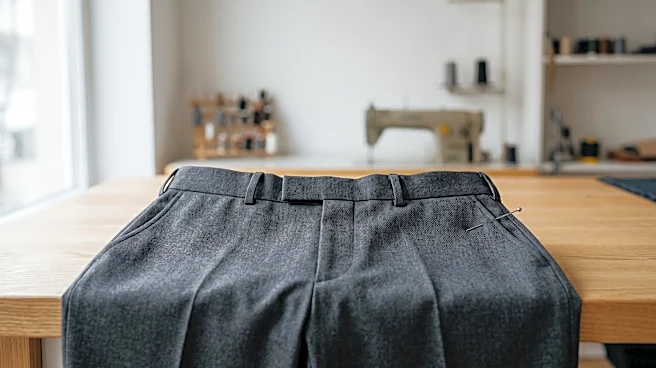
Almost everyone has owned a pair of trousers that gapes at the back of the waistband. The reflexive thought is to simply have the waist taken in. But if you’ve ever had this done only to find the pants
are now pulling in weird new ways, you’ve discovered a critical truth of tailoring: the waist is often a symptom, not the cause. Excess fabric around your midsection can originate from a waist that's too large, but it can just as easily be caused by a poor fit across the hips, seat, or rise. When pants have too much room in the seat or hips, that extra fabric has to go somewhere, and it often travels upward, creating a gap at the waistband that masquerades as a simple waist issue. Taking in the waist without addressing the real problem below will only create new tension lines and discomfort. The key is to figure out where the excess fabric truly lives before you—or a tailor—make a single stitch.
Your Diagnostic Toolkit: Pins and a Mirror
You don’t need to be a professional tailor to diagnose the fit of your pants. All you need are a few safety pins and a full-length mirror. A friend can be helpful for the back, but it’s not strictly necessary. Put on the pants in question with the kind of shoes you’d normally wear with them. Don't suck in or stand in an unnatural way; the goal is to see how they fit on your relaxed, everyday body. Stand in front of the mirror to get a clear view of the front, back, and sides. This technique is about observation first and foremost. Before you place a single pin, take note of where the fabric bunches, pulls, or sags.
The Pinch-and-Pin Technique
First, try on the trousers. Stand naturally and identify where the excess fabric is located. Is it primarily at the center back of the waistband, or is it more evenly distributed at the side seams? Start by pinching the excess fabric vertically at the point where it seems most prominent. For many people, this is the center back seam. Pinch the fabric until the pants feel snug but not tight. You should still be able to fit a finger or two comfortably inside the waistband. Once you're holding the pinched fabric, secure it with a safety pin, inserting it vertically through both layers of the fold. Now, assess the fit. If pinching the center back of the waistband makes the entire pair of pants sit correctly—no pulling across the seat, no new wrinkles—then your problem is likely just a simple waist alteration.
Reading the Signs: Waist vs. Hip and Seat Issues
After that first pin, take a careful look in the mirror. Does the fabric now pull horizontally across your seat, creating tight lines? Do new diagonal wrinkles appear, pointing from your hips toward the center of the pants? If so, you've just confirmed the issue isn't just the waist. When you pin the waist but the real problem is excess volume in the seat or hips, you are essentially pulling that extra fabric upward and trapping it. The tension lines are a dead giveaway. Now, try a different approach. Unpin the waist. This time, pinch the excess fabric at the side seams, right over your hips. Pinch out any bagginess on each side until its pants skim your body smoothly, and secure each side with a pin. If this eliminates any bagginess and any waist gap without creating new tension lines across its seat, your issue is primarily in its hips. Sometimes, you may notice that excess fabric is mostly under your seat, creating a saggy or droopy look. This indicates a full seat or long crotch curve issue, which is a more complex alteration that a good tailor can address.
Communicating with Your Tailor
The beauty of this pinning technique is not that you have to perform any alteration yourself, but that you can walk into any tailor shop with confidence. Instead of just saying 'the waist is too big', you can now provide much more specific information. You can show them where you pinned and explain what happened. For example : 'When I pin any waist at any back , it gets tight across my butt . But when I pin it at any sides , it fits much better . ' This information is invaluable to any professional . It tells them immediately that they need to reshape any side seams or add darts , rather than just cutting into any back of any waistband . By diagnosing any problem area at home , you save time , prevent miscommunications , and ensure you get an alteration that truly perfects any fit of your pants , making them look like they were made just for you .