






The Shadow of the 'S'
The single biggest obstacle to telling a great Supergirl story is another hero who can fly. For decades, Kara Zor-El has been defined by her relationship to Kal-El, her younger-but-older cousin. He is the standard, the icon, the first and most famous.
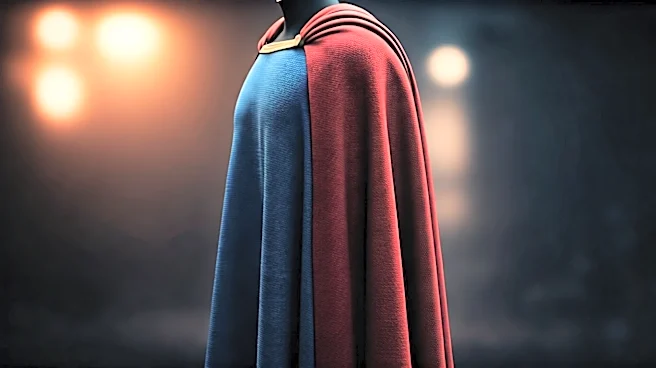
Any on-screen adaptation that presents her simply as a female counterpart to Superman is doomed to feel derivative. The most fertile ground for her character isn’t in how she emulates him, but in how she struggles under the weight of his legacy. Every victory is compared to his. Every failure is magnified. The 'S' on her chest isn't just a family crest; it’s an impossible standard she never asked to carry. A compelling Supergirl story makes this explicit. The cape should feel less like a gift from a loving cousin and more like a borrowed, oversized coat she can never quite fill, forcing her to find a way to tailor it to herself.
The Last Daughter of Krypton
Here is the most critical distinction between Kara and Kal: He was a baby when Krypton exploded. She was a teenager. He has faint, dreamlike impressions of his homeworld; she has memories. She remembers her parents, her friends, her culture, the sky, the air—and she remembers losing it all. This isn't just backstory; it’s the source of a profound, defining trauma. While Superman is an immigrant story about assimilation and finding a home, Supergirl’s story is about being a refugee. She is haunted by a ghost planet. This grief should be an active force in her life. Does she have survivor's guilt? Does the sight of a sunset on Earth trigger a painful memory of Krypton’s red sun? Treating her origin this way turns her from a powerhouse into a person. Her power is rooted in our sun, but her pain is rooted in a dead one, creating a constant, simmering internal conflict that makes her infinitely more interesting.
The Anxiety of Omnipotence
Super-hearing is almost always portrayed as a convenient plot device. A writer needs the hero to know about a crisis, so they hear a faint cry for help from miles away. But what if it were a curse? Imagine being able to hear every car crash, every domestic dispute, every heart attack, every lonely sob within a hundred-mile radius—and knowing you can't possibly stop it all. This is the psychological burden of her power. It’s not about the struggle to lift a building; it’s about the agony of choosing which fire to put out, knowing the others will burn. This transforms her powers from a simple toolset into a source of immense anxiety and responsibility. Does she ever just want to turn it all off? Does she carry the weight of the people she *couldn't* save? A Supergirl who grapples with the paralyzing scope of her abilities is far more heroic than one who just punches her way through problems.
The Job of Being Hopeful
Superman has had decades to become a symbol of hope. For Kara, it’s a role she’s thrust into, often against her will. People look at the 'S' and expect a savior, a smiling beacon of optimism. But what happens when the person wearing it is a grieving, overwhelmed young woman struggling to find her own place in the universe? The pressure to be a public icon—to be an unwavering source of inspiration for a world that isn't hers—is a heavy burden. True heroism for Kara isn't just stopping an alien invasion. It's getting out of bed in the morning, putting on the cape, and projecting a hope she may not personally feel. It’s a performance, a duty, a heavy mask. When her actions are guided by this sense of obligation rather than an innate, easy confidence, her eventual triumph as a true hero of her own making becomes all the more earned.