


More Than Lights and Lasers
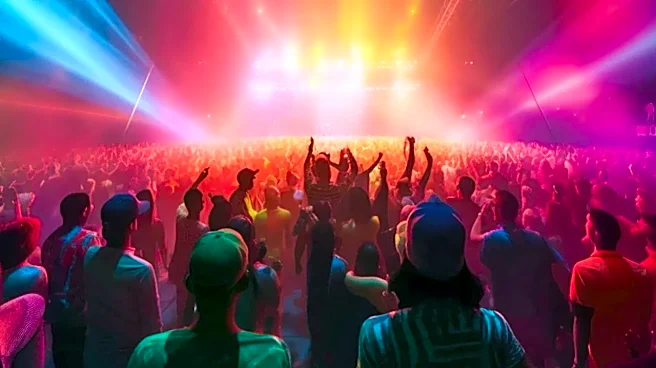
We’ve all seen the highlight reels: headliners commanding stages with blinding light shows, intricate choreography, and screens projecting hyper-cinematic visuals. The modern music festival has often become a race for the biggest, loudest, most technologically
advanced spectacle. This approach certainly has its place, creating immersive worlds that can be breathtaking. But it has also created a counter-narrative, one that plays out every year at festivals like Austin City Limits. A performance's true scale isn't always measured in megawatts or the number of backup dancers. Sometimes, the most memorable sets are the ones that strip away the excess, proving that the most powerful special effect is a compelling artist.
When Talent Is the Spectacle
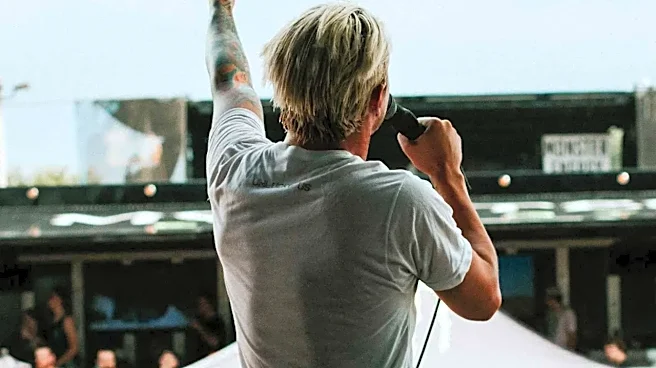
Before the advent of stadium-sized LED screens, an artist had to hold a crowd with something far more fundamental: raw, undeniable talent. This principle hasn't vanished; it’s just quieter. When a vocalist like Jensen McRae steps up to the mic, her emotional honesty and stunning control can silence a sprawling park. When a band like Wet Leg delivers a wildly fun rock set, their energy makes it impossible not to dance. These moments don’t require elaborate staging because the musicianship itself is the main event. An intricate guitar solo, a soaring vocal run, or the palpable chemistry of a band locked into a groove creates a magnetic pull. The focus shifts from what you’re seeing to what you’re feeling, and that feeling is generated by pure skill. In these sets, the artistry isn't supported by the production; the artistry is the production.
Making a Park Feel Like a Small Room
The greatest challenge for any festival performer is closing the physical and emotional distance between the stage and the last row of people. While spectacle aims to overwhelm the space, a minimalist approach seeks to shrink it. This is the work of true stage presence. It’s in the way an artist like King Princess balances humor and vulnerability between songs, making thousands of strangers feel like they're in on an inside joke. It’s Doechii commanding a massive stage with just her DJ and boundless charisma. It's about looking past the front row, telling a story, and creating moments of shared experience. When an artist can forge this kind of genuine connection, the vast expanse of Zilker Park fades away, and for the duration of a song, it feels as intimate as a local club. This connection is a two-way street; the audience feels seen, and in turn, their focused energy flows back to the stage, amplifying the performance.
The Austin City Limits Factor
The setting itself plays a crucial role. Austin City Limits grew out of a public television show renowned for its no-frills, music-first ethos. That DNA is still present in the festival's culture. While it books pop powerhouses, it also maintains a reputation for spotlighting indie darlings and genre-blending artists, attracting an audience that appreciates musicianship. The crowd at ACL is a mix of seasoned festival-goers and local families, creating a 'chiller' atmosphere where people will lay out blankets to simply listen. This environment, set against the iconic Austin skyline, is less about frantic energy and more about a communal appreciation for live music. Artists know they are playing to a crowd that is ready to be won over by a great song, not just a great show, giving them the freedom to let the music speak for itself.
The Artistry of 'Less Is More'
Choosing a stripped-down set is rarely a sign of a smaller budget; it’s a deliberate artistic choice. In a world of overstimulation, minimalism can be a powerful statement. By removing visual distractions, an artist forces the audience to engage more deeply with the music itself—the lyrics, the melody, the emotional core of the song. A ballad that might get lost in a sea of pyrotechnics can become a festival's most talked-about moment when delivered with just a voice and a guitar. This approach requires immense confidence. The performer has nothing to hide behind. Every note, every word, and every silence is exposed. When it works, the result is a performance that feels more authentic, more vulnerable, and ultimately, more human.