



Your Brain on Horror: The Fear of the Unknown
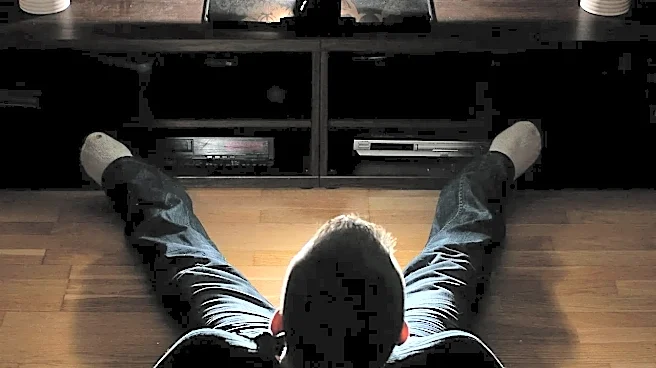
The core of this cinematic sleight of hand is a concept called acousmatic sound—a sound you hear without seeing its source. The term dates back to ancient Greece, where Pythagoras would teach his students from behind a veil to force them to focus on his words,
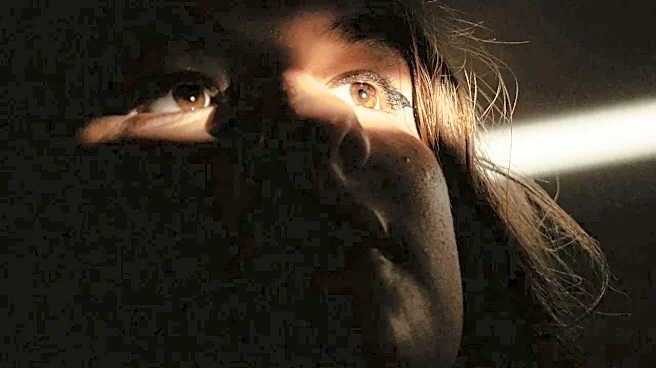
not his presence. Horror directors use this same principle to weaponize your own imagination against you. When your brain hears a twig snap, a floorboard creak, or a faint whisper, but your eyes see nothing, it doesn't just wait for an explanation. It fills the void with the worst possible scenario, customized to your own deepest fears. This technique bypasses logic and targets the amygdala, the primitive, anxiety-processing part of your brain responsible for the fight-or-flight response. It’s not just a jump scare; it's a sustained, psychological game that builds a sense of dread far more potent than any visual shock.
The Shark You Couldn't See
The textbook case for the power of sound over image is Steven Spielberg's Jaws. Famously, the mechanical shark, nicknamed "Bruce," was a technical nightmare that rarely worked. This limitation became the film's greatest strength. Composer John Williams created a simple, two-note cello and tuba theme that became the shark's stand-in. That iconic "duh-dum" became a signal for impending doom, allowing the audience’s terror to build long before the shark ever appeared on screen. Spielberg later admitted that without Williams’ score, the movie would have been only half as successful. The music did what the visuals couldn’t: it made the threat feel instinctual, relentless, and unstoppable, transforming a broken prop into a symbol of primal fear.
From Sci-Fi Dread to Unbearable Silence
This isn't just an old-school trick. In Ridley Scott’s Alien, the most nerve-shredding moments aren't of the creature itself, but of the sounds that signal its presence. The unnerving ping of the motion tracker, echoing through the desolate halls of the Nostromo, creates an unbearable tension. The sound design intentionally blurs the line between organic and mechanical noises—faint breathing, a heartbeat-like pulse in the ship's ambience—making you feel viscerally unsafe in your own environment. More recently, A Quiet Place weaponized the absence of sound. In a world where silence equals survival, every tiny, incidental noise—a creaking floorboard, a nail on a staircase—becomes a source of heart-pounding terror. The film proves that what you don't hear can be just as frightening, as your brain stays on high alert, anticipating the sudden, deadly noise that will break the calm.
It’s More Than Just a Jump Scare
A common mistake is to confuse this technique with a simple jump scare, which typically uses a loud burst of sound to startle you. While effective in the moment, a jump scare is a fleeting shock. The power of sound-before-image is in its ability to build and sustain dread. It’s the difference between someone shouting "Boo!" from behind a door and hearing slow, heavy footsteps approaching from the floor above for ten straight minutes. The former startles you; the latter infects you with anxiety. This craft choice forces the audience into an active role, making them a participant in their own terror. The sounds you don't see are often the ones you never forget, because they were shaped, in part, by your own mind.