






The ‘Clear and Obvious’ Mirage
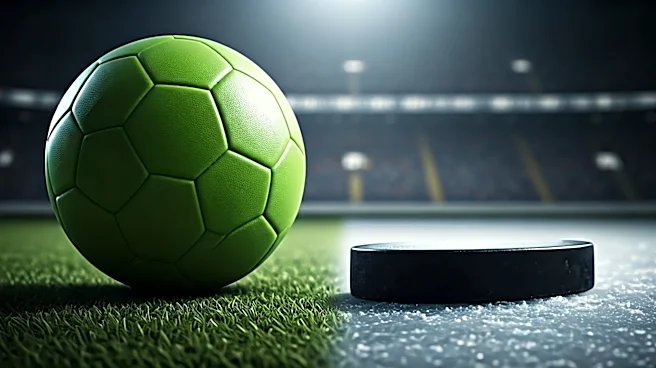
In soccer, Video Assistant Referees (VAR) are instructed to intervene only for a “clear and obvious error.” It sounds simple, but it’s the root of the problem. What one official sees as a blatant missed penalty, another sees as a fair shoulder-to-shoulder challenge. The result? A five-minute delay while referees stare at a monitor, only to uphold a call that half the audience furiously disagrees with. The technology provides more angles, but it can’t provide objective truth for a subjective event. This is the exact same headache NHL fans have endured with goaltender interference. The league office in Toronto can review a play from a dozen angles in super slow-motion, but the final decision still boils down to a judgment call. Did the attacking
player’s skate prevent the goalie from making a save? Was he pushed in? There is no scientific answer. In both sports, replay was sold as a tool for correcting egregious mistakes, but it’s now used to micro-analyze judgment calls, leaving fans just as angry, only now with a longer wait.
The Agony of the Offside Line
Nothing infuriates soccer fans more than a beautiful, flowing team goal being chalked off because a player’s kneecap was a millimeter ahead of the last defender. VAR uses digital lines drawn on the screen to make these calls with supposed precision. But this quest for geometric perfection feels antithetical to the spirit of a fast-moving game. It ignores the attacker’s intent and the momentum of the play, reducing a moment of brilliance to a sterile, forensic exercise. The celebration is cut short, the stadium deflates, and everyone argues about pixels.
Ask an NHL fan about this. They’ll tell you about the agony of a “skate in the air” offside review. A team scores a thrilling goal, only for the play to be challenged because a player might have entered the offensive zone a fraction of a second before the puck. Officials zoom in to see if a skate blade was still touching the ice on the blue line. It’s the same issue: a rule designed to prevent cherry-picking is now used to retroactively nullify exciting plays based on microscopic, irrelevant infractions that had no bearing on the goal itself.
The Ultimate Momentum Killer
Soccer and hockey are games of flow. Momentum, tempo, and rhythm are everything. A team can spend ten minutes building pressure, pinning an opponent in their own end, feeling a goal is imminent. Then, a stoppage. In soccer, it’s the silent ear-piece check, the referee jogging to the sideline monitor. In hockey, it’s the coach’s challenge and the long wait for the verdict from headquarters. In both cases, the game grinds to a halt. The tension evaporates. Players cool down, coaches regroup, and the entire feel of the match is disrupted.
Even when the replay system gets the call “right,” it often feels wrong because it fundamentally alters the experience of watching the game. It introduces a constant sense of retroactive dread. You can’t fully celebrate a goal in either sport anymore. There’s always a pause, a look over the shoulder to see if there’s a challenge or a VAR check coming. This hesitation chips away at the spontaneous joy that makes sports great.
A Cultural Clash with Technology
At its core, the debate in both sports is about culture. For generations, soccer was defined by the referee’s authority and the acceptance of human error as part of the game. A bad call was frustrating, but it was part of the narrative—something to be debated in the pub for decades. VAR represents a jarring shift toward a clinical, tech-driven version of the sport that many long-time fans resist. Similarly, hockey prides itself on being a tough, fast, instinctive game. The idea of stopping the action to litigate a zone entry from 45 seconds prior feels like a betrayal of that ethos.
While American football has seamlessly integrated replay into its stop-and-start rhythm, the continuous nature of soccer and hockey makes the intrusion of technology feel far more alien. Fans in both camps aren't just arguing about a specific call; they're debating what they want their sport to be: a perfectly officiated contest or a beautifully imperfect human drama.