




The Power of Breaking Symmetry
Our eyes are trained to look for and appreciate symmetry. It feels balanced, predictable, and calm. An off-center or asymmetrical seam intentionally disrupts that balance. This isn't a mistake; it's a deliberate choice that introduces visual tension and energy.
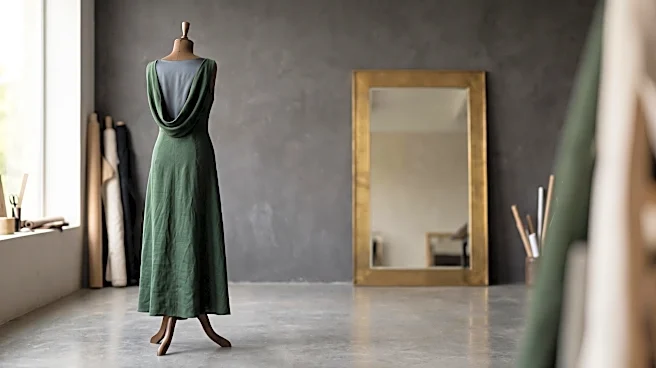
The design forces your eye to move and follow the new, unexpected line, creating a sense of dynamism and intrigue that a perfectly centered seam lacks. This simple shift can transform a basic sheath or slip dress from a classic staple into a contemporary statement piece, all without adding fussy embellishments. It’s a rebellion against predictability, suggesting confidence and a modern sensibility.
A Nod to Avant-Garde History
While asymmetrical details feel very of-the-moment, their roots run deep in fashion history. The technique has its origins in ancient draped garments like the toga, which naturally fell asymmetrically. In the 20th century, designers like Madeleine Vionnet revolutionized silhouettes with the bias cut, a technique of cutting fabric diagonally that inherently creates fluid, asymmetrical lines. However, the idea of intentionally exposing or misplacing seams to challenge convention was pushed forward by avant-garde Japanese designers like Rei Kawakubo and Yohji Yamamoto, and Belgian designers like Martin Margiela in the 1980s. They used deconstruction to question the very structure of clothing. Today's trend is a softer, more wearable version of that rebellion, taking the architectural interest of asymmetry and applying it to everyday pieces.
It’s All in the Drape and Silhouette
An off-center seam does more than just look interesting; it fundamentally changes how a garment hangs and interacts with the body. A seam’s placement dictates fabric tension and direction. Moving a seam off-center, especially when combined with a bias cut, can create a more fluid drape that clings and releases in unexpected ways. This creates new silhouettes that can be incredibly flattering. The diagonal lines produced by asymmetrical seams draw the eye across the body rather than straight up and down or side to side, which can have a lengthening and slimming effect. This is why an asymmetrically cut dress can feel so effortlessly elegant; it works with the body’s natural movement to create a flowing, dynamic shape.
Making the Look Work for You
The beauty of this trend is its versatility. It's appearing on everything from knit sweaters with angled hems to elegant evening gowns with a single shoulder. The key to wearing an asymmetrical piece is to let it be the focus. Because the garment itself has inherent movement and interest, it doesn't require much styling. For a dress with an off-center seam or an uneven hemline, opt for simple, classic accessories. The goal is to complement the dress, not compete with its thoughtful design. This trend isn't about being overtly dramatic, but about appreciating the subtle, intentional details that elevate a piece from ordinary to compelling. It’s a quiet statement that proves that sometimes, the most powerful design choice is simply moving the line.