


From Local Showcase to Global Spectacle
To understand the yearly debate, you have to look back. The festival, which started in 2002, was inspired by the long-running PBS show "Austin City Limits." That show was a beacon of the city's unique music scene, built on a foundation of country, blues,
and folk. The first festival was a two-day affair with a $25 ticket, featuring acts like Asleep at the Wheel and a young Gary Clark Jr. It was an extension of that local-first ethos. Fast forward to today, and ACL is a global behemoth spanning two weekends, drawing nearly half a million people, and produced by C3 Presents, a company also behind Lollapalooza. That evolution from a homegrown gathering to an international destination is at the heart of the tension.
The Headliner Industrial Complex
The primary complaint from longtime Austinites is often about homogenization. The lineup, they argue, looks too much like every other major festival. But this ignores the fundamental economics of a festival its size. To sell hundreds of thousands of tickets, organizers need massive, globally recognized headliners. You can't anchor a festival that generated nearly $500 million in economic impact in 2023 on niche local bands alone. The inclusion of pop, hip-hop, and EDM superstars isn't a betrayal of Austin; it's the financial reality of competing in a crowded festival market dominated by major players like Live Nation and AEG. The festival has to cater to a global audience to survive, and that audience demands household names.
Keeping the 'Weird' on the Bill
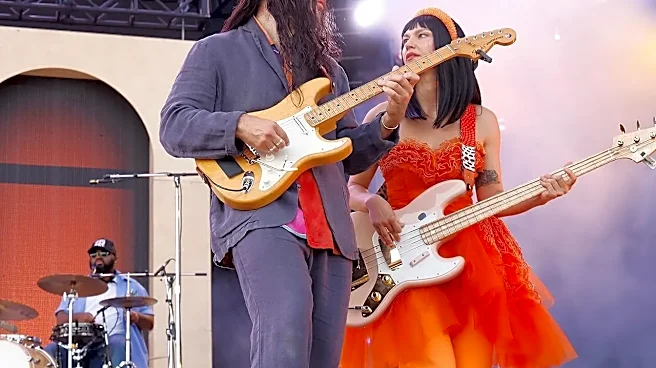
Still, ACL can't completely abandon its roots. The "Keep Austin Weird" spirit, though now more of a commercial slogan than a genuine subculture, demands a nod to the local scene. Every year, the lineup is peppered with Austin-based and Texas-bred artists. You'll find them in the early-day slots on smaller stages, acts that range from indie rock and Americana to jazz and psych-rock. Critics might call this tokenism, a way to placate the old guard while the main stages are given to touring giants. But for those artists, an ACL slot is a huge opportunity, offering exposure to a massive new audience. The festival also provides a platform for a wide array of genres, reflecting the diverse sounds coming out of the city today.
A Soundtrack for the New Austin
Perhaps the most honest way to view the ACL lineup is not as a battle between old and new Austin, but as an accurate reflection of what the city has become: a global tech hub that is also a cultural crossroads. The city is no longer a sleepy college town defined by a singular music scene. The festival's mix of genres—from Charli XCX and Skrillex to Texas country acts and the Huston-Tillotson University Jazz Collective—mirrors a city that is itself a blend of different cultures, industries, and people. The lineup's diversity isn't a sign of a lost identity; it's the sonic identity of a city that has grown complex and, to some, contradictory. The very presence of headliners from different backgrounds speaks to a broader, albeit sometimes fraught, cultural shift.