







Stuck in the Explainer Loop
When Juneteenth was signed into law as a federal holiday in 2021, a flurry of educational content was not just understandable, it was necessary. Millions of Americans, of all races, were hearing the story of Gordon Granger’s arrival in Galveston, Texas,
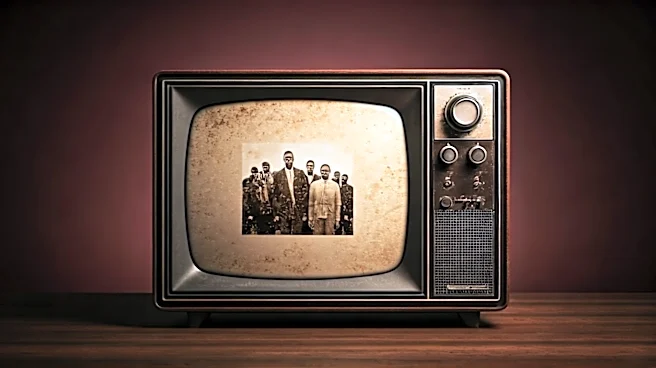
for the first time. News segments, documentaries, and network specials dutifully explained that the Emancipation Proclamation of 1863 didn't instantly free all enslaved people and that it took two and a half years for the news—and enforcement—to reach the westernmost Confederate state. This initial wave of explainers served its purpose. It established a baseline of knowledge. The problem is, we’re still there. Each year, much of the programming around June 19th feels like a reset, a well-meaning but repetitive history lesson. We are trapped in a cycle of explaining the what and the when of Juneteenth, treating the audience as if they are perpetual beginners. This approach, while safe, ultimately defangs the holiday, reducing its profound significance to a piece of historical trivia.
What ‘Consequences’ Really Means
To ask for “more consequences” is not a call for more graphic depictions of slavery’s brutality. We’ve had that. Instead, it’s a demand for stories that grapple with the direct, cascading results of emancipation—and its two-and-a-half-year delay. The consequences of Juneteenth are the story of America itself.
What does this look like on screen? It looks like a documentary not just about Galveston in 1865, but about the violent backlash of Reconstruction that followed. It’s a drama series about the Freedmen’s Bureau and its promises of “40 acres and a mule,” exploring the political betrayals that ensured it never materialized for most. It’s a story about the subsequent generations—the sharecroppers, the families fleeing to the North during the Great Migration, the Black soldiers who fought for freedom abroad while being denied it at home. Consequence is the through-line connecting the failure to secure Black property after the Civil War to the racial wealth gap today. It’s the through-line from the Black Codes enacted in 1866 to the voting rights battles of 2024. These aren't separate stories; they are the continuing plot.
Beyond the Period Drama
This storytelling doesn’t have to be confined to somber historical epics. The most radical thing TV could do is embed these consequences into our contemporary narratives. Imagine a sitcom where a family discovers their inherited property deed is being challenged because of its Reconstruction-era origins. Picture a reality show that follows Black entrepreneurs trying to secure loans from a banking system whose architecture was built on their ancestors’ exclusion. These are not far-fetched premises; they are the lived reality for millions.
By treating the legacy of Juneteenth as an active force in the present, creators can move beyond reverence and into relevance. The holiday isn't a historical artifact under glass; it’s a living principle. Freedom isn't a single event but a continuous, often contested, process. Our television, from the most prestigious drama to the most popular network procedural, should reflect that dynamic truth.
From Celebration to Commemoration
There is a place for the joyous celebrations, the concerts, and the cookouts. They are a vital expression of Black culture and resilience. But a party is not a commemoration. A commemoration demands reflection, an understanding of sacrifice, and a commitment to the principles being honored. Right now, much of Juneteenth TV leans heavily on the celebratory, offering a feel-good experience that risks becoming another commercialized holiday disconnected from its radical roots.
By focusing on consequences, television can help bridge that gap. It can provide the context that turns a celebration into a meaningful commemoration. It can remind us that the work that began in Galveston is unfinished. To tell the story of what happened after June 19, 1865—the triumphs, the betrayals, the unceasing fight for full citizenship—is to truly honor the spirit of the day.