



The Secret Language of Fabric
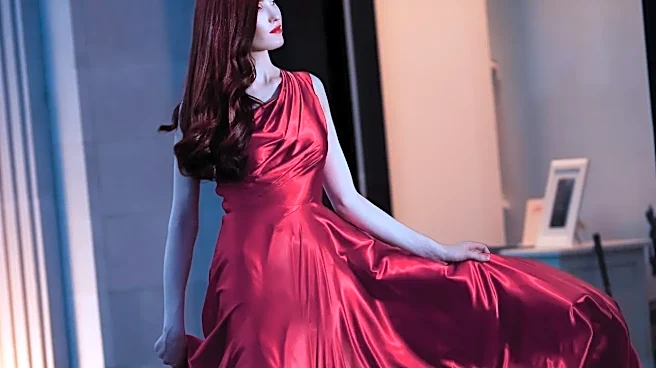
The magic starts with the material. Designers who want a gown to perform for the cameras will choose fabrics specifically for their kinetic properties. Lightweight materials like silk chiffon, charmeuse, and organza are masters of movement. Chiffon is
sheer and airy, creating a graceful, floating effect as the wearer walks. Charmeuse, with its liquid-like sheen and fluid drape, catches the light in a way that emphasizes every subtle shift of the body. Tulle, often used in layers, adds volume and a romantic, weightless quality without being heavy. These fabrics aren't just pretty; they are engineered to interact with air and light, turning a simple walk into a visual event. Their fibers—often long and smooth—slide past each other, allowing the fabric to fall and flow naturally rather than holding a rigid shape.
An Architecture of Movement
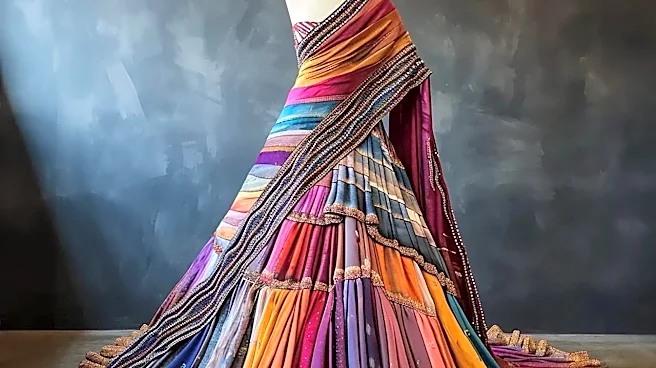
Beyond fabric choice, the structure of a gown is often a carefully planned piece of engineering. Techniques like pleating, fringe, and ruffles are not just decorative flourishes; they are tools to build movement directly into the dress. Pleats, whether sharp knife pleats or soft accordion folds, create a built-in springiness, allowing a skirt to expand and contract with each step. Fringe is perhaps the most obvious example, designed to sway and create a dynamic blur of motion. Similarly, tiered or ruffled skirts are constructed to catch the air, creating a cascading effect that a static pose could never capture. Some designers, like Iris van Herpen, have taken this to an extreme, creating 'kinetic' dresses with moving parts, such as feathers rotated by hidden mechanisms or sculptural elements that bloom and fold as the model walks. These are not just clothes; they are wearable sculptures designed for performance.
The Still Versus the Story
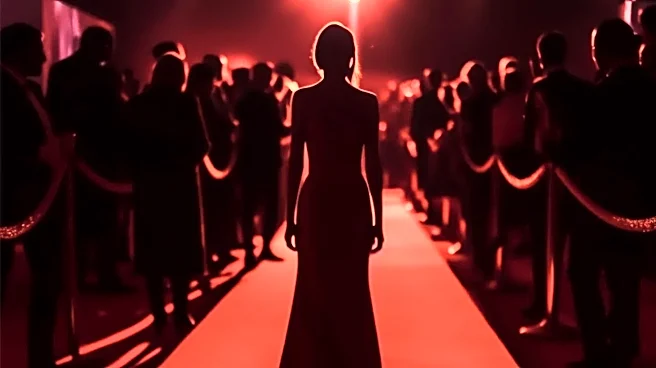
The technology used to capture the moment plays a huge role. A still photograph freezes a single, split-second slice of time. This can be unflattering, catching the dress in an awkward mid-swing or flattening its intricate layers. Flash photography, common on red carpets, uses a powerful burst of light that can wash out subtle textures and make flowing fabrics look stiff. Video, on the other hand, tells a story over time. It uses continuous lighting, which is more forgiving and allows the eye to see how the fabric drapes, flows, and reflects light as the person moves. A photographer is lighting for a perfect single frame, while a videographer is lighting for a continuous scene where movement is part of the narrative. A dress designed for motion is telling a story, and a photograph only captures one word of it.
The Art of the Unseen
Sometimes, the most important elements are the ones you can't see. The internal construction of a gown is critical to how it behaves. Skilled draping can shape the body with a gentle touch, while strategically placed layers can create movement without losing definition. In some cases, a designer might use a supportive inner structure to ensure the dress moves with ease, allowing the wearer to feel comfortable and confident. That sense of ease translates directly on camera, particularly in video, where natural, uninhibited movement makes the gown come alive. In essence, a dress that looks amazing in motion is often a successful collaboration between fabric, cut, and construction, all working together to support a performance. The wearer isn't just wearing a dress; they are activating it.