



A Founder's Radical Philosophy
The story begins with Harry Winston himself, the man nicknamed the "King of Diamonds." When he founded his New York City salon in 1932, he introduced a revolutionary idea: let the gemstones dictate the design, not the other way around. At a time when
heavy metal settings were the norm, Winston believed that the jeweler's job was to reveal the inherent beauty of the stones. This philosophy meant sourcing the most exceptional diamonds and gems and then creating settings so minimal they were nearly invisible. He acquired and completely reimagined entire estate collections, such as that of socialite Arabella Huntington, transforming old-fashioned pieces into modern masterpieces that felt fresh and alive. This approach wasn't about following style; it was about creating it from the most elemental and beautiful materials on earth.
The Genius of the Winston Cluster
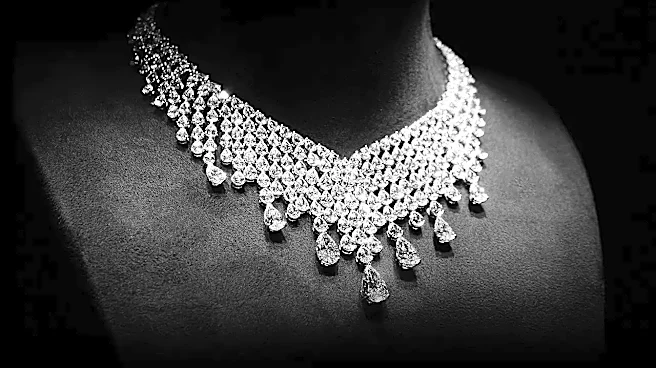
Perhaps no design better embodies this philosophy than the Winston Cluster. Introduced in the 1940s, the concept was inspired by a simple, beautiful moment: Winston noticing how frost formed on a holly wreath on his door. He wanted to replicate that organic, three-dimensional sparkle. The resulting technique involves setting a mix of pear, marquise, and round brilliant diamonds at various angles in discreet platinum claws. This allows the gems to seemingly float on the skin, creating a sculptural piece that captures light from every direction. Unlike rigid, symmetrical designs, the Cluster feels dynamic and full of life. It’s a method so iconic and effective that it remains a signature of the house today, from delicate earrings to breathtaking necklaces.
A Legacy Built on Legendary Stones
A brand's reputation is only as good as its history, and Harry Winston's is unparalleled. It is estimated that during his career, over a third of the world's most famous diamonds passed through his hands. This includes legendary stones like the Jonker and Vargas diamonds. But the most famous is undoubtedly the Hope Diamond, a massive 45.52-carat deep blue diamond with a history stretching back to French royalty. After acquiring it in 1949, Winston didn't hoard it. He toured it as part of his "Court of Jewels" exhibition before donating it to the Smithsonian Institution in 1958, a gift to the world. Handling such historically significant gems built a mystique and level of public trust that no marketing campaign could ever buy. It cemented the brand not just as a jeweler, but as a custodian of history.
Craftsmanship as a Quiet Statement
The "quiet" part of Harry Winston's endurance comes from the unseen work that goes into each piece. The house operates two workshops in New York City, where artisans—some with decades of experience—blend traditional techniques with modern technology. The focus is on perfection, from selecting only the highest quality stones (often D color and Flawless clarity) to hand-crafting platinum settings designed to be almost invisible. This meticulous process ensures that the focus remains entirely on the brilliance of the diamonds. It’s a level of quality that doesn’t need to shout for attention. When Marilyn Monroe sang, "Talk to me, Harry Winston!" in Gentlemen Prefer Blondes, it wasn't just a catchy line; it was a recognition that the name itself had become shorthand for the absolute best.