
More Than Just Chasing the Ball
At first glance, pressing looks like simple, hard work. Players hunt down the opponent with the ball, trying to win it back. But it’s far more sophisticated than that. Traditional defensive strategy dictates
that when a team loses the ball, its players should retreat, fall back into an organized defensive shape near their own goal, and wait for the opponent to come to them. Pressing flips that script entirely. Instead of retreating, the team immediately works as a single, coordinated unit to swarm the player with the ball, cutting off passing lanes and forcing a mistake. It’s a proactive defensive philosophy built on winning the ball back as quickly as possible, as high up the field as possible.
Turning Defense into Offense
The true genius of pressing is that it’s not really about defense at all—it’s an offensive weapon disguised as a defensive action. The thinking, popularized by legendary coaches like Arrigo Sacchi and Marcelo Bielsa, is that an opponent is never more vulnerable than in the few seconds after winning possession. They haven't had time to transition from a defensive mindset to an attacking one. Their players are likely out of their ideal attacking formation. By pressing immediately, a team can exploit this moment of disorganization. Forcing a turnover deep in the opponent's half creates an instant scoring opportunity against a defense that is out of position and scrambling. It’s the soccer equivalent of a full-court press in basketball leading to a steal and an easy layup.
The Rise of Gegenpressing
The most famous modern version of this tactic is “gegenpressing,” a German term that translates to “counter-pressing.” Championed by tactical innovator Ralf Rangnick and perfected by his disciples like Liverpool’s Jürgen Klopp, gegenpressing is a high-octane, almost fanatical application of the concept. For Klopp’s famous Borussia Dortmund and Liverpool teams, the counter-press wasn't just a tactic; it was an identity. The philosophy is simple: the best moment to win the ball is immediately after you’ve lost it. Klopp once said, “The best playmaker is a good counter-pressing situation.” This aggressive, front-foot style creates a constant state of transition and chaos that many teams simply can’t handle, generating turnovers that lead directly to goals.
The High-Stakes Gamble
For all its benefits, pressing is a high-wire act. It is physically punishing, requiring elite levels of fitness and stamina from all eleven players for the full 90 minutes. More importantly, it requires near-perfect coordination and tactical discipline. If one player fails to do their job—mistimes a run, gets pulled out of position, or doesn’t close down an opponent quickly enough—the entire system can collapse. A skilled opponent can exploit that single mistake with one or two quick passes, breaking the press and finding acres of open space behind the midfield. This leaves the defense completely exposed and vulnerable to a devastating counter-attack. A team that lives by the press can just as easily die by it.
The Guardiola Variation
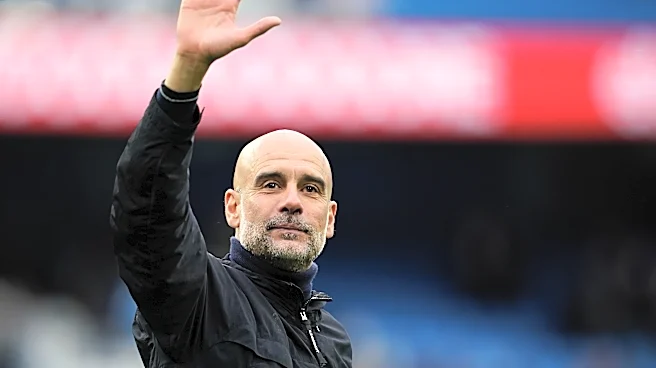
While often associated with high-energy German soccer, another master of the press is Pep Guardiola. His version, however, is slightly different and intertwined with his possession-based philosophy. At Barcelona, Bayern Munich, and Manchester City, Guardiola’s teams use pressing not just to create chances but to maintain control. His famous “six-second rule” dictates that his players should relentlessly hunt the ball for six seconds after losing it. If they can’t win it back in that window, they fall back into their defensive shape. This short, intense burst of pressure suffocates opponents, prevents counter-attacks before they can start, and allows his teams to quickly re-establish their dominant possession game. It’s less about frantic chaos and more about methodical strangulation.