




The Golden Hour Mandate
The most striking thing about the premier Cannes red carpet photos is the light. It’s warm, soft, and seems to wrap itself around the subjects. That’s no accident. The festival’s most important premieres—the ones with the biggest stars—are meticulously scheduled to begin during the “golden hour.” This is the period shortly before sunset when the sun is low in the sky, casting a flattering, diffused, golden-hued light across the Côte d'Azur. Unlike the harsh, shadow-casting light of midday, this natural filter is a photographer’s dream. It smooths skin, makes colors pop, and provides a romantic, cinematic quality that no artificial light can perfectly replicate. Festival planners treat the sunset as a non-negotiable member of the production team,
timing the arrival of A-listers to coincide with the moment the Riviera's natural beauty is at its peak.
An Architectural Stage
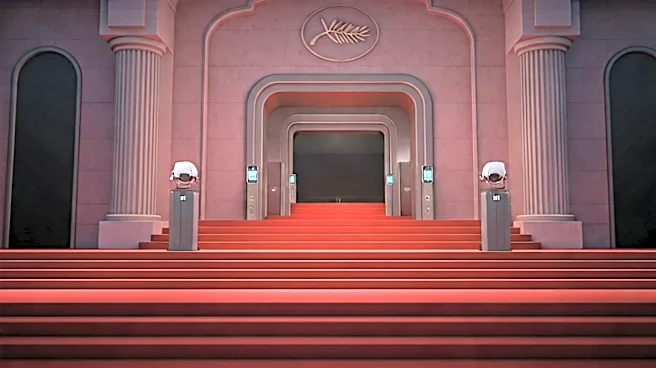
The setting itself is a crucial piece of equipment. The famous 24 steps of the Palais des Festivals et des Congrès are more than just a way to get inside. They are a purpose-built photographic stage. The gentle incline forces a slow, deliberate pace, preventing an unseemly rush and giving photographers ample time to shoot. The width of the staircase allows entourages to spread out, creating grand, panoramic compositions. Crucially, the ascent requires stars to turn their bodies as they walk, naturally offering a variety of angles to the tiered walls of photographers on either side. Every celebrity who walks that carpet is, in essence, performing a slow-motion pirouette for a global audience, and the architecture is their silent choreographer.
The Symphony of Flashbulbs
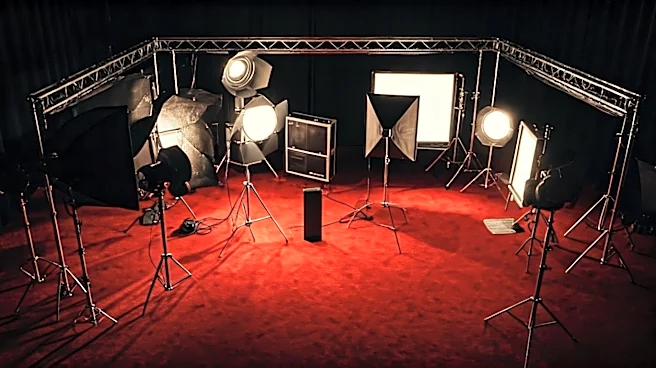
While the sun provides the beautiful base layer, it’s not reliable. That’s where the photographers' pit comes in. This is not the chaotic scrum of paparazzi you see in movies. At Cannes, it is a highly organized, tiered structure where credentialed photographers from major agencies like Getty Images and AFP take their assigned positions. What looks like a frenzy of flashing is actually a coordinated wall of light. Hundreds of powerful flash units going off simultaneously create a massive, overwhelming source of artificial daylight. This technique, known as “blasting” or creating a “wall of flash,” serves a specific purpose: it overpowers the ambient light and kills shadows. Whether a cloud passes over the sun or a shadow falls across a star’s face, the sheer force of the synchronized flashes fills it in, ensuring a clean, crisp, and evenly lit subject from every angle.
Choreographing Every Glance
The human element is the final, and perhaps most overlooked, logistical component. Celebrities don't just wander up the stairs. Their journey is managed from the moment they step out of the car. Publicists and festival staff guide the talent, controlling the flow of traffic to prevent bottlenecks and ensure each major star gets their moment alone on the steps. You’ll often see handlers subtly directing a star’s eyeline—a call to “look left!” to the main photo bank, then a “turn right!” for the broadcast cameras. This isn’t rude; it’s a necessary part of the job. In a few short minutes, a star has to provide hundreds of photographers with a usable, iconic shot. Without this precise human choreography, the whole system of light and architecture would fall apart into a mess of missed moments and bad angles.