






An Unlikely Culture Clash
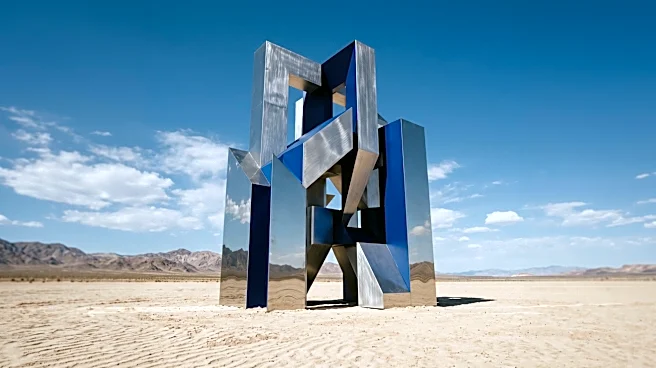
On the surface, nothing seems more opposed than Paris Hilton and Burning Man. The festival, which began on a San Francisco beach in 1986, is built on a foundation of ten principles, including radical self-reliance, gifting, and, most notably, decommodification.
It’s an experimental city where commercial sponsorships, transactions, and advertising are rejected in favor of a participatory experience. Paris Hilton, on the other hand, built her empire on the very concept of commodification. She didn't just participate in the rise of celebrity as a brand in the early 2000s; she defined it, turning her name, catchphrases like "That's hot," and paparazzi-fueled lifestyle into a multi-million dollar business of fragrances, endorsements, and appearances. Her persona was a carefully curated performance of aspirational wealth and hyper-feminine glamour, the antithesis of Burning Man's gritty, anti-materialistic ethos.
Performing on the Playa
When Hilton first started attending Burning Man around 2016, it was met with a degree of skepticism. Yet she never attempted to shed her persona and become an anonymous “Burner.” Instead, she performs as “Paris Hilton at Burning Man.” She doesn't roll in the dust for a newbie baptism; she arrives by private jet. Her outfits are not cobbled-together expressions of radical self-expression but high-fashion, social media-ready spectacles. She showcases dazzling, custom-made sequined jumpsuits and crystal-adorned hats from boutique designers, perfectly matching her holographic-wrapped electric bike. This isn’t an attempt to blend in. It’s a demonstration that her brand can absorb any environment, even one fundamentally opposed to it. She brings her world to the desert, complete with photo ops and Instagram posts that, to the chagrin of purists, sometimes tag brands, directly challenging the principle of decommodification.
From Anomaly to Brand Strategy
What might have initially seemed like a tone-deaf vacation for a rich socialite has, over time, been reframed as another pillar of her surprisingly resilient career. In the 2000s, Hilton perfected the art of being famous for being famous, leveraging constant media attention into a formidable business. Now, in an era that celebrates her as a savvy entrepreneur and cultural innovator who foresaw the influencer economy, her Burning Man appearances look less like a contradiction and more like a strategic expansion. She’s proven her ability to evolve, moving from reality TV star to global DJ and advocate. Attending Burning Man, an event that has increasingly attracted Silicon Valley elites and celebrities, allows her to remain part of a certain influential cultural conversation. She’s not just a relic of the Y2K era; she’s an active participant in the status-laden cultural events of today.
The Master of Self-Awareness
Ultimately, Hilton’s presence at Burning Man reinforces the central thesis of her entire career: she has always been in on the joke. Her 2020 documentary, "This Is Paris," revealed that her famous “ditzy blonde” persona was a deliberate construction. Her embrace of Burning Man feels like an extension of that same self-awareness. She understands the perceived absurdity of her being there and leans into it, creating content that is both perfectly on-brand for her and perfectly tailored for the spectacle of the event. She isn’t trying to convince anyone she’s a rugged survivalist; she’s reinforcing her identity as Paris Hilton, a figure so iconic she can turn even the most counter-culture setting into another backdrop for her own enduring fame. She’s not a tourist at Burning Man; Burning Man has become a recurring character in the long-running show that is Paris Hilton.