










The 'I Don't Want to Play With You Anymore' Moment
You’ve seen it. You bought the perfect toy—a beautiful wooden train set, a complex Lego castle, or the doll they begged for. You watched them unwrap it with glee. For a few glorious hours, or even days, it was their constant companion. Then, the moment
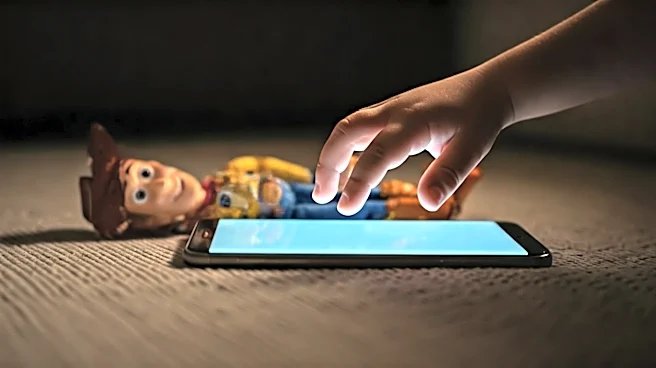
arrives. You offer the toy, and your child, without even looking up from a tablet, says, 'No thanks, I'm watching this.' In that instant, you become the parent of Woody from *Toy Story 2*, watching your beloved toy get shelved for a shinier, more captivating alternative. This is the crux of the 'Toy Story 5 Trend'—a social media shorthand parents use to describe the quiet pang of seeing a physical toy cast aside for a digital screen. It isn't a formal trend, but a shared, knowing nod among parents navigating the digital age. The toy isn't broken or lost; it’s just… obsolete in that moment. The rejection feels disproportionately sad, not just because a toy is being ignored, but because it feels like a whole category of play—imaginative, tactile, and self-directed—is being sidelined.
Why Every Screen is a 'Forky'
To understand the phenomenon, it helps to see the screen not as the villain, but as Forky—the breakout star of *Toy Story 4*. Forky was made of literal trash, but to Bonnie, he was fascinating, novel, and endlessly amusing. She made him, so he was *hers*. Screens hold a similar power. They aren’t just passive entertainment; they are interactive, responsive, and offer a seemingly infinite well of novelty. One minute it’s a game, the next it’s a cartoon, the next it’s a video of other kids playing with toys. This constant stream of new stimuli is something a static train set simply cannot compete with. Developmental psychologists note that the variable rewards of digital content—the dings, points, and surprising new videos—are exceptionally compelling for a developing brain. The screen is a 'Forky' because it’s a whirlwind of novelty that a child can control. The problem isn’t that traditional toys are boring; it’s that screens are engineered to be anything but.
It's Not About the Toys (It's About Us)
Let’s be honest: the sadness isn't really for the abandoned Lego bricks. It’s for us. Many of today’s parents are millennials who grew up alongside Andy. The *Toy Story* franchise is our story, a cultural touchstone that defined our own relationship with play. We remember the magic of creating entire worlds with nothing but action figures and cardboard boxes. When we see our own children bypass that experience for the slick, pre-packaged world of an app, it feels like a loss of connection to a childhood we understood and valued. The toy is a proxy for a type of imaginative, unguided play that feels essential. That feeling of rejection is tangled up in nostalgia, a fear that our kids are missing something fundamental, and perhaps a little guilt over our own role in introducing the screens in the first place. We want them to have the 'Andy's room' experience we idolized, but they're living in a world with entirely different options.
Finding a Purpose Beyond the Playroom
The arc of the *Toy Story* movies isn't about defeating a new toy; it's about adapting to change and finding a new purpose. Woody’s journey from Andy’s favorite to Bonnie’s part-timer to a 'lost toy' helping others was a lesson in letting go. This is the real challenge for parents. The goal isn't to wage a 'war' on screens, a battle that is both exhausting and likely unwinnable. Instead, it’s about finding a new equilibrium. It’s about teaching children how to be mindful digital citizens, just as we teach them to share physical toys. It means embracing 'co-play,' where parents engage with the digital world alongside their kids—asking questions about the game they’re playing or watching the silly YouTube video with them. It also means curating and championing offline time, creating moments where the only option is that dusty train set. The focus shifts from 'screens versus toys' to creating a balanced 'play diet' where both can have a place. Like Woody finding his new role with Bo Peep, we can help our kids find value in all kinds of play, both on-screen and off.