





First, Let's Talk 'Investment'
Before diving into shapes, it's important to clarify what "investment" means for a diamond. Unlike stocks or gold, most diamonds do not reliably appreciate in financial value; in fact, retail markups mean they often lose value immediately after purchase.
For jewelry, a better way to think of investment is as a purchase that retains its beauty, significance, and a stable portion of its value over a lifetime. The goal is to acquire a piece that is both emotionally meaningful and physically enduring, representing a wise use of your funds. The right cut is central to achieving that goal.
The Look: Sharp Geometry vs. Softened Edges
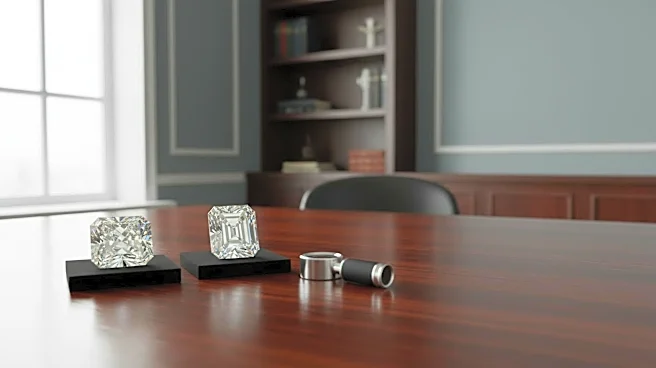
The most immediate difference between the two is their silhouette. A princess cut is defined by its sharp, 90-degree corners, creating a clean, geometric, and modern look. It’s a true square, and that crispness is its signature appeal. The radiant cut, by contrast, has trimmed or beveled corners. While it can be square, it's more often rectangular, and those softened corners give it a slightly warmer, more versatile appearance that blends the clean lines of an emerald cut with the sparkle of a brilliant.
The Sparkle: Two Paths to Brilliance
Both are known as "brilliant" cuts, meaning their facets are designed to maximize light return, but they do it differently. The radiant cut typically has more facets—often 70 compared to a princess cut's 58—creating an intense, glittering sparkle that is sometimes described as looking like crushed ice. This complex faceting is excellent at reflecting light from multiple angles, giving it a lively, all-over shimmer. The princess cut's faceting creates a different effect, with strong, linear reflections that often form a distinct X-pattern of light and dark contrast within the stone. While both are brilliant, many find the radiant cut has a slight edge in overall sparkle.
The Durability Factor: A Clear Winner
From a practical investment standpoint, durability is paramount. Here, the radiant cut has a significant advantage. The sharp, pointed corners of a princess cut are its primary vulnerability; they are prone to chipping or snagging, especially if the setting doesn't include V-shaped prongs for protection. This is a well-known risk that can compromise the stone over time. The radiant cut's beveled corners make it a far more robust choice for anyone with an active lifestyle or who plans to wear the piece daily. That built-in protection is a crucial element of long-term value preservation.
The Value Proposition: Price and Perception
When it comes to price, the princess cut often offers more for your money. Because its shape conforms closely to the natural shape of a rough diamond, the cutting process results in less waste—retaining up to 80% of the original crystal. This efficiency translates to a lower price-per-carat compared to many other shapes. Radiants, while also efficient, can be slightly more expensive. However, the elongated shape of many radiants can make them appear larger than their actual carat weight, and their superior durability can be seen as a long-term value-add that justifies the initial cost.